News


Stormwater Drainage Systems: Types, Pipes, and Design Basics
11 Nov 2026Stormwater Drainage Systems: Types, Pipes, and Design Basics
A stormwater drainage system collects runoff from streets and sites, moves it through pipes, and releases it where it can do no harm. Drainage and stormwater management overlap but are not identical: drainage moves the water, while management adds storage, infiltration, and treatment around that movement. This page covers the system types, the components that make them work, and the design thinking behind a layout that survives real storms.
What Is a Stormwater Drainage System?
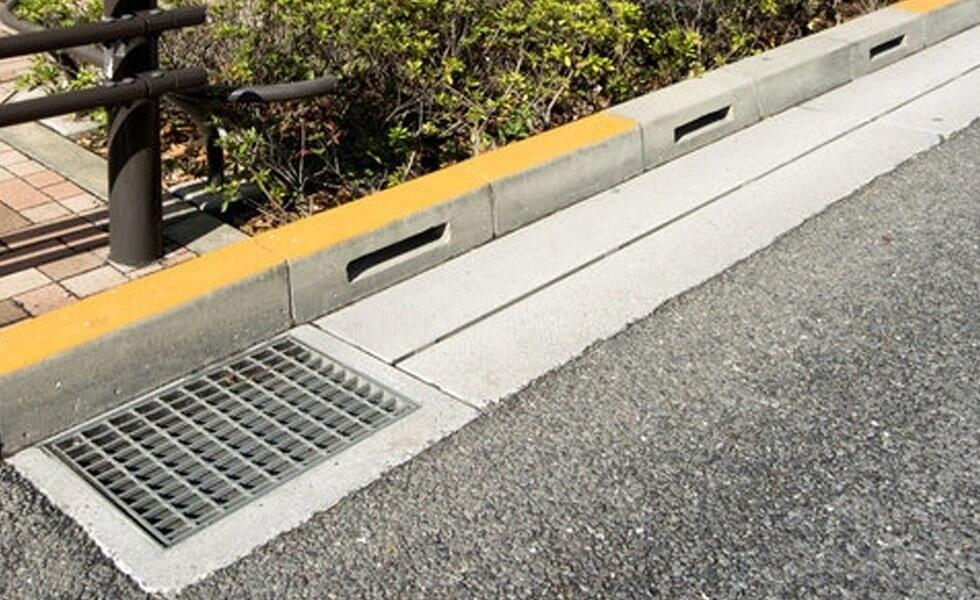
Every drainage system answers one question: where does the water go? Rain lands on a street, sheets to the gutter, drops through an inlet, and travels a buried pipe network. The journey ends at an outfall — the point where the system hands the water to a stream, channel, or larger sewer. The stormwater drainage meaning, in plain terms, is that complete journey from rainfall to release.
Municipal networks carry the public side of that journey. Private sites carry their own version — parking lots graded to catch basins, pipes under the pavement, and a discharge point at the property boundary. Both follow the same anatomy.
Types of Stormwater Drainage Systems
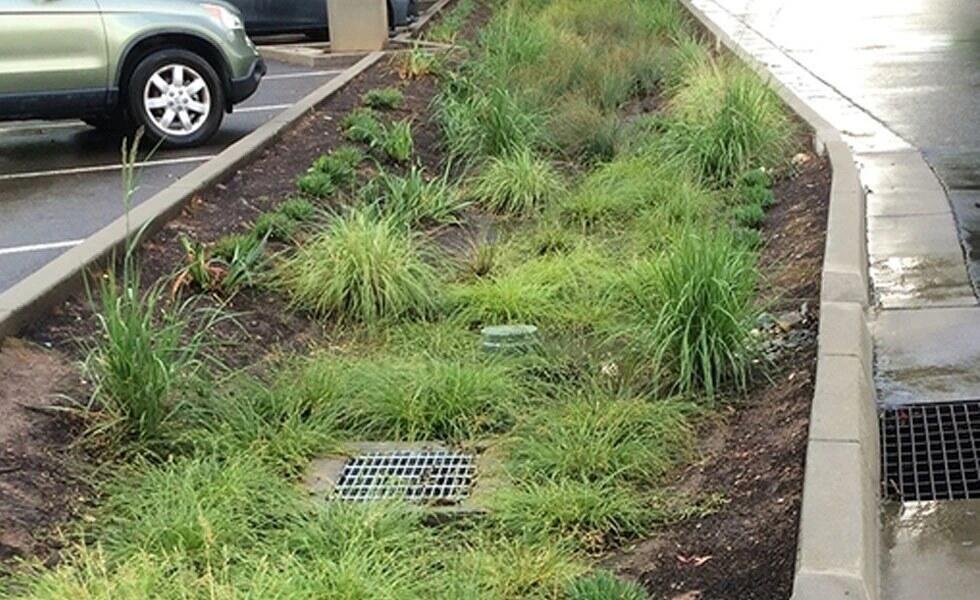
Drainage systems sort into three families by how they handle the surface:
• Surface drainage. Graded pavement, curbs and gutters, roadside ditches, and swales. Water moves across the ground on purpose-built paths — the oldest and still the most common family.
• Subsurface drainage. Storm sewers, culverts, catch basins, and underdrains. Pipes carry what inlets collect, which keeps streets trafficable during storms.
• Green drainage. Bioswales, permeable pavements, and vegetated filter strips. These slow and partially absorb the flow instead of simply conveying it, and they pair naturally with the other two families.
Most real networks are hybrids. A green street drains to a conventional inlet, which feeds a pipe that discharges through a vegetated outlet — three families in one line.
Key Components: Inlets, Pipes, and Outfalls
The component chain repeats in every stormwater drainage system:
• Inlets and catch basins — the entry points. Grates admit the flow; the basin below catches grit and debris before they travel.
• Stormwater pipes — the transport layer. Concrete, HDPE, and PVC pipe families dominate, sized by the flow they must carry and the loads above them.
• Junctions and manholes — the service points. They combine flows and give crews inspection access without excavation.
• Outfalls — the discharge end. Energy protection at the outfall prevents the released water from eroding the receiving channel.
• Flow control — the throttle. Orifices and weirs at storage structures meter the release rate to what the permit allows.
The chain is only as strong as its weakest joint. A perfect pipe run ending in an unprotected outfall fails at the mouth, which is why outlet protection appears on every sound set of plans.
Stormwater Drainage Design Basics
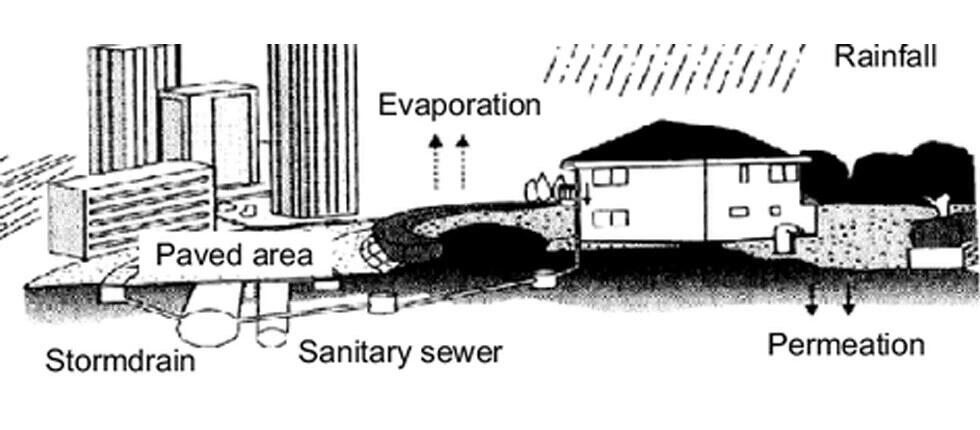
Stormwater drainage design starts from a storm, not from a map. The designer sizes the network for a design storm, a rainfall event defined by local regulation. Every segment must carry that flow without surcharging the street.
Three geometric decisions shape most layouts. Slope keeps the water moving and the pipe self-cleaning. Alignment follows the streets and structures above, minimizing conflicts with utilities. Depth balances cover over the pipe against the cost of deeper excavation. Drainage design documentation — plans, calculations, and details — is produced by the civil engineer of record and issued for permits. Request that documentation set for any system you are evaluating, rather than assuming standard plans apply.
The design conversation does not end at conveyance. Modern ordinances ask what the discharge rate will be, which pulls storage structures into the same plan. The stormwater management solutions guide covers that half of the system.
Finding Stormwater Pipes on a Property
Before digging, find what is already buried. Three paths work, in order. Your municipality's engineering department holds the as-built records for the public network. The local GIS or stormwater map portal, which many cities publish online, shows the same lines graphically. Utility locating services mark known lines before any excavation. Private lateral drains — the ones connecting a property to the main — are the least documented, so older parcels deserve a camera inspection before construction.
How Drainage Fits the Bigger System
Drainage is the conveyance layer of the stormwater discipline. The concepts upstream of it — what the water even is — live on our what is stormwater explainer. The full practice is anchored by the stormwater management overview. Where a site must store or soak its water instead of draining it, buried storage and infiltration trenches take over from the pipe network.
Specify a drainage-adjacent storage structure by sending the storage volume, loading class, and ground conditions to YY Tank. We return a quotation within four hours and an engineered layout within 24.
Frequently Asked Questions
What are the essential components of a stormwater drainage system?
Five components do the work. Inlets and catch basins admit runoff, pipes transport it, and junctions and manholes service the network. Flow controls meter the release, and an outfall returns it safely. Missing any one of them breaks the chain — most failures trace back to blocked inlets or unprotected outfalls.
What is one of the biggest problems with stormwater runoff?
Volume is the biggest problem. Developed surfaces shed far more water than the ground ever absorbed. Pipes sized for that surge are expensive, so runoff arrives faster than networks can accept it. The second problem rides along with the first: the same water carries untreated pollution into receiving streams.
How do I find stormwater pipes on my property?
Start with your municipality's engineering department, which holds the as-built drawings for public drains. Many cities publish a stormwater or GIS map online — search the city site for "stormwater map". For private laterals, hire a camera inspection, because the small connecting pipes are rarely documented. Always call the utility locating service before any excavation.
What does "stormwater" mean?
Stormwater means the water produced by a storm — rain and snowmelt that flows off surfaces instead of soaking into the ground. It is the raw material of every drainage system. The full definition, the spelling question, and the main types live on our stormwater explainer page.