
2025 — Sponge City — A New-Generation Urban Stormwater Management Concept
10 Feb 2025Can you believe it?Cities can now have a "sponge-like nature" — they cleverly "absorb and manage" both light and heavy rainfall.The new-generation sponge city is coming soon.Stay tuned and expand your knowledge with us!
01 What Is a Sponge City
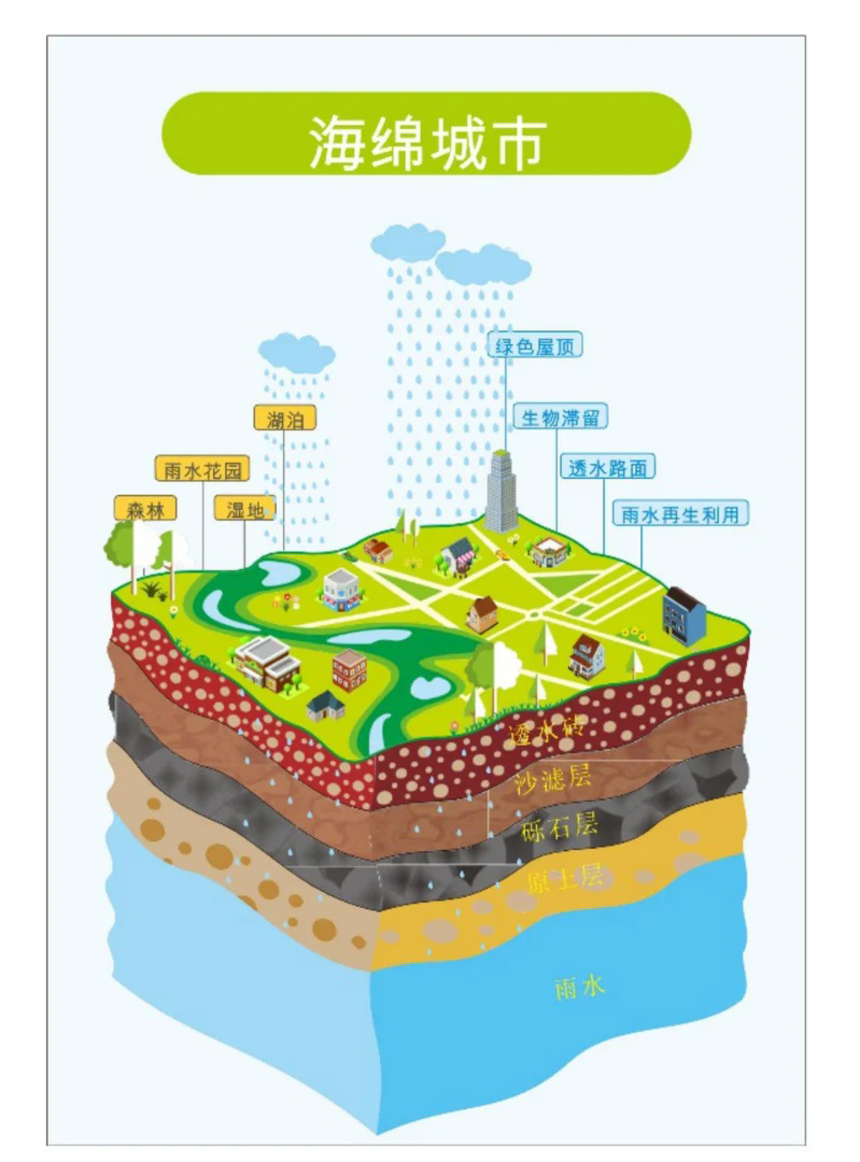
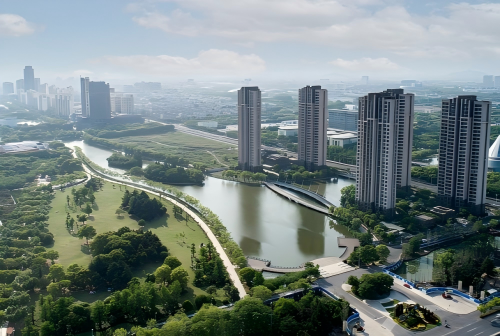
The new-generation urban stormwater management concept refers to cities that can be as resilient as sponges in adapting to environmental changes and responding to natural disasters caused by rainwater. It is also known as a "water-resilient city".
The internationally accepted term is "Low-Impact Development (LID) for stormwater system construction". When it rains, it absorbs, stores, infiltrates and purifies rainwater; when needed, it releases and utilizes the stored water, realizing the free circulation of rainwater in cities.
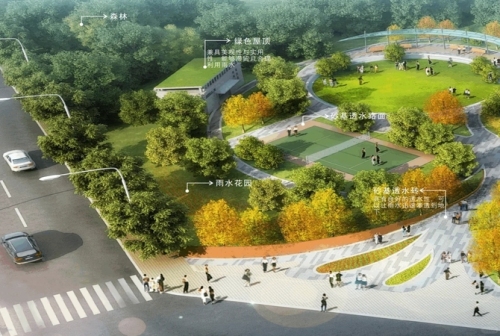
Protection of the city’s original ecosystem: Maximize the protection of existing water-ecologically sensitive areas such as rivers, lakes, wetlands, ponds and ditches; reserve sufficient woodlands, grasslands, lakes and wetlands for water conservation and coping with heavy rainfall; and maintain the natural hydrological characteristics of the city before development. This is the basic requirement for sponge city construction.
Ecological restoration and rehabilitation: Adopt ecological methods to restore and rehabilitate water bodies and other natural environments that have been damaged under the traditional extensive urban construction model, and maintain a certain proportion of ecological space.
Low-Impact Development (LID): In accordance with the development and construction concept of minimizing the impact on the urban ecological environment, rationally control the development intensity, retain sufficient ecological land in cities, control the proportion of urban impervious areas, and minimize damage to the city’s original water ecological environment. Promote sponge-type buildings and communities, sponge-type roads and squares, and advance the construction of park green spaces and natural ecological restoration.
02 Professional Terms for Sponge Facilities
Green roofs, sunken green spaces, grassed swales, permeable pavement, storage tanks, and more. These terms may sound full of greenery, but they are not simple greening concepts — they are core terms in sponge city construction. What kind of urban stormwater management wisdom lies behind them? Next, we will break them down one by one and take you deeper into the professional world of sponge cities.
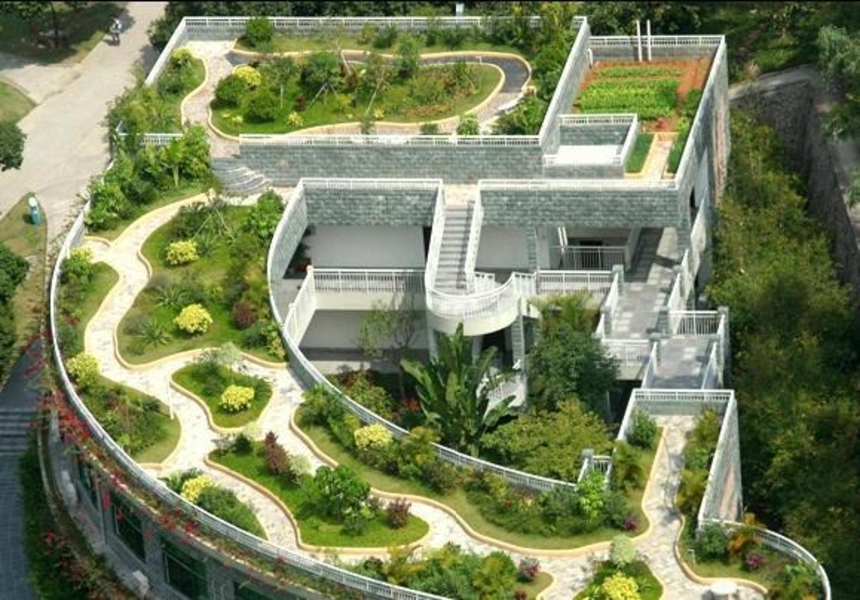
Green roofs: facilities that retain rainwater by covering roof surfaces with soil or using containers. They not only purify rainwater but also reduce pressure on urban drainage systems during heavy rain.
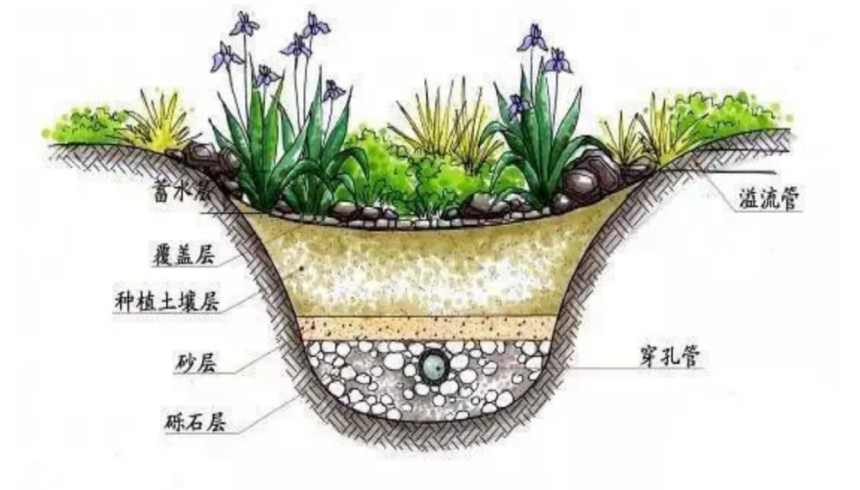
Sunken green spaces: mainly used in green areas around buildings, roads and parking lots, as well as urban green belts. They are facilities located in low-lying zones that retain, infiltrate and purify runoff rainwater through plant, soil and microbial systems.
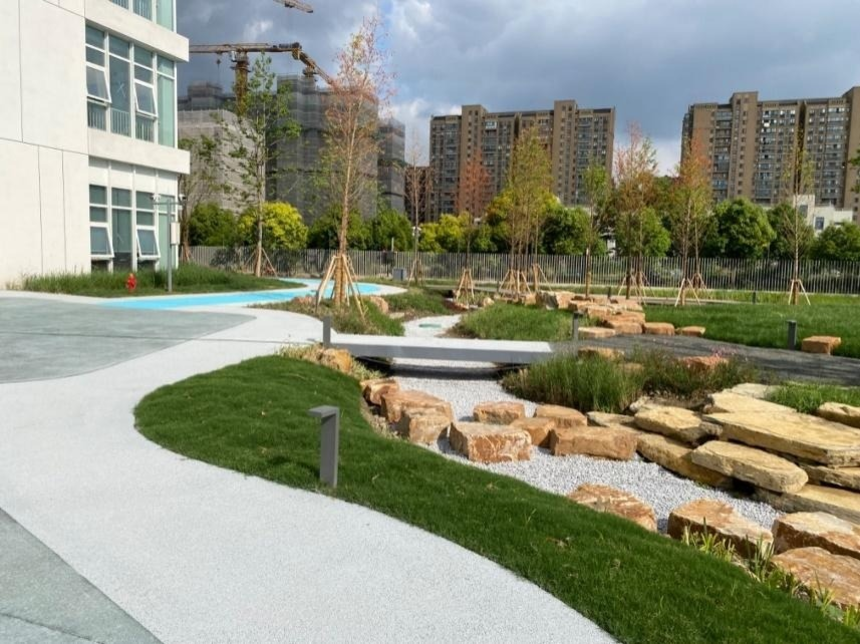
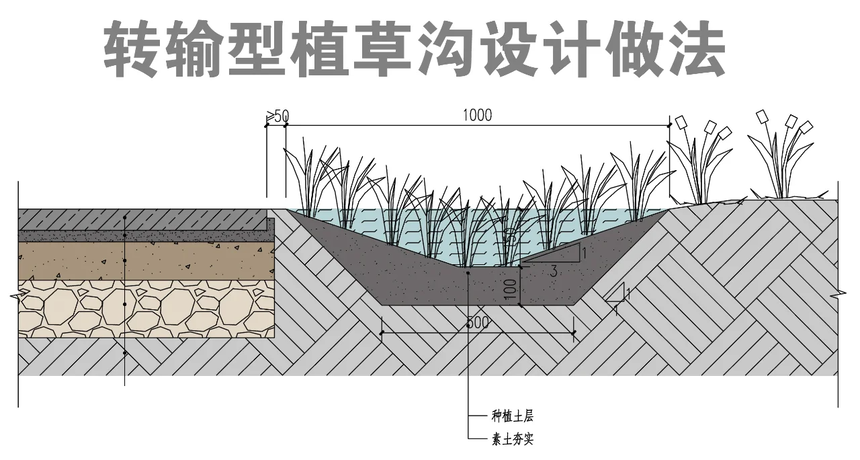
Grassed swales: vegetated surface channels that collect, convey and discharge runoff rainwater while providing a certain degree of rainwater purification. They can be used to connect individual facilities, urban rainwater pipe networks, and excess rainwater runoff discharge systems.In addition to conveyance grassed swales, there are also infiltration-based dry swales and permanently wet swales, which can improve the control of total runoff volume and runoff pollution respectively.
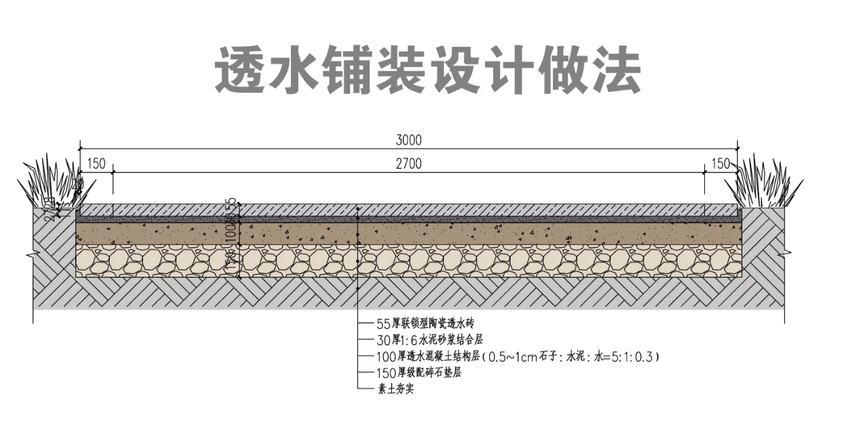
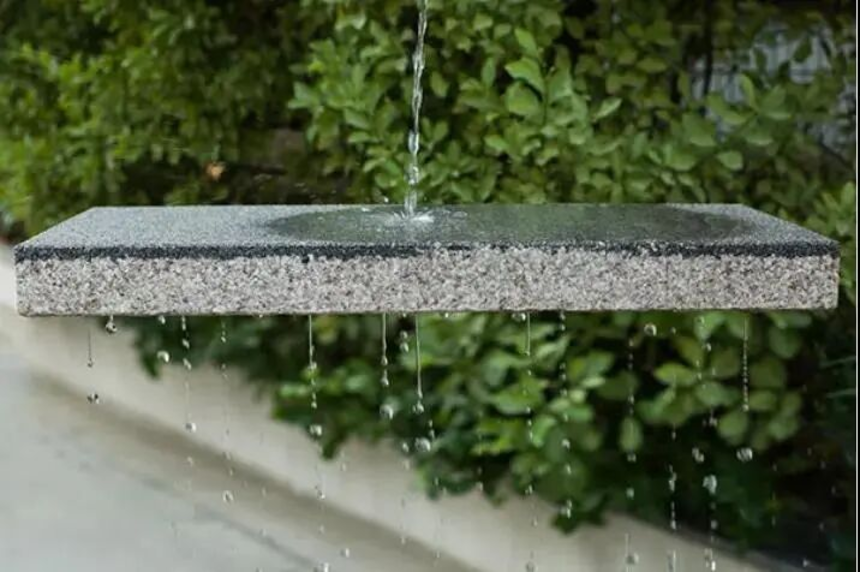
Permeable pavement: During heavy rains, urban surfaces tend to accumulate water because ordinary pavements are impermeable.Bricks used in permeable pavement are densely porous, mimicking the void structure of natural soil, allowing rainwater to drain quickly through these pores and solving waterlogging problems.Permeable pavement also helps reduce peak runoff flow and purify rainwater to a certain extent.
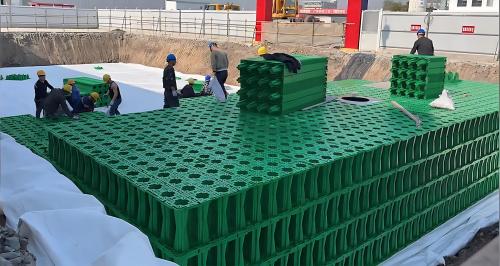
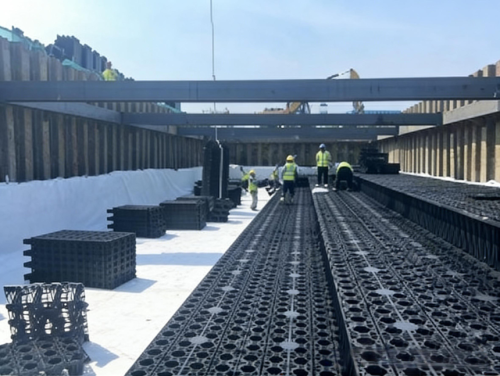
Rainwater harvesting tanks: facilities for collecting, storing and utilizing rainwater, which also help reduce peak runoff flow.They mainly include reinforced concrete tanks, brick and stone masonry tanks, and assembled PP rainwater storage module tanks.Most land-scarce cities use underground closed storage tanks.
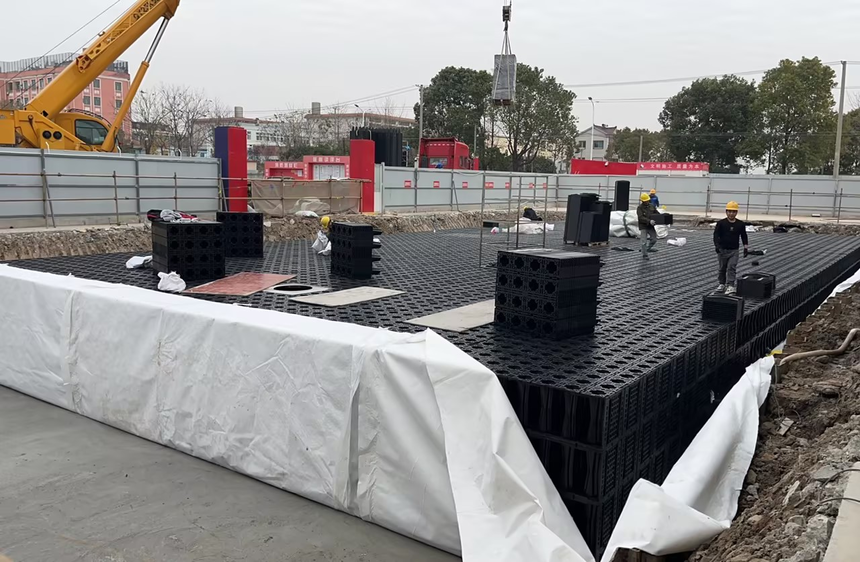
03 Excavation Depth and Elevation of Storage Tanks
Absolute Elevation:An elevation based on a unified national or regional reference plane set as zero.
In China, the average sea level of the Yellow Sea is defined as the zero point of absolute elevation, and all local elevations are measured against this datum. The height difference between any location and the average Yellow Sea level is referred to as its absolute elevation. This standard applies only within China.
Relative Elevation:An elevation system that sets the outdoor ground level as zero, used for elevation marking in building construction drawings.
Yellow Sea Elevation:In 1956, China designated the long-term average sea level of the Yellow Sea (Qingdao) as the unified datum, establishing the country’s first national height system.1985 National Height Datum = 1956 Yellow Sea Elevation − 0.029 m.
The 1985 National Height Datum was officially implemented in May 1987, and the 1956 Yellow Sea Elevation System was abolished at the same time.