


Commercial Rainwater Harvesting: ROI Analysis & Case Studies
20 Sept 2026Commercial Rainwater Harvesting: ROI Analysis & Market Trends
The global rainwater harvesting market generated $951 million in 2024 and is projected to grow at a 6-7% CAGR through 2031. In the Chinese market alone, the sector reached RMB 1.743 billion (approximately $240 million) in 2025. For commercial property developers and facility managers, however, the relevant question is not macro growth. It is whether one specific project delivers measurable financial returns.
This analysis examines commercial rainwater harvesting through the lens of investment return, drawing on case studies from three continents and modelling payback under different water tariff scenarios. Modular plastic rainwater systems now command 35-40% of the global storage market, growing faster than concrete or metal alternatives.
A Five-Variable ROI Framework
Calculating rainwater harvesting ROI requires five inputs. Skipping any one of them produces misleading results.
Variable 1: System investment. Total capital cost includes PP modules (40-50% of budget), excavation and civil works (15-20%), pump station and distribution (8-12%), pretreatment equipment (5-10%), post-treatment (5-8%), piping and electrical (5-8%), membrane and geotextile (5-8%), and smart controls (3-5%).
Variable 2: Annual water savings. Commercial buildings typically offset 20-50% of municipal water consumption with harvested rainwater, depending on collection area, rainfall volume, and non-potable demand profile. Multiply annual harvestable volume (m³) by the local water tariff ($/m³) to obtain annual savings.
Variable 3: Maintenance costs. Budget 1-3% of system capital cost annually for filter replacement, pump service, inspection, and geotextile checks. PP modular systems carry lower maintenance costs than concrete tanks because there are no crack repairs, rebar corrosion issues, or relining requirements.
Variable 4: Regulatory incentives. Many jurisdictions offer financial incentives that improve ROI: stormwater fee reductions in US MS4 communities, BREEAM and LEED certification credits that raise property value, accelerated depreciation for green infrastructure assets, and direct subsidies in some EU and Australian programmes.
Variable 5: Payback period calculation. Simple payback (years) = total system investment / (annual water savings - annual maintenance cost).
For a 50 m³ commercial system costing $28,000 with annual water savings of $4,200 and maintenance of $700 per year, payback = $28,000 / ($4,200 - $700) = 8.0 years.
In high water-tariff cities such as London, Sydney, and San Francisco, payback compresses to 3-5 years. In low-tariff regions, it stretches to 8-12 years.
Three Case Studies from Different Markets
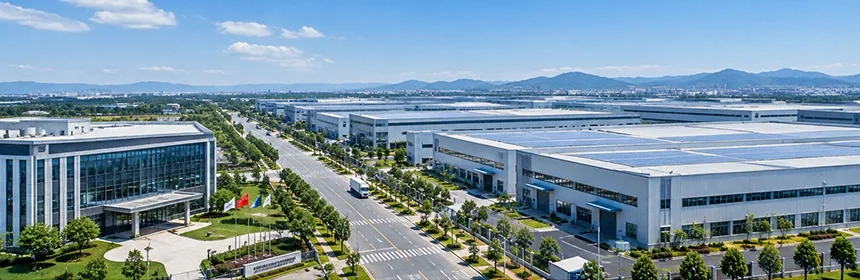
Case 1: Nanjing Industrial Park, China - 500 m³ System
A 500 m³ rainwater harvesting system was installed at an industrial facility in Nanjing to supply landscaping, road washing, and fire-reserve topping water.
| Parameter | Value |
| Storage volume | 500 m³ |
| Total investment | RMB 350,000 (~$48,000) |
| Annual water harvested | 1,200 tonnes |
| Treatment cost | RMB 0.8/tonne (electricity + consumables) |
| Annual savings | RMB 50,000-70,000 |
| Payback period | 5-7 years |
The system uses PP modular storage assembled from Yingyuan Standard 1000 units, installed beneath a landscaped area with no surface footprint impact.
Case 2: Brazilian Shopping Centre - Roof + Parking Collection
A commercial shopping centre in Brazil installed a combined rooftop and parking-lot collection system targeting toilet flushing and air-conditioning cooling tower makeup.
| Parameter | Value |
| Collection area | 4,500 m² (roof + parking) |
| Annual water savings | 30%+ of total consumption |
| Primary uses | Toilet flushing, cooling tower makeup |
| System type | Underground PP modular (150 m³) |
The 30%+ annual water savings exceeded initial projections because the large parking-lot collection area supplemented rooftop harvest during high-intensity tropical storms.
Case 3: US Cities - Rooftop Toilet Flushing
A study across four US cities evaluated rooftop rainwater collection used exclusively for toilet flushing in commercial buildings.
| City | Annual rainfall | Potable water offset | Payback period |
| Seattle | 950 mm | 55-60% | 3-5 years |
| Portland | 940 mm | 50-55% | 4-6 years |
| Denver | 400 mm | 30-35% | 8-10 years |
| Phoenix | 230 mm | 20-25% | 10-12 years |
The correlation between rainfall volume and payback period is clear. Even in arid Phoenix, the system achieved 20-25% potable water reduction, which is meaningful for facilities facing municipal water restrictions during drought periods.
Market Trends Driving Commercial Adoption
Four regulatory and market forces are accelerating commercial rainwater harvesting adoption worldwide.
China's Sponge City mandate. GB 50400 now requires rainwater collection and reuse systems in all new, renovated, and expanded buildings. The Sponge City programme has moved from pilot status to nationwide enforcement, creating guaranteed demand for PP modular storage systems.
US EPA Green Infrastructure push. The EPA classifies rainwater harvesting as a core Green Infrastructure practice. MS4 (Municipal Separate Storm Sewer System) permit holders must implement Low Impact Development to the maximum extent practicable, and rainwater harvesting counts toward compliance.
UK SuDS mandate for major developments. The Flood and Water Management Act 2010 Schedule 3 requires SuDS for developments of 10 or more dwellings or 1,000 m² or more of commercial space. Rainwater harvesting satisfies the reuse tier of the SuDS hierarchy, which is the preferred option.
Middle East water scarcity. The Middle East and Africa region is experiencing more than 20% annual growth in rainwater harvesting demand driven by extreme water scarcity. Dubai's 2025 SuDS strategy and Abu Dhabi's Estidama framework are creating regulatory pull for commercial-scale systems.
Frequently Asked Questions
What is the typical payback period for commercial rainwater harvesting?
Most commercial systems pay back within 3-12 years depending on local water tariffs, rainfall volume, and system scale. High-tariff cities such as London and Sydney cluster at the 3-5 year end, while lower-tariff regions stretch to 8-12 years. The Nanjing industrial park case demonstrated a 5-7 year payback for a 500 m³ system.
Are there government incentives for installing rainwater systems?
Yes. US MS4 communities often offer stormwater fee reductions. UK BREEAM credits increase property value. China's Sponge City programme mandates compliance, which effectively makes rainwater harvesting a regulatory requirement rather than an optional investment. Some Australian states offer direct rebates for commercial rainwater installations.
How much water can a commercial building save with rainwater harvesting?
Commercial buildings typically offset 20-50% of total water consumption with harvested rainwater. The four-city US study found 30-60% potable water replacement for toilet flushing specifically. The exact figure depends on collection area, local rainfall, and the proportion of non-potable demand in the building's water profile.
For component selection and system configuration detail, refer to Yingyuan's complete rainwater harvesting system resources, covering storage sizing, filtration, and heavy-duty load classes.