News


Rainwater Filtration System Guide: Types, Selection, and Maintenance
24 Aug 2026What Is a Rainwater Filtration System? (And Why You Need One)
A rainwater filtration system is the set of components that removes leaves, dirt, and bacteria from your harvested rainwater — before it enters your storage tank, and again before it comes out of your tap. It's not a single filter. Think of it as three lines of defence working together from your roof to your point of use.
Most people underestimate how important filtration is. Poor filtration doesn't just make your water look cloudy. It can wreck your pump (sediment eats away at the impeller and seals), clog your drip irrigation emitters within a single season, and introduce biofilm, scale, and bacteria into your indoor plumbing if you're using the water for toilet flushing or cooling towers.
A well-designed rainwater filtration system works in three stages:
Pre-storage filtration — at the roof and gutter, before water enters the tank
In-tank filtration — managing sediment and water quality inside the tank
Post-storage filtration — at the point of use, just before the water comes out
Each stage deals with a different type of contaminant. Skip or weaken one stage, and the others have to work harder.
Jiangsu Yingyuan Sponge City Technology Co., Ltd. (registered capital 38 million CNY, founded 2018) engineers PP modular rainwater storage systems that work with all three filtration stages. The modules themselves have a 92% void ratio, which means less stagnant water and less biological growth inside the storage zone — a built-in advantage that directly supports your filtration system.

Types of Rainwater Filtration: A Simple Breakdown
Pre-Storage Filtration: Catching the Big Stuff at the Roof
This stage removes the bulk of contaminants before water ever reaches your tank. Done right, it can reduce the load on downstream components by 80–90%.
Leaf screens and gutter guards — the first line of defence. These are stainless steel or PVC mesh with 2–5 mm openings, installed over your gutters or at the top of downpipes. Their only job: stop leaves, twigs, and windblown debris from entering your system.
• Maintenance: brush or rinse every 2–3 months during leaf season
• Cost: $50–200 per downpipe connection
First-flush diverters — often overlooked, but critically important. The first 2–5 mm of any rainfall carries the highest concentration of pollutants: bird droppings, dust, pollen, and decomposing organic matter from your roof. A first-flush diverter isolates that dirty initial flow and sends it to a drain or soakaway, so only the cleaner subsequent rain goes into your tank.
• Typical size: captures 20–50 litres per 100 m² of roof area
• Maintenance: flush the chamber monthly during the wet season
• Cost: $80–300 depending on capacity and automation
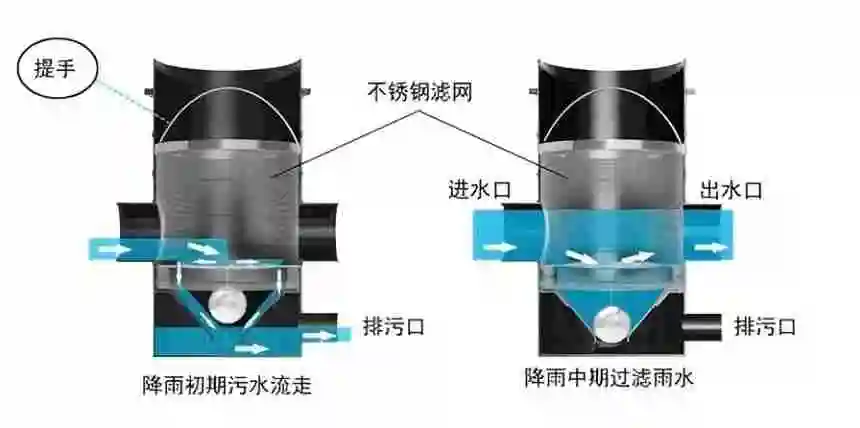
Vortex pre-filters — the highest level of pre-storage filtration. Water enters a cylindrical chamber at an angle, creating a vortex that spins debris outward against a 280-micron stainless steel mesh. Clean water passes through the mesh to your tank, while the concentrated debris falls into a collection sump for easy removal.
• Flow capacity: 3–10 L/s per unit
• Maintenance: inspect and rinse the mesh every 3–6 months
• Cost: $200–600 per unit
• Yingyuan note: Vortex pre-filters are standard on our commercial-scale installations to protect the downstream PP modular storage from fine sediment buildup.
In-Tank Filtration: Keeping Water Clean While It's Stored
Once water is in your tank, three features help maintain quality until you draw it off.
Calming inlets — prevent incoming water from stirring up sediment that has settled at the bottom. Instead of letting the downpipe dump water directly into the tank, a calming inlet directs the flow upward or spreads it across a wide surface, keeping the sediment layer undisturbed. This is especially useful in PP modular systems where the flat base area naturally collects fine particles.
• Maintenance: check the inlet diffuser once a year for blockages
• Cost: $50–150 per inlet assembly
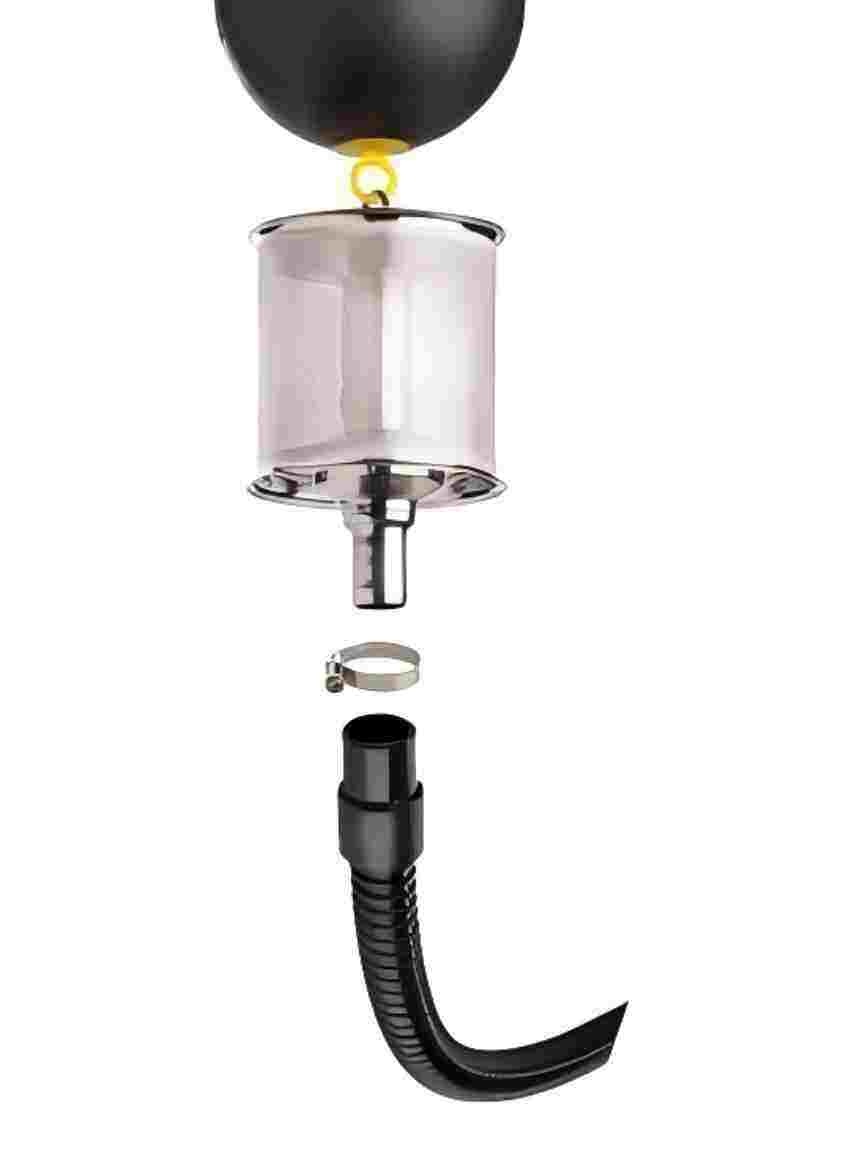
Floating suction — draws water from the cleanest layer, typically 100–200 mm below the surface, where oxygen levels are highest and suspended solids are lowest. The floating arm rises and falls with the water level, always pulling from that optimal depth.
• Mantenimiento: revisar anualmente el mecanismo del flotador y las conexiones de la manguera
• Coste: 150‑400 USD según la geometría del depósito
Sediment traps — collection points at the base of the tank where fine particles settle over time. In a PP modular system, the storage zone sits below the frost line and ground-level thermal cycling (modules can be buried up to 3.5 m deep), so there are fewer convection currents to keep particles suspended. Sediment traps are accessed through an inspection chamber and should be pumped out every 2–3 years.
• Cost: integrated into the tank base design, adds $100–300 to installation
Post-Storage Filtration: Polishing Your Water at the Point of Use
This stage brings your water to the quality required for its specific job.
Cartridge filters (5–50 micron) — in-line pressure filters that remove fine suspended solids. The micron rating determines what gets through: 50-micron cartridges are fine for general outdoor use, while 5-micron cartridges produce water suitable for cooling tower makeup or vehicle washing.
• Typical housing: 20-inch big-blue format
• Maintenance: replace cartridges every 3–6 months, or when differential pressure exceeds 1 bar
• Cost: housing $100–250, cartridges $20–60 per set
UV sterilisation — uses ultraviolet light (254 nm wavelength) to inactivate bacteria and viruses without adding chemicals. Required for any indoor non-potable application where water might contact skin or become aerosolised (toilet flushing, showering in some jurisdictions).
• Typical dosage: 40 mJ/cm²
• Maintenance: replace the UV lamp annually, clean the quartz sleeve every 6 months
• Cost: $1,500–5,000 for commercial flow rates
Activated carbon filters — adsorb dissolved organic compounds that cause odour and taste. Not essential for irrigation or industrial use, but standard for indoor non-potable applications where user acceptance matters.
• Maintenance: replace carbon media every 6–12 months
• Cost: $100–400 per media replacement
Matching Filtration to Your Specific Use
Not every installation needs the same level of filtration. Over-specifying wastes money and adds maintenance. Under-specifying risks equipment damage or regulatory problems.
Use Case | Recommended Filtration | Why? |
Irrigation only | Pre-filter (leaf screen + vortex) + calming inlet | Removes particles large enough to block drip emitters (above 200 microns). No need for disinfection. Underground PP storage blocks sunlight, preventing algae growth. |
Toilet flushing | Pre-filtration + 25-micron cartridge filter + UV | The cartridge stops fine particles that could stain the bowl or clog the cistern. UV ensures safety when water aerosolises during flushing. |
Cooling tower makeup | Pre-filtration + 5-micron cartridge filter + chemical treatment | Cooling towers are sensitive to both particles and dissolved solids. The high void ratio of PP modular storage (92% usable water space) reduces stagnant water and lowers the biological load on the chemical system. |
Vehicle washing | Pre-filtration + 10-micron cartridge filter | Water at this quality dries without leaving visible residue on painted surfaces. |
Note: All Yingyuan PP modules are manufactured and tested to CJ/T 542-2020 heavy-duty standards, verified at the CABR Testing Center — so the storage system itself won't introduce contaminants.
One more thing about underground PP modular storage: With a 50-year design life and installation depths up to 3.5 m, it maintains a stable thermal environment that reduces biological growth pressure on your entire filtration system. And because sediment buildup on module bases can create uneven load distribution, proper filtration also protects your tank's structural performance over the long term.
Frequently Asked Questions
Q:How often should rainwater filters be cleaned?
A:Cleaning frequency depends on the filter type and catchment environment. Leaf screens and gutter guards need attention every 2-3 months during leaf-fall season, or monthly if overhanging trees are present. Vortex pre-filters with 280-micron mesh typically require inspection and rinsing every 3-6 months. Cartridge filters downstream of the tank should be replaced every 3-6 months, or sooner if the differential pressure gauge indicates clogging. A detailed seasonal maintenance schedule is outlined in our rainwater harvesting maintenance checklist.
Q:Does rainwater need treatment for garden use?
A: For most garden irrigation, basic pre-storage filtration (leaf screen and vortex filter) plus a calming inlet is adequate. Rainwater is naturally soft and slightly acidic, which most plants prefer over treated municipal water. Treatment beyond pre-filtration is only necessary if the catchment surface introduces specific contaminants — for example, lead flashing on older buildings or treated timber in close proximity to the roof catchment.
Q: What is the difference between filtration and purification?
A: Filtration removes physical particles — debris, sediment, and some microorganisms trapped by mesh or media. Purification goes further, removing or neutralising dissolved chemicals, heavy metals, and all viable pathogens. A rainwater filtration system prepares water for non-potable uses. Achieving potable (drinking water) quality requires additional purification steps including reverse osmosis or distillation, along with regulatory approval that varies significantly by jurisdiction.
Q: How do you prevent rainwater filters from freezing in cold climates?
A: In regions where temperatures drop below 0°C, pre-storage filters (particularly vortex units and first-flush diverters) are the vulnerable components. Solutions include installing filters below frost line inside an inspection pit, using heated filter housings with a low-wattage trace heater, or fitting isolation valves that allow the filter to be drained and bypassed during prolonged freezing periods. Underground PP modular storage itself is inherently frost-resistant — the maximum cover depth of 3.5 m places the water storage well below typical frost penetration, and the system's rainwater harvesting components can be specified to match local climate conditions.
Selecting the right filtration system depends on your catchment type, storage configuration, and intended water use. Yingyuan's Standard 1000 module integrates with all three filtration stages described above, and our engineering team provides site-specific filtration specifications as part of every project scope. For a broader overview of how filtration fits within a complete harvesting system, see our guide to rainwater harvesting system components.
Related Reading
Pre-treatment is where most systems fail first — our filtration within our rainwater harvesting system guide, PP modular tanks designed for filtration integration, rainwater harvesting system components breakdown, rainwater recovery system efficiency guide and Get a Quote.