


Rainwater Harvesting System Components: A Complete Buyer's Guide
15 Sept 2026Rainwater Harvesting System Components: A Complete Buyer's Guide
Sourcing the right components is where most rainwater harvesting projects succeed or fail. Buyers frequently encounter two problems: missing an essential component that causes downstream water quality issues, or specifying incompatible parts that void warranty coverage or reduce system efficiency.
This guide breaks down the eight essential components in a commercial rainwater harvesting system, with specification parameters, price ranges, and compatibility notes for each.
The Eight Essential Components
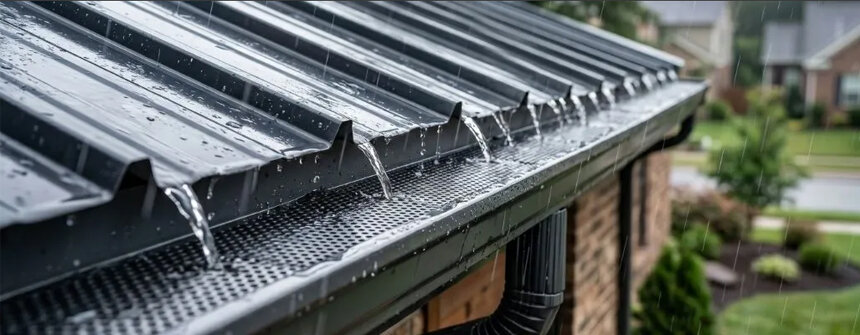
1. Collection Surface (Roof / Gutter System)
The collection surface is the starting point of every system. Its area determines the maximum harvestable volume, and its material affects the filtration requirements downstream.
Key specs:
Calculate effective area as the horizontal footprint (not sloped surface)
Metal roofs produce the cleanest runoff; asphalt shingles shed granules that require more aggressive pre-filtration
Gutter sizing: 150 mm half-round per 50 m² of roof (minimum)
Minimum gutter fall: 1:500 (2 mm per metre) toward the downpipe
What to look for: Stainless steel or aluminium gutters with leaf guards. Avoid PVC in commercial installations — UV degradation causes cracking within 8–12 years.
2. Leaf Screen / Debris Interceptor
A mesh screen fitted at each gutter outlet or downpipe entry point, preventing leaves, twigs, and insects from entering the conveyance pipework.
Key specs:
Mesh aperture: 2–3 mm (stainless steel preferred)
Self-cleaning design: dome-shaped screens shed debris by gravity
Flow capacity: must match or exceed gutter discharge rate during peak rainfall (design for 150 mm/hr intensity)
Price range: 15–60 per unit depending on material and size.
3. First-Flush Diverter (2–5 mm Rainfall)
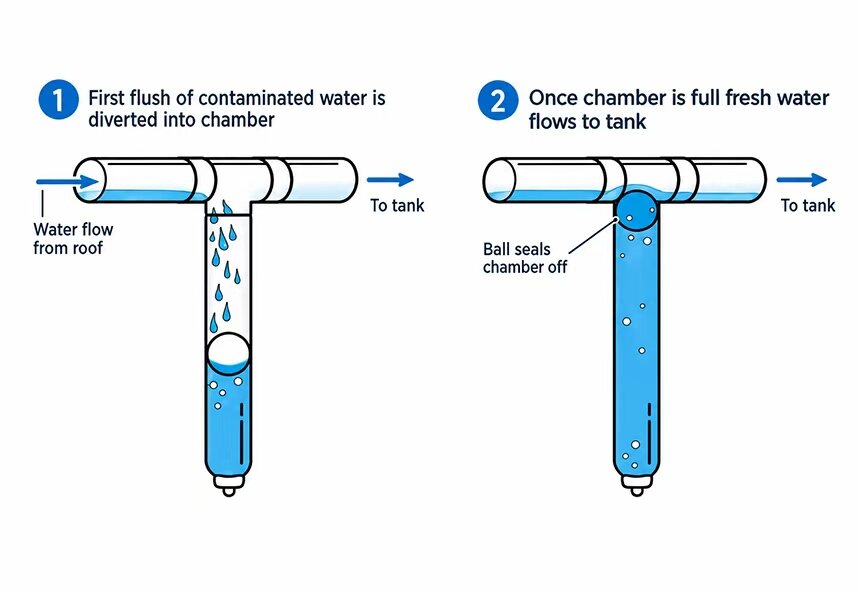
The first 2–5 mm of any rainfall event carries the highest concentration of pollutants — bird droppings, pollen, dust, dissolved organics from the collection surface . A first-flush diverter automatically captures and discards this initial volume.
Key specs:
Diversion volume: 2–5 mm of rainfall × collection area
Type: vortex (no moving parts, self-cleaning) or standpipe (simple, manual drain)
Drain rate: slow bleed valve resets the diverter between events (4–6 hour reset time typical)
What to look for: Vortex-type diverters are preferred for commercial installations because they require no manual intervention and have no mechanical parts to fail.
4. Pre-Storage Filter (Mesh or Vortex)
After first-flush diversion, water passes through a pre-storage filter that removes particles down to 280 microns before entering the tank. This protects the pump and downstream treatment equipment from sediment damage.
Key specs:
Filtration rating: 280–500 microns
Type options: mesh cartridge (lower cost, more frequent replacement) or vortex (higher cost, self-cleaning)
Flow rate: must handle peak gutter discharge without bypassing
Price range: 200–1,500 depending on flow rate and automation level.
5. PP Modular Storage Crate (Core Component)
The storage module is the system's heart. Yingyuan's PP modules are manufactured from PPB (block copolymer polypropylene), an engineering-grade plastic chosen for impact resistance, chemical inertness, and long-term creep performance.
Key specs:
Void ratio: 92% — nearly the entire installed volume is usable water storage
Load capacity: 45–85+ tonnes/m² depending on model
Design life: 50+ years
Dimensions: 1000×500×200 mm (1000-EW and Hurricane HD) or 1200×600×300 mm (1200-SD)
Assembly: snap-fit interlocking, no heavy machinery required
Product line overview:
| Model | Dimensions | Compressive Strength | Best Application |
| Hurricane HD | 1000×500×200 mm | >85 tonnes/m² | Heavy-duty: highways, car parks |
| 1000-EW | 1000×500×200 mm | >70 tonnes/m² | General commercial |
| 1200-SD | 1200×600×300 mm | >85 tonnes/m² | Large-scale projects |
| 1200-EW | 1200×600×300 mm | >45 tonnes/m² | Budget-friendly, light-duty |
Note: 1 tonne/m² ≈ 9.8 kPa (0.0098 MPa). Equivalent values: >85 tonnes/m² ≈ 0.83 MPa, >70 tonnes/m² ≈ 0.69 MPa, >45 tonnes/m² ≈ 0.44 MPa. European and engineering specifications typically quote compressive strength in MPa or kN/m².
All models carry CNAS-accredited test reports. Modules ship efficiently: 1,200+ units per 40HQ container.
6. Pump Station (Submersible or External)
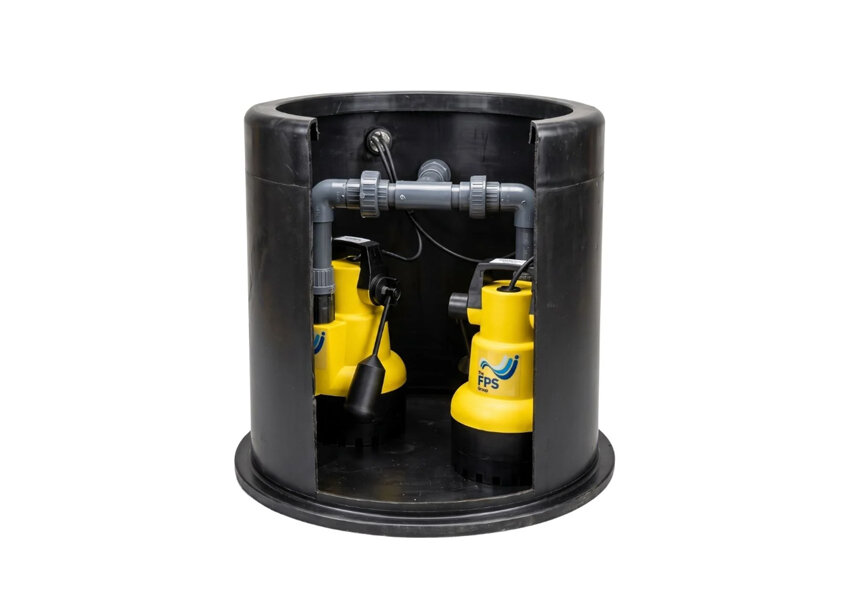
The pump moves stored water from the module array to the point of use. Submersible pumps sit inside the tank; external pumps sit in an adjacent dry chamber.
Key specs:
Head calculation: depth of water + height to delivery point + friction losses in pipework
Flow rate: sized to meet peak demand (e.g., simultaneous toilet flushing across a floor)
Materials: stainless steel wetted parts for corrosion resistance
Redundancy: commercial buildings should specify twin-pump configuration with automatic failover
Price range: 800–5,000 depending on head, flow rate, and redundancy configuration.
7. Post-Storage Treatment (UV / Chemical)
For non-potable applications (toilet flushing, irrigation), UV sterilisation at 25 mJ/cm² dose is typically sufficient. Potable-grade systems require additional chlorination, carbon filtration, and in some jurisdictions, continuous residual chlorine monitoring.
Key specs:
UV dose: 25 mJ/cm² for non-potable, 40+ mJ/cm² for potable
Lamp life: 9,000–12,000 hours (12–18 months continuous operation)
Pre-filtration requirement: water must be < 5 NTU turbidity for UV to be effective
Price range: 500–3,000 depending on flow rate and treatment level.
8. Smart Controller with IoT Sensors
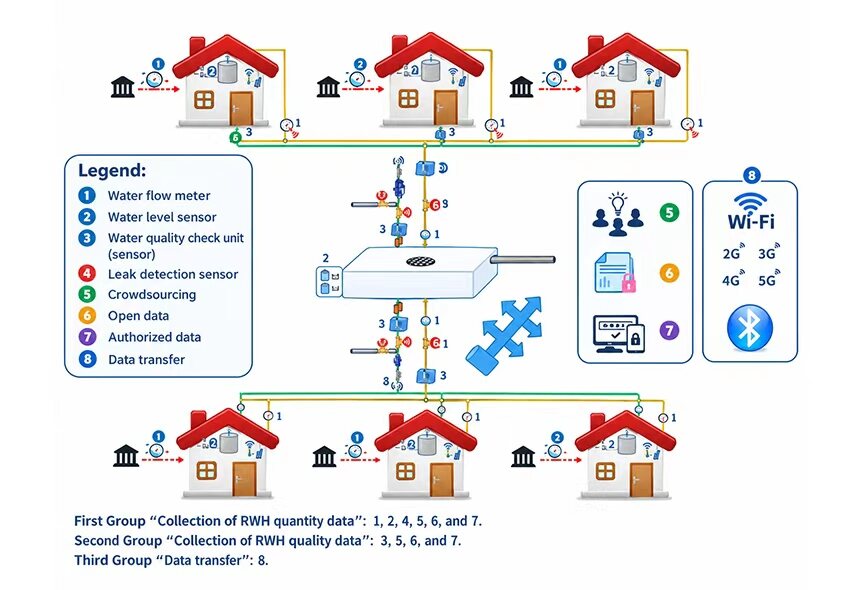
Modern commercial systems benefit from intelligent control that monitors tank level, weather forecasts, and pump status in real time . Advanced controllers can pre-emptively release stored water before a predicted storm to maximise capture capacity, or throttle pump output during drought periods to extend supply.
Key specs:
Connectivity: Wi-Fi / 4G / Ethernet
Sensors: ultrasonic level, flow meter, rainfall gauge, temperature
Integration: building management system (BMS) protocol compatibility (BACnet, Modbus)
Price range: 1,000–5,000 depending on sensor count and BMS integration complexity.
Component Compatibility Guide
Mixing components from different suppliers is common, but three compatibility pitfalls cause frequent failures.
⚠️ Pipe diameter matching
Inlet and outlet pipes must be sized to balance flow rates. An oversized inlet that delivers water faster than the pre-filter can process causes bypass and sediment entry into the tank. Standard practice: match inlet pipe diameter to the pre-filter's rated flow capacity, not to the gutter discharge rate.
⚠️ Geotextile specification
PP modules must be wrapped in non-woven geotextile (200 g/m² minimum weight) for infiltration systems, or 0.5 mm PE geomembrane for sealed storage systems. Using a woven geotextile (designed for reinforcement, not filtration) can block infiltration and cause waterlogging around the module array.
⚠️ Pump sizing relative to storage depth
Submersible pumps must be rated for the maximum water depth in the module array plus the delivery head. A common error is specifying a pump rated for the delivery head only, neglecting the 1.5–3 m of submergence head. Always add submergence depth to the total dynamic head calculation.
Frequently Asked Questions
What is the most important component of a rainwater harvesting system?
The PP modular storage crate is the system's core — it determines total capacity, structural integrity, and lifespan. However, the first-flush diverter has an outsized impact on water quality: skipping it allows the most polluted water to enter the tank, accelerating sediment build-up and increasing maintenance frequency.
Do I need a first-flush diverter for my system?
Yes, for any system where water quality matters. The first 2–5 mm of rainfall carries the highest pollutant load from the collection surface . In irrigation-only systems with no water quality requirement, a first-flush diverter is optional but still recommended to reduce sediment accumulation in the tank.
Can I use any pump with PP modular storage?
The pump must be sized for the total dynamic head (submergence depth + delivery height + pipe friction losses) and constructed from materials compatible with stored rainwater (stainless steel or food-grade plastic wetted parts). Submersible pumps designed for clean water service are suitable; sewage pumps or sump pumps with large-particle impellers are not recommended.
What maintenance do system components need?
Annual inspection of all components is the baseline. First-flush diverters should be checked quarterly and after major storms. Pre-filters need cartridge replacement every 2–5 years. UV lamps require annual replacement. Pumps should be serviced every 3–5 years. PP modules themselves require only periodic inspection via the access well.
This article is part of our complete rainwater harvesting system guide . For installation instructions, see our step-by-step installation guide. For detailed filtration options, see our filtration system guide.For module specifications, explore the 1000-EW storage module.