


Yingyuan Sponge City – Rainwater harvesting system
26 Nov 2024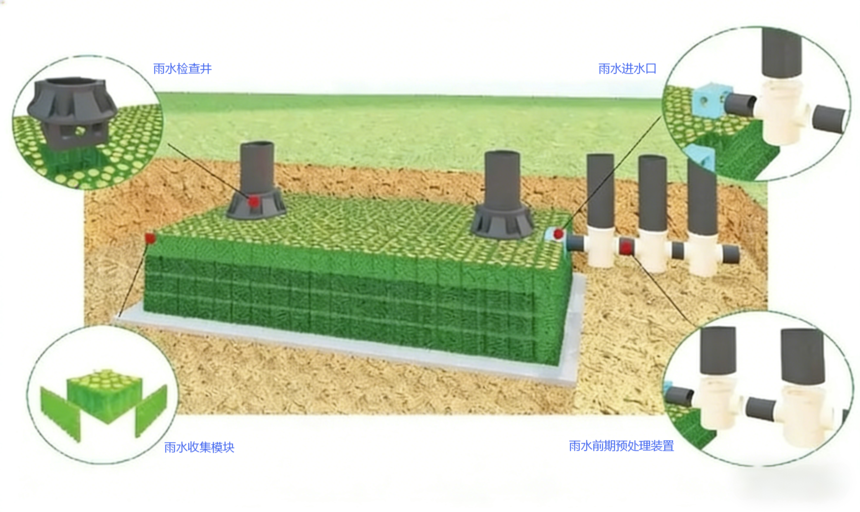
01: Definition
02: System Classification
03: Advantages
04: Concept Overview
Definition
The United States Environmental Protection Agency (EPA) defines a rainwater harvesting system as “a technical system that collects rainwater from impervious surfaces and stores it for subsequent use”. The entire process is divided into five stages: rainwater collection via drainage pipes → pollutant interception and first‑flush diversion → water storage in polypropylene rainwater harvesting modules → filtration and disinfection → purification and reuse.
System Classification
1. Based on the source of rainwater, systems are broadly divided into two categories:
Rooftop rainwater
2. It is relatively clean, with few impurities, sediments and other pollutants. After first‑flush diversion and simple filtration, it can be fed directly into the storage system for further treatment.
Surface‑runoff rainwater
It contains large quantities of impurities and complex‑composition pollutants. First‑flush diversion, coarse filtration and sedimentation are required before the water enters the storage system.
Advantages

1. It can effectively control surface‑runoff peaks and cut pollutant loads, easing flood‑control pressure on urban drainage networks. In addition, rainwater harvesting and reuse recharge underground aquifers, regulate the regional microclimate, and improve the living environment for urban residents.
2. Compared with other water‑supply systems, it features lower costs, simple operation and light‑duty routine maintenance.
3. It significantly lowers water intake from the municipal water supply network and drinking‑water expenses; cuts drainage‑network operation and maintenance costs caused by excessive runoff; reduces expenditure on water‑pollution control; minimizes flood‑related losses and boosts relevant state tax revenue, delivering substantial economic benefits.
4. It effectively raises public awareness of water conservation and rain‑resource utilization; mitigates urban water‑logging risks and supports residents’ daily travel and routines.
Conceptual Popular Explanation
Urban Rainwater Harvesting System: Among all urban rainwater management and utilization measures, the Rainwater Harvesting System (RWHS) is one of the key technologies for addressing community‑level water scarcity and effectively reducing surface runoff.
In urban areas, the RWHS collects, stores and treats rainwater from rooftops, terraces, courtyards and other impermeable building surfaces for applications such as toilet flushing and garden irrigation. Its purpose is to cut consumption of potable water supplied by municipal water distribution networks.