News


What Is SuDS? Complete Guide to Sustainable Drainage
22 Oct 2026What Is SuDS?
SuDS stands for Sustainable Drainage Systems — an approach to managing rainwater that replicates natural drainage processes as closely as possible. Rather than channelling stormwater into pipes and sewers at maximum speed, SuDS slows, stores, treats, and reuses runoff at or near the point where rain falls. The result is a drainage strategy that reduces flood risk, improves water quality, and delivers measurable environmental benefits.
The UK SuDS National Standards require systems to manage the 1% annual exceedance probability (AEP) extreme rainfall event, intercept the first 5 mm of daily rainfall, and follow a strict drainage hierarchy that prioritises reuse, then infiltration, then controlled discharge to a watercourse, with discharge to sewer treated as the last resort. In England, Schedule 3 of the Flood and Water Management Act 2010 makes SuDS mandatory for major developments, with the Sustainable Drainage Approving Body (SAB) overseeing compliance — a requirement that was further strengthened in 2024. Design your scheme to these two benchmarks from day one and the SAB submission should clear on the first pass, rather than coming back for redesign.
SuDS is not a single product or technique. It encompasses a wide range of surface and underground measures, from permeable paving and rain gardens to underground geocellular attenuation tanks. The term is sometimes used interchangeably with LID (Low Impact Development) in the United States or BMPs (Best Management Practices), but the UK framework is distinct in its legislative structure and the central role of the SAB approval process.
For civil engineers, landscape architects, and planning consultants working on new developments or major refurbishments, understanding the SuDS framework is now essential — not optional. The Environmental Improvement Plan 2025 has further tightened SuDS requirements and integrated them with Biodiversity Net Gain (BNG) obligations, meaning that drainage design is now inseparable from wider site ecology.
SuDS Classification: Source, Site, and Regional Control
SuDS measures fall into three tiers based on where in the drainage catchment they operate. This hierarchy — often called the SuDS management train — ensures that runoff is managed as close to its origin as practicable, with each successive tier providing additional capacity and treatment.
Source Control
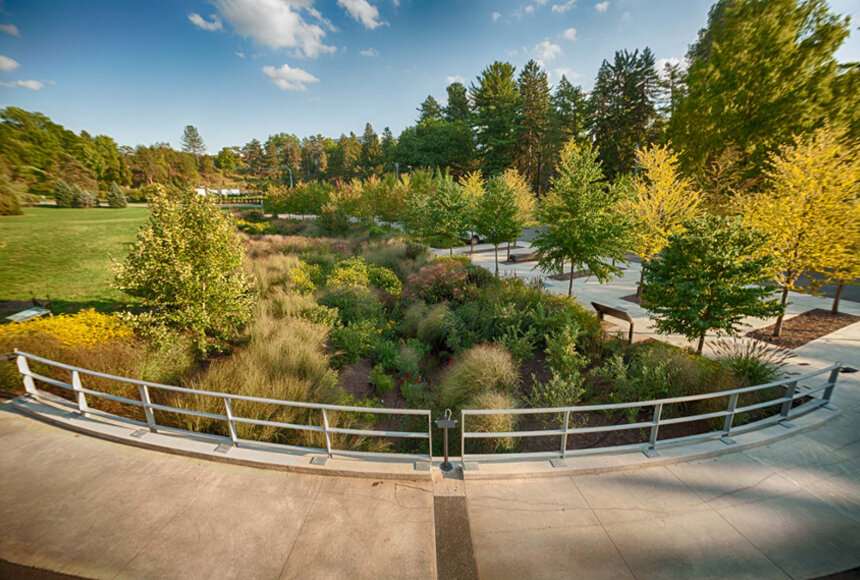
Source control measures intercept rainfall at or very near the point where it lands. Their purpose is to reduce the volume of water entering the drainage system in the first place, and to treat the "first flush" — the initial wave of runoff that carries the highest pollutant load.
Green roofs intercept between 50% and 70% of rainfall on building rooftops, with Mediterranean climate studies recording interception rates of 40% to 65% depending on substrate depth and planting. Rainwater harvesting tanks capture roof runoff for reuse in irrigation, toilet flushing, or industrial processes, reducing both discharge volume and mains water demand. At the source level, permeable paving can reduce surface runoff by 60% to 80% while removing 70% to 90% of suspended solids and 50% to 70% of total phosphorus from the water that does pass through. The more of this source control your scheme adopts, the smaller the attenuation volume you need to store and the smaller the pipe diameters your downstream network can be sized to.
Site Control
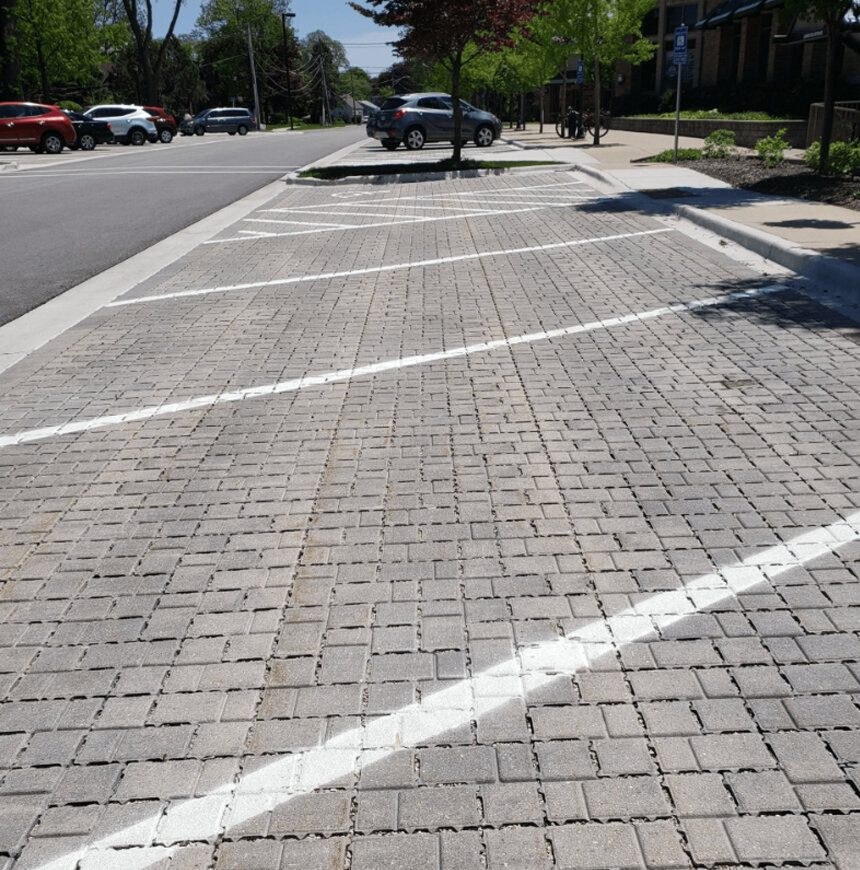
Site-level SuDS manages runoff that has already left individual plots and is flowing across the development. These systems provide storage, conveyance, and additional treatment.
Bioswales are shallow, vegetated channels that slow and filter runoff as it moves between areas of hardstanding and downstream storage. Filter strips operate on a similar principle but with a broader, shallower profile suited to sheet flow from car parks or roads. Soakaway crates — modular geocellular units — store excess runoff underground and release it slowly into surrounding soil. These crates are the most widely used underground SuDS component for developments with limited surface area. Third-generation PP modules achieve bearing capacities of up to 80 t/m² with void ratios exceeding 92%, making them suitable for installation beneath car parks and access roads. So you can put the storage under the car park and access road your scheme already needs, keeping it off the open ground and leaving more of your site available for saleable area.
Regional Control
Regional-scale SuDS handles combined runoff from multiple sites or an entire catchment. Detention basins are shallow, landscaped depressions that store flood volumes during major storms and release them at a controlled rate. Constructed wetlands provide both long-term storage and biological treatment of runoff, removing fine sediments and dissolved pollutants through natural processes. Flood storage areas can be integrated into public open space — Rotterdam's sunken plazas, for example, serve as recreational areas in dry weather and temporary flood storage during heavy rainfall, reflecting the Dutch philosophy of "living with water".
Across all three tiers, combined LID measures have been shown to reduce annual runoff volumes by 30% to 50% and peak flows by 40% to 60%. This layered approach means that no single component bears the entire drainage burden, producing a more resilient and maintainable system. With those reductions banked, your downstream pipework and attenuation tank can be specified at a smaller size, cutting both material cost and excavation depth.
Six Advantages of SuDS
1. Flood Risk Reduction
Combined SuDS measures reduce annual runoff by 30% to 50% and peak flows by 40% to 60%. In a country where the 2007 floods caused over GBP 3 billion in damage and displaced residents from 55,000 homes, this is not an abstract benefit — it is a direct response to a documented and growing risk. The damage bill from a single storm runs into billions; the incremental cost of designing SuDS into your scheme is a fraction of that, which makes the spend easy to defend to your board.
2. Water Quality Improvement
Permeable paving alone removes 70% to 90% of suspended solids and 50% to 70% of total phosphorus from runoff. When SuDS components are arranged in a management train, each stage adds further treatment, so that water reaching a receiving watercourse has passed through multiple filtration and biological processes. Cleaner water at the outlet means your downstream treatment stages and the number of silt-clearance visits can both be reduced.
3. Water Conservation and Reuse
Rainwater harvesting systems capture roof and surface runoff for non-potable uses such as irrigation, vehicle washing, and toilet flushing. In agricultural settings, harvested stormwater supports crop irrigation and livestock operations, reducing dependence on mains supply or licensed abstractions. This reuse-first approach sits at the top of the UK drainage hierarchy.
4. Biodiversity Enhancement
Wetlands, rain gardens, bioswales, and green roofs all create habitat for invertebrates, amphibians, and birds. The Environmental Improvement Plan 2025 now integrates SuDS design with Biodiversity Net Gain (BNG) requirements, meaning that a well-designed SuDS scheme can contribute directly to the 10% BNG uplift that planning authorities demand. On a tight site, combining the BNG habitat area with your drainage features lets you hit the 10% uplift and the drainage requirement on the same patch of ground, saving land you would otherwise lose.
5. Climate Resilience
The SuDS drainage hierarchy — reuse, infiltration, watercourse, sewer — builds resilience by reducing dependence on energy-intensive wastewater treatment and ensuring that systems can adapt to increasingly intense rainfall events driven by climate change. Decentralised stormwater management, as demonstrated in Berlin's zero-discharge commercial districts, shows that entire neighbourhoods can function without connection to the municipal sewer for stormwater.
6. Long-Term Cost Savings
SuDS installations typically cost 10% to 20% more upfront than conventional piped drainage, but long-term maintenance costs run 30% to 50% lower. When co-benefits such as water quality improvement, biodiversity gains, and urban cooling are factored in, the whole-life cost argument for SuDS is strong. PP modular systems with a 50-year design life further strengthen this calculation. Developers also benefit from faster planning approval when a compliant SuDS scheme is submitted at the outline stage. The result is a lower whole-life cost, and if you bring the compliant scheme forward at the outline stage you avoid the redesign cycle that eats into your programme.
Frequently Asked Questions
Is SuDS mandatory in the UK?
In England, Schedule 3 of the Flood and Water Management Act 2010 requires SuDS for major developments, with SAB (Sustainable Drainage Approving Body) approval needed before construction begins. The 2024 legislative updates further strengthened this requirement. Scotland has enforced mandatory SuDS since the 2007 Flood Act and maintains the strictest SuDS framework in the UK, with local authorities responsible for long-term maintenance of adopted systems. In Wales, full implementation has been in place since 2015.
How much does SuDS cost compared to traditional drainage?
Initial capital expenditure for SuDS is typically 10% to 20% higher than conventional piped drainage, but lifecycle maintenance costs are 30% to 50% lower. When water quality improvements, biodiversity gains, urban cooling, and reduced sewer charging are included, the whole-life value of SuDS significantly outperforms traditional infrastructure. Set the extra 10% to 20% upfront against the 30% to 50% you save on maintenance each year, and the higher capital figure is paid back within the early years of operation, after which your maintenance budget stays lower for the rest of the asset's life.
Can SuDS handle extreme rainfall events?
Yes. UK SuDS National Standards require systems to manage the 1% AEP (1 in 100 year) extreme rainfall event, and designers should incorporate a freeboard allowance of 150 mm to 300 mm as an additional safety margin. Geocellular attenuation tanks rated for vertical pressures of 35 to 70 tonnes and above can be installed beneath car parks and roads, handling both structural loading and hydraulic demand. That lets you place the storage under the car parks and roads the scheme already includes, so the volume is handled without taking up additional land.
Are SuDS suitable for agricultural and rural applications?
SuDS measures including detention basins, constructed wetlands, and rainwater harvesting tanks are widely used in agricultural settings. Harvested runoff can be reused for crop irrigation, livestock watering, and yard washing, reducing reliance on mains water or licensed abstractions. Agricultural SuDS schemes also contribute to nutrient management by intercepting and treating field runoff before it reaches watercourses.
This article is part of our complete SuDS Solutions: The Complete Guide to Sustainable Drainage Systems, which covers legislation, attenuation sizing and product selection in greater depth.
Looking to design a SuDS scheme? Read our guide to SuDS Design Principles for infiltration, attenuation, and water quality calculations, or explore SuDS Compliant Products to find the right system for your site. For underground attenuation solutions, see our geocellular attenuation tank range. For the reuse side of the drainage hierarchy, our rainwater recovery system guide covers maximising non-potable reuse.