News


Rainwater Drainage Systems: From Roof to Reuse
20 Nov 2026Rainwater Drainage Systems: From Roof to Reuse
A rainwater drainage system is the chain of parts that moves rain off the roof and across the lot to a lawful outlet. Gutters catch it, downspouts drop it, drains carry it, and a dispersal or storage unit finishes the job. Leave out any link and the water chooses its own path — across the patio, into the basement, or toward the neighbor's fence. This page walks the full drainage path and shows where each component earns its place.
The Drainage Path: From Roof to Outlet
Follow one drop of rain through a complete rain drainage system and the route looks like this:
1. Gutters catch the sheet of water leaving the roof edge and feed it sideways to the outlets.
2. Downspouts drop that water to grade — the vertical legs of the system.
3. Surface drains and channels collect what lands on paving, so it never ponds against the house.
4. Pipes carry the combined flow under the lot toward its destination.
5. The outlet is where the system hands the water over: a dispersal unit, a storage tank, a soak-in point, or a municipal connection where one is lawful.
A rainwater drainage system for home use is just this chain at small scale, and the first two links are already on the house. Gutter capacity sets the ceiling for everything downstream — a roof that fills its gutters in one cloudburst will find the weak link below them. Most home drainage failures are not missing parts. They are undersized gutters, a downspout dumping at the foundation, or a pipe with nowhere lawful to end.
The destination deserves as much attention as the pipes. Drainage only moves water; the unit at the end decides whether the water soaks in, gets stored, or leaves the site. That choice decides whether drainage reads as a cost or as the first stage of collection. The system-level view sits on the rainwater harvesting system pillar page.
Rainwater Dispersal Cells: Types and Examples
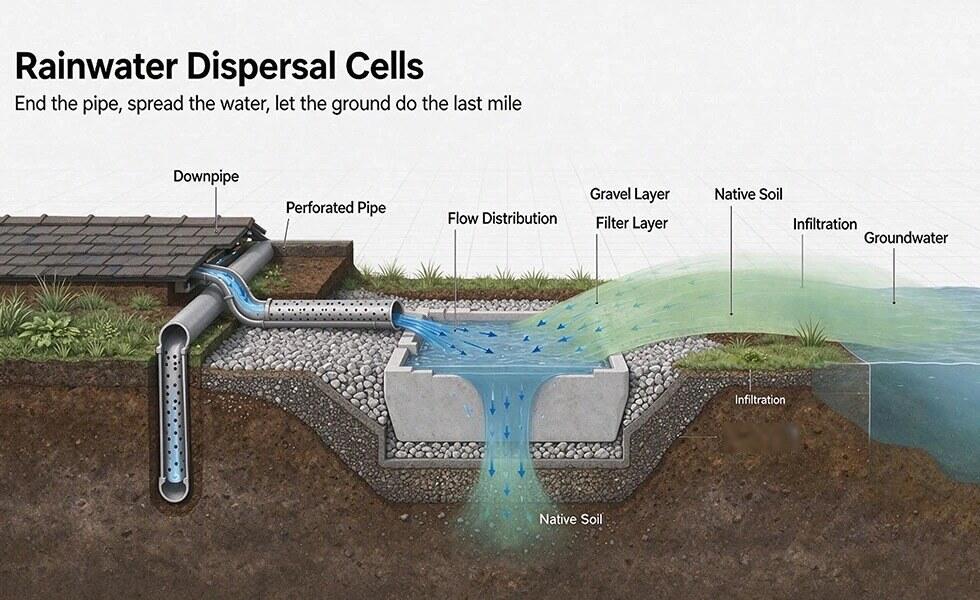
Dispersal cells are buried units that spread runoff into the ground over a wide area instead of releasing it at one point. They sit at the end of the drainage path and turn a concentrated pipe flow into a slow, wide soak.
Common types of rainwater dispersal cells include:
• Infiltration trenches — a stone-filled line that lets water weep into the soil along its length.
• Soak-in crate fields — open-wrapped modular crates that hold the surge and release it into native soil.
• Dispersion pads — shallow gravel beds that spread flow across a permeable surface.
• Dry wells — a vertical pit that receives concentrated flow and disperses it below grade.
Real-world examples are easy to spot once you know the pattern. A suburban front yard takes the downspouts of a pitched roof into a shallow trench line. A commercial parking edge bleeds runoff into a planted basin at the curb. A courtyard drains to a crate field hidden under the paving. Each is the same idea at different scale — end the pipe, spread the water, let the ground do the last mile.
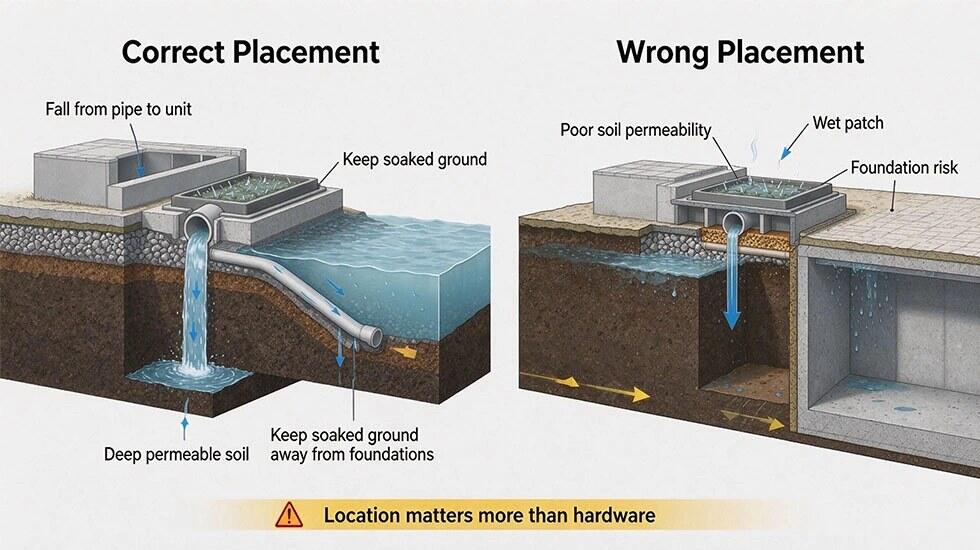
Sitting matters more than shopping when a dispersal unit is specified. The cells need fall from the pipe to the unit and soil that absorbs at depth. The location must keep the soaked ground away from foundations. A unit in the wrong place is a wet patch with good hardware inside it.
One legality note belongs here, because drainage ends have consequences. Runoff directed across a property line, onto a public footway, or into a sanitary connection can breach local drainage rules. The fix is always at the end of the pipe, not in it. The lawful outlet is part of the system design, not a detail for installation day.
Rain drainage systems share one more trait: they are judged on their worst day. A network that performs in a drizzle and fails in a downpour has failed. Size each link for the storm, not for the average, and the dry days take care of themselves.
Where the soil drinks freely, dispersal is the cheapest lawful outlet a site can have. Where it does not, the same cells get lined and become storage — which is a different job with different hardware.
Drainage vs Storage: Who Does What
Drainage moves water; storage keeps it. The two meet at the end of the pipe, and choosing the terminal unit is a design decision, not a plumbing one. Settle the terminal unit first and the rest of the design usually follows from it. Pipe sizes, fall, and access all serve that one choice.
| Terminal unit | Duty | Hardware |
|---|---|---|
| Dispersal cells | Soak the water into native soil | Trenches, crate fields, dry wells |
| Storage tank | Hold the water for reuse | A rainwater harvesting tank sized to the roof |
| Infiltration system | Percolate treated flow to groundwater | Dedicated infiltration hardware |
Note on the storage row: structural crate modules serve both the dispersal and the storage duty, and only the wrap changes between them. The distinction is laid out on the drainage crates page. The collection-side equipment that pairs with stored water sits on the residential rainwater collection systems page. For the soak-it-into-the-ground option as a product, the infiltration system page carries the dedicated line.
Keeping the Path Clear
A drainage system is only as good as its most clogged link. Two habits carry most of the maintenance. Gutters and channel grates get cleared each autumn, before the first storm loads them with leaves. And every terminal unit keeps its access — a grate you can lift, a chamber you can look into, a trench mouth you can rake clean. Ten minutes with a ladder and a rake each autumn is the whole program. Water that cannot enter the system does not care how well the rest of it was built.
Frequently Asked Questions
What is a bioswale?
A bioswale is a gently sloped, planted channel that slows runoff and filters it through vegetation and soil as it moves along. In drainage terms it is a conveyance part of the system with cleaning built in. Water enters at the high end, rides the planting, and leaves at the low end cleaner and slower than it arrived.
What are the different types of floor drains for bathrooms?
Bathroom floor drains belong to indoor plumbing, which is a separate discipline from rainwater drainage. This page follows rain from roof to outlet, outdoors. Indoor drains connect to the sanitary system and are sized by fixture codes. For anything inside the building envelope, a plumbing reference is the right source.
What happens when plant cells absorb water?
That is plant physiology, and this page stays on the drainage side of it. What matters outdoors is the visible version. Roots and leaf surfaces intercept and transpire rainwater, which is why planted swales dry out faster than bare paving. The plants do the absorbing; the drainage design just gives them the water.
How to drain a puddle of water?
Give the standing water somewhere to go and a reason to go there. For a one-off puddle, sweep it toward an existing drain or break a shallow outlet channel with a spade. For a puddle that returns to the same spot every rain, the fix is upstream. Regrade the low point, or extend a downspout away from it. A small pipe run can also end in a dispersal unit that takes the water down instead of around.
Start your drainage-to-storage layout — send the roof area and outlet question to YY Tank.