

Schwammstadt-Regenwasser
Normkonforme Modulsysteme für städtische Wasserwirtschaft Resilienz
Der Sechs-Prinzipien-Leitfaden – Versickerung, Rückhaltung, Speicherung, Reinigung, Nutzung, Entwässerung – definiert das Konzept der städtischen Wasserwirtschaft Chinas. Die EW Economy-Serie von Yingyuan überführt jedes der sechs Prinzipien in nachweisbare Ingenieurkomponenten innerhalb eines modularen, montierbaren und wartungsfreundlichen Systems. Von über 20 provinziellen Normen bis hin zur Leistungsüberprüfung am Standort lässt sich jedes Bauteil auf gültige Vorschriften zurückverfolgen.

Schwammstadt-Regenwasser
Normkonforme Modulsysteme für
Städtische Wasserresilienz


Der Sechs-Prinzipien-Leitfaden
Chinas Rahmenkonzept für städtisches Regenwassermanagement
Im Jahr 2013 formulierte die chinesische Zentralregierung eine neue Philosophie zur städtischen Entwässerung in sechs Schlüsselbegriffen: Versickerung, Rückhaltung, Speicherung, Reinigung, Nutzung und Entwässerung. Dieses Rahmenkonzept versteht die Stadt nicht mehr als bloße Entwässerungsanlage, die Regenwasser so schnell wie möglich ableitet – das Konzept der grauen Infrastruktur des 20. Jahrhunderts –, sondern als einen Schwamm, der Regenwasser am Entstehungsort aufnimmt, reinigt, speichert und wiederverwertet. Die entsprechende Politik wurde in den Technischen Leitfaden für den Bau von Schwammstädten (2014) aufgenommen, in der Norm CJJ 311-2020 kodifiziert und in GB/T 50378-2019 (Bewertungsnorm für grüne Gebäude) integriert. Bis zum Jahr 2030 müssen 80 % der bebauten Stadtflächen in Schwammstadt-Pilotgebieten die vorgeschriebene jährliche Gesamtabflusskontrollrate erreichen – je nach Klimazone beträgt diese üblicherweise 70 bis 85 %.
Für Bauingenieure, Entwässerungsberater und Landschaftsarchitekten bedeutet dies, dass jedes Projekt – Wohn-, Gewerbe-, Kommunal- und Industriebau – eine nachweisbare Einhaltung der quantifizierten Ziele zur jährlichen Abflusskontrolle belegen muss. Modulare Geozellsysteme, speziell ausgelegt für Versickerung und gedämpfte Wasserabgabe, haben sich als Standardtechnologie zur Umsetzung dieser Anforderungen auf Grundstücks- und Quartiersebene etabliert. Die EW Economy-Serie von Yingyuan ist genau auf diese regulatorischen Vorgaben abgestimmt: Jeder technische Parameter (Porengröße 090, Versickerungsrate durch Geotextil, Speichervolumen pro Modul, Scherfestigkeit der Verbindungsclips) lässt sich direkt den Klauseln einschlägiger nationaler und provinzieller Normen zuordnen.
Vom Sechs-Prinzipien-Leitfaden zur Ingenieurauslegung des EW-Moduls – eine nachvollziehbare Umsetzung
Der politische Rahmen
Sechs Prinzipien, drei Ebenen
Chinas Schwammstadt-Konzept gliedert sich in drei räumliche Ebenen: (a) Quellkontrolle – einzelnes Grundstück, Niederschlag direkt am Auftreffort bewirtschaften (Versickerung, Rückhaltung)
(b) Quartier- und Transportebene – Entwässerungsnetz auf Wohngebietsebene zum Transport überschüssigen Abflusswassers zwischen Quellkontrollanlagen (Entwässerung, Speicherung)
(c) Stadt- und Regionalebene – Hauptentwässerung und Hochwasserspeicher zur Bewirtschaftung von Extremereignissen, die über die Kapazität der Quellkontrolle hinausgehen (Entwässerung, Speicherung)
Das EW-System von Yingyuan kommt vor allem auf den Ebenen (a) und (b) zum Einsatz, auf Ebene (c) findet es Anwendung als verteilter Speicher in kommunalen Grünkorridoren und Stadtparks.
EW Economy-Serie
Die ingenieurtechnische Lösung für Anwendungen im Schwammstadt-Bereich
- Anforderungen an SchwammstädteEW Reaktion
- Flache Einbettung (1,2–2,5 m) für Anlagen zur QuellkontrolleEW-Modulhöhe 300 mm; Mindestüberdeckung 500 mm; übliche gesamte Einbettungstiefe 1,2–2,0 m – vollständig im Bereich flacher Grabenaushubarbeiten
- Nur Fußgänger- und Leichtfahrzeugbelastung (keine Schwerlastkraftwagen)Klasse SL-45 (Achslast bis max. 45 t); geeignet für Fußgänger, Radwege, Pkw-Parkflächen und gelegentliche Belastung durch leichte Lieferwagen; entsprechende Auslegung nach A15/B125
- 92 % Hohlraumanteil für maximales Speichervolumen pro AushubvolumenDurchgehender Hohlraumanteil von 92 %; 198,72 l pro Modul; reduziert Aushubmengen und externe Entsorgungskosten – besonders vorteilhaft für städtische Standorte mit eingeschränktem LKW-Zugang
- Geotextilfilter nach O90-SpezifikationGTX-180 (180 g/m²) zur Versickerung; O90 0,07–0,12 mm; Durchlässigkeit ≥ 5·10⁻³ m/s – übertrifft die Anforderungen an Geotextilien nach CJJ 311-2020
- Manuelle Montage – kein Kran erforderlich auf beengten städtischen BaustellenModulgewicht 8,75 kg; Zweimann-Arbeitsgruppe; 50–70 Module pro 8-Stunden-Schicht; kein Kran, keine maschinellen Geräte zur Modulverlegung
- Konform mit mehr als 20 provinziellen Schwammstadt-NormenPro Projekt wird eine Konformitätserklärung erstellt, in der jede Systemkomponente den einschlägigen Klauseln der nationalen, provinziellen und kommunalen Normen zugeordnet wird.
Sechs Prinzipien
Umsetzungsabgleich
 Versickerung
CJJ 311-2020 Abschnitt 5.2: EW-Module in versickernder Ausführung – vollständige Umhüllung mit Geotextil GTX-180 (180 g/m²), ohne Abdichtfolie. O90-Porengröße des Geotextils von 0,07–0,12 mm abgestimmt auf die Körnung des umgebenden Erdreichs. Versickerungsrate durch das Geotextil ≥ 5·10⁻³ m/s – übersteigt die Auslegungsversickerungsrate aller Bodenarten von sandigem Lehm (10⁻⁵ m/s) bis gut gestuftem Sand (10⁻⁴ m/s). Der Hohlraumanteil von 92 % ermöglicht eine Zwischenspeicherung während des Versickerungsvorgangs.Rückhaltung
CJJ 311-2020 Abschnitt 5.3: EW-Module in rückhaltender Ausführung mit Wirbel-Durchflussbegrenzer (Hydro-Bremse 110 mm). Der Durchflussbegrenzer drosselt den Abfluss auf die Abflussrate unbebauter Grünflächen vor Baumaßnahmen (QBAR, üblicherweise 5–8 l/s/ha). Bei maßgeblichen Starkregenereignissen wird Wasser im Hohlraum der Module zurückgehalten und mit geregelter Geschwindigkeit abgegeben – der Spitzenabfluss sinkt um 70–90 % gegenüber ungedrosseltem Oberflächenabfluss. Der Durchflussbegrenzer arbeitet passiv: ohne Stromversorgung, ohne bewegliche Bauteile und ohne Wartungsaufwand.Speicherung
CJJ 311-2020 Abschnitt 5.4: EW-Modul mit einem Hohlraumanteil von 92 %: Ein Modul der Abmessungen 1000 × 600 × 300 mm speichert ca. 198,72 Liter.
Das erforderliche Speichervolumen berechnet sich wie folgt:V = (Einzugsfläche × Auslegungsniederschlagshöhe × Abflussbeiwert × Sicherheitsfaktor 1,1) / Hohlraumanteil 0,92
Die Auslegungsniederschlagshöhe entnimmt man der vom provinziellen Wohnungsbauamt veröffentlichten Kurve zur Beziehung zwischen jährlicher Abflusskontrollrate und Niederschlagshöhe.Reinigung
CJJ 311-2020 Abschnitt 6.2: Mehrstufige Reinigungsanlage mit mehreren Filterstufen: (a) Einlaufschlammsammelbehälter (600 l) fängt grobe Verunreinigungen und Sedimente (>5 mm) ab; (b) umhüllendes Geotextil (O90 0,07–0,12 mm) hält Schwebstoffe an der Grenzfläche zwischen Erdreich und Modul zurück; (c) beruhigendes Einlaufbauteil verhindert das Aufwirbeln von Sedimenten im Speicherhohlraum; (d) schwimmender Saugfilter (200 Mikrometer) sorgt für die abschließende Aufbereitung des gesammelten Wassers. Wirkungsgrad der TSS-Abscheidung: 75–90 % (systembezogen, abhängig von Einlaufkonzentration und Wartungsintervall des Schlammsammelbehälters).Nutzung
CJJ 311-2020 Abschnitt 7: EW-Module in Regenwassernutzungsausführung: undurchlässige Speicherung mit HDPE-Dichtfolie (GM-2,0 mm), Tauchpumpe auf Sockel aus 316L-Edelstahl, schwimmender Saugfilter mit Entnahme 150 mm unter der Wasseroberfläche sowie beruhigtes Einlaufbauwerk. Anwendungen für aufbereitetes Wasser: Grünflächenbewässerung (Gärten, Parks, Gründächer), Toilettenspülung (nach UV-Desinfektion), Straßenreinigung, Bauwasser, landwirtschaftliche Bewässerung von Nicht-Nahrungspflanzen. Übliches Speichervolumen für Regenwassernutzung bei Wohngebäuden: 10–30 m³ pro Gebäude (Deckung von 30–60 % des Brauchwasserbedarfs).Entwässerung
CJJ 311-2020 Abschnitt 8: Überlauf- und Umgehungsausführung: Ist das Speichervolumen des Moduls vollständig gefüllt, strömt überschüssiges Zuflusswasser über einen Hochwasserwehr ab in das nachgeschaltete Entwässerungsnetz (kommunaler Regenkanal oder offener Graben). Die Höhe des Wehrs liegt auf der Oberkante der Module, um einen Rückstau im vorgeschalteten Einlaufrohr zu vermeiden. Bei Anwendungen auf Quartiersebene werden mehrere EW-Versickerungseinheiten hydraulisch hintereinander geschaltet – Einheit 1 füllt sich zuerst und überläuft dann zu Einheit 2 usw., sodass eine maximale Versickerung erreicht wird, bevor Wasser oberflächlich abfließt.Vier Einsatzszenarien
Schwammstadt in der Praxis
Landschafts- und öffentlicher Raum
Integration grüner Infrastruktur
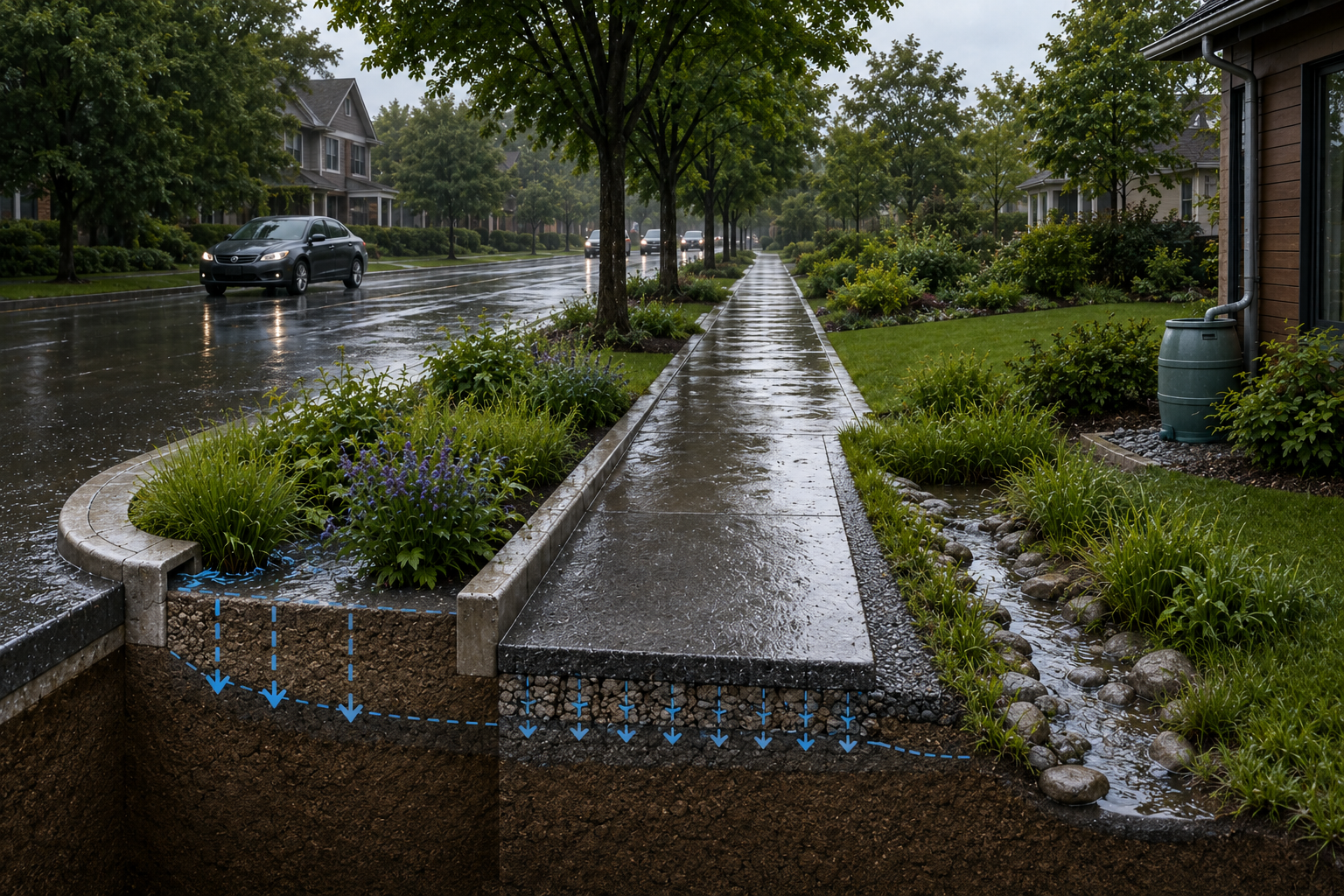
Die sichtbarste Anwendung der Schwammstadttechnik: Module unter durchlässigen Pflasterbelägen, Regengärten, Bioschwällen und abgesenkten Grünflächen in Parks, Plätzen, Straßenzügen und städtischen Grünkorridoren.
- ParameterNutzen
- ModulserieEW Economy, Höhe 300 mm
- Hydraulische FunktionVersickerung (umhüllt mit Geotextil, ohne Dichtfolie) – oder hybride Versickerung + Rückhaltung mit Dichtfolie und vertikaler Filterkette bei kontrollierter Ableitung zum Schutz des Grundwassers
- GeotextilGTX-180 (180 g/m²) für Standard-Landschaftsbereiche; GTX-300 (300 g/m²) für Einbauten in Baumwurzelnähe
- AbdecktypPE-Abdeckung mit Belastungsklasse A15 für Fußgänger oder versenkte Wannenabdeckung für Oberboden + Rasen/Bepflanzung zur unsichtbaren Einbindung
- Einbautiefe0,8–1,8 m (Moduloberkante bis Landschaftsoberfläche)
Wichtiger Hinweis:Ästhetische Einbindung: Der teleskopische Aufsatz mit versenkter Wannenabdeckung ermöglicht eine verdeckte Inspektionsöffnung unter Rasen oder Bepflanzung und erfüllt damit die Forderung der Landschaftsarchitekten nach unsichtbarer Infrastruktur. Bei zusätzlichem Bewässerungsbedarf am Standort kann das Versickersystem zu einer teilweisen Regenwassernutzungsvariante erweitert werden (Dichtfolie + Pumpe in einem abgetrenntencompartment).
Projektreferenz:Städtischer Grünkorridor, Ostchina (Stadt der zweiten Ebene): 850 m³ verteilt auf 14 Versickerungsstellen, sämtlich unter gestaltetem öffentlichem Raum. Seit 3 Jahren in Betrieb – Versickerungsleistung liegt konstant bei 85 % der Auslegungswerte. Jährliche Wartung: CCTV-Untersuchung. Keine weiteren Eingriffe erforderlich.

Wohnsiedlung
Regenwassermanagement auf Parzellenebene und gemeinschaftlich
Wohngebiete (Villen, Mittel- und Hochhäuser) mit folgenden Anforderungen: (a) parzellenspezifische Versickerungsanlagen für private Gärten und Einfahrten; (b) gemeinsame Rückhalteanlagen unter Zufahrtsstraßen, Parkplätzen und gemeinschaftlichen Grünflächen; (c) Regenwassernutzung zur Landschaftsbewässerung und Autowäsche.
- ParameterNutzen
- ModulserieEW Economy für Gemeinschaftsbereiche (Parkplätze, Zufahrtswege); PP Standard für private Gartenversickerungsanlagen (kostenoptimiert)
- Hydraulische FunktionParzellenbezogen: Versickerung (Versickerungsanlage). Gemeinschaftsbereiche: Rückhaltung (mit vertikaler Filterkette) oder Regenwassernutzung (mit Dichtfolie, Pumpe, Schwimmfilter)
- GeotextilGTX-180 für parzellenspezifische Bereiche; GTX-300 für gemeinschaftliche Flächen in Baumwurzelnähe
- AbdecktypA15-PE-Abdeckung (parzellenbezogen, Privatgarten); B125-Gusseisenabdeckung (Gemeinschaftsbereiche, gelegentlicher Fahrzeugverkehr)
- Einbautiefe1,0–1,5 m (parzellenbezogen); 1,5–2,5 m (Gemeinschaftsanlagen unter Straßen)
Wichtige HinweiseKostenempfindlichkeit auf Parzellenebene: Die Kosten der parzellenspezifischen Versickerungsanlagen wirken sich direkt auf die Marge des Bauträgers aus. Das EW-Modul mit einem Fassungsvermögen von 198,72 l pro Einheit erreicht das erforderliche Speichervolumen (üblicherweise 3–8 m³ je Parzelle) mit 9–24 Modulen pro Versickerungsanlage. Die Montage dauert lediglich 3–4 Stunden und kann durch das allgemeine Erdbauteam ohne spezialisierte Subunternehmer ausgeführt werden. Gemeinschaftliche Regenwassernutzungsanlagen senken den Trinkwasserbedarf für die Grünflächenbewässerung des Baugebiets um 55–85 % und tragen zur Erfüllung der Zertifizierungskriterien für grüne Gebäude (GB/T 50378, LEED, BREEAM) bei.
ProjektreferenzWohnbauvorhaben (Gemischte Bebauung aus Villen und Mittelhäusern), Südchina: 120 parzellenspezifische Versickerungsanlagen (EW) + 3 gemeinsame Rückhaltebecken (EW, Gesamtvolumen 800 m³). Durchschnittliche Montagezeit je Parzelle: 3,5 Stunden. Montage der gemeinsamen Becken: 11 Tage mit einer sechsköpfigen Arbeitsmannschaft. Zertifizierung nach dem Grünbaustandard GB/T 50378 erreicht.
Städtische Grünanlagen
Verteilter Speicher und Wasserwiederverwendung
Stadtparks, Straßengürtelgrün, Uferschutzstreifen sowie städtische Ökosanierungsgebiete – Umsetzung der Schwammstadt auf Gemeinde- und Stadtebene. Diese Maßnahmen gehören üblicherweise zum jährlichen Umsetzungsplan der Kommunalverwaltung für Schwammstädte mit quantifizierten Abflusssteuerungszielen und einer Leistungsüberprüfung nach Fertigstellung.
- ParameterNutzen
- ModulserieEW Economy, Höhe 300 mm
- Hydraulische FunktionVersickerung (porös, ohne Dichtfolie) unter Grünflächen; Rückhaltung und Regenwassernutzung unter befestigten Flächen in unmittelbarer Nähe von Grünanlagen
- GeotextilGTX-180 für Versickerungsbereiche; GTX-300 für Rückhaltebereiche als Unterlage der Dichtfolie
- Dichtfolie (Bereiche zur Wasserwiederverwendung)GM-2,0 (2,0 mm HDPE) zur Speicherung von Bewässerungswasser
- AbdecktypEingelassene Abdeckwanne Klasse A15 (Grünflächen); Gusseisenabdeckung Klasse B125 (Zufahrten für Wartungsfahrzeuge)
- Einbautiefe1,5–2,5 m Einbautiefe
Wichtiger HinweisKommunale Beschaffung: Öffentliche Projekte folgen einem anderen Beschaffungszyklus als private Bauvorhaben. Yingyuan kann entweder über den Generalunternehmer des Projekts (EPC-Modell: Engineering, Procurement, Construction) oder direkt im Rahmen einer Rahmenvereinbarung mit der Stadtverwaltung liefern.Standardzahlungsbedingungen für öffentliche Projekte: 30 % Vorauszahlung, 60 % bei Lieferung, 10 % nach Abnahme.Das technische Dokumentenpaket umfasst: Konformitätserklärung abgestimmt auf die planerischen Vorgaben der städtischen Schwammstadt, Materialprüfzertifikate, Montageanweisungen sowie Protokolle zur Leistungsüberprüfung nach Fertigstellung.Öffentliche Projekte erfordern üblicherweise das IoT-Überwachungsset zur automatisierten Leistungsberichterstattung an die zentrale Schwammstadt-Datenplattform der Stadt.
ProjektreferenzSchwammstadt-Demonstrationsgebiet in Zentralchina: Verteilte Speicherkapazität von 2.200 m³ aufgeteilt auf sechs Park- und Straßengürtelstandorte.Es wurden 18-monatige Leistungsüberwachungsdaten der städtischen Wohnbauverwaltung als Teil der Abnahme des Schwammstadtprojekts vorgelegt.Die Daten umfassen: kontinuierliche Wasserstandsmessungen (IoT-System StormWatch), vierteljährliche Versickerungsgeschwindigkeitsprüfungen sowie Wasserqualitätsproben zur Bestimmung von Schwebstoffgehalt (TSS), chemischem Sauerstoffbedarf (CSB) und Ammoniumstickstoff.
Landwirtschaftliche Wiederverwendung
Erfassung von Hofabfluss und Speicherung zur Bewässerung
Periurbane Landwirtschaft und ländliche Wasserwirtschaft: Erfassung von Hofabfluss und Dachablauf von Gewächshäusern; Speicherung für Sprühbewässerung, Viehtränke und Ergänzungswasser für Aquakulturen. Löst das saisonale Ungleichgewicht zwischen Niederschlag (konzentriert in Regen-/Monsunzeit) und Bewässerungsbedarf (Spitzenbedarf in Trockenzeit).
- ParameterNutzwert
- ModulserieEW Economy mit 300 mm Höhe – alternativ PP Standard für sehr flache Einbausituationen (Speicherung von Gewächshausrinnenablauf)
- Hydraulische FunktionRegenwassernutzung – undurchlässiges System mit 2,0-mm-HDPE-Dichtfolie, Tauchpumpe, schwimmendem Saugfilter und beruhigtem Zulauf
- VorbehandlungSpülwasserumlenkung (erste 2–5 mm Niederschlag) + zweistufiger Schlammfang (600 l und 1200 l hintereinander geschaltet, mit Strömungsleitwänden)
- GeotextilGTX-300 Geotextil als Unterlage unter der Dichtfolie und Abdeckung über den Modulen
- PumpenspezifikationTauchpumpe, 0,75–2,2 kW (standortspezifisch), Durchfluss abgestimmt auf den Bedarf der Bewässerungsanlage
- Einbautiefe1.5-3.0m
Wichtiger GesichtspunktWasserqualität für landwirtschaftliche Wiederverwendung: Die Behandlungsstrecke (Spülwasserumlenkung → Schlammfang → beruhigter Zulauf → schwimmender Saugfilter) ist ausgelegt, um den Qualitätsstandard der Klasse II für landwirtschaftliches Bewässerungswasser einzuhalten. Für Viehtränkwasser ist nach der Pumpe eine UV-Desinfektion nachzuschalten.Saisonale Wartung: Saugreinigung des Schlammfangs vor der Regenzeit (um zu verhindern, dass abgelagerte Sedimente in den Speicher geschwemmt werden); halbjährliche Kontrolle des Netzes am schwimmenden Filter.Das IoT-Überwachungsset ermöglicht die Fernüberwachung von Füllstand und Trübung des Speichers – praktisch für landwirtschaftliche Betriebe, bei denen der Speicher weit vom Wohnhaus entfernt ist und tägliche Sichtkontrollen nicht durchführbar sind.Zur Einhaltung von Förderprogrammen im Agrarbereich (z. B. chinesische Zuschüsse zur Wasserersparnis in der Landwirtschaft oder internationale Förderprojekte) stellt Yingyuan eine Vorlage für Leistungsnachweise zur Einreichung bei der Förderstelle zur Verfügung.
ProjektreferenzMilchviehbetrieb im periurbanen Bereich: Regenwasserspeicher mit 120 m³ Fassungsvermögen (EW-Module, 2,0-mm-HDPE-Dichtfolie, zwei hintereinander geschaltete 600-l-Schlammfänge). Erfassung von Hof- und Stall Dachablauf bei einer Einzugsfläche von ca. 2.200 m². Das aufbereitete Wasser deckt 65 % des Bedarfs für Stallreinigung und Weidebewässerung ab. Amortisationszeit durch eingesparte Kosten für Trinkwasser aus dem öffentlichen Netz: 3,8 Jahre.
EW Economy-Serie
Betriebliche Vorteile für Schwammstädte
Architektur zur Quellsteuerung
Regen dort behandeln, wo er fällt
Regen dort behandeln, wo er fällt
15-jährige Nutzungsdauer des Geotextils
Abgestimmt auf die Lebensdauer der Module
Abgestimmt auf die Lebensdauer der Module
Vorgefertigte behördliche Dokumentationen
Von der Planung bis zur Abnahme
Von der Planung bis zur Abnahme
Skalierbar von Grundstücks- bis Stadtmaßstab
Eine einheitliche Technologieplattform
Eine einheitliche Technologieplattform
Winterbau
Betrieb auch unter dem Gefrierpunkt
Betrieb auch unter dem Gefrierpunkt
Architektur zur Quellsteuerung
Regen dort behandeln, wo er fällt
Das Grundprinzip der Gestaltung von Schwammstädten ist die Quellsteuerung: Der Niederschlag wird an oder nahe der Stelle verwaltet, an der er auf den Boden trifft, statt ihn zu einer weit entfernten zentralen Anlage abzuleiten. Die EW-Module ermöglichen diese verteilte Architektur: Mehrere kleine Versickerungsanlagen (jeweils 5–20 m³) werden unter einzelnen Grünflächen platziert, hydraulisch verbunden, aber baulich voneinander unabhängig. Dieser verteilte Aufbau sorgt für Ausfallsicherheit – ein Ausfall einer Versickerungsanlage (z. B. durch Schlammablagerungen infolge Sedimenteintrags während der Bauphase) beeinträchtigt nicht das gesamte System. Wartungsarbeiten können an einer Einheit durchgeführt werden, ohne die übrigen außer Betrieb zu setzen. Zudem lassen sich die Versickerungsanlagen dank der modularen Bauweise in unregelmäßig geformten Restflächen zwischen Versorgungsleitungen, Fundamenten und Baumwurzelbereichen platzieren, wie sie typischerweise auf beengten städtischen Baustellen vorkommen.
EW Schwammstadt-Faktenkarte
Wichtige Leistungsreferenzwerte
- PositionWert
- Ultimative axiale Tragfähigkeit EW-Modul450 kN/m² (Klasse SL-45 nach CJ/T 542-2020)
- Abmessungen EW-Modul (L × B × H)1200 x 600 x 300 mm
- Speichervolumen pro EW-Modul198,72 Liter (bei Hohlraumanteil 92 %)
- Modulgewicht (unbefüllt)8.75 kg
- O90-Porengröße Geotextil (Versickerung)0.07-0.12 mm (GTX-180)
- Vertikale Durchlässigkeit Geotextil≥ 5x10⁻³ m/s
- Prognostizierte Nutzungsdauer des Geotextils≥ 15 Jahre (Neu-PP-Endlosfilamente)
- Standard-Einbautiefe (Quellsteuerung)0,5 m Überdeckung bis 2,5 m Einbautiefe
- Maximale Einbautiefe (EW)4,0 m (nur verkehrsfrei)
- Verlegeleistung (2-Mann-Mannschaft)50–70 EW-Module pro 8-Stunden-Schicht
- TSS-Abscheidewirkung (Systemebene)75-90%
- Chinesische Städte in der Niederschlagsdatenbankmehr als 200 Städte, vordefinierte statistische Bemessungsniederschläge
- Provinznormen zugeordnetmehr als 20 provinzielle Richtlinien für Schwammstädte
- Nationale Pilotstädte (Schwammstadt-Programm)30 Städte (1. und 2. Tranche, 2015–2016)
- Referenzinstallation – kommunale Schwammstadt-Demonstrationszone2.200 m³ verteilt auf 6 Knoten (Zentralchina)
- CCTV-Inspektionsintervall (mit IoT-Überwachung)2–3 Jahre (gegen jährlich ohne IoT)
Modulares Schwammstadt-Verfahren gegenüber herkömmlichem Verfahren
Herkömmlicher Referenzwert
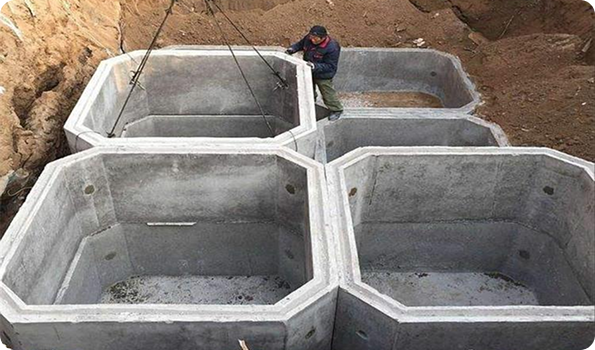
Herkömmliche graue Infrastruktur: Tief eingebaute Beton-Rückhaltebecken, großkalibrige Regenwasserkanäle, Endbehandlung am Kanalauslass. Hohe Aushubkosten, lange Bauzeit, keine Versickerungsfunktion, keine Wasserwiederverwendung. Abflusssteuerung: Transportorientiert – Einleitung in Vorfluter mit geringer Dämpfung und Aufbereitung. Flächenbedarf: Großer Platzbedarf für Rückhaltebecken. Wartung: Betreten von beengten Räumen zur Bauwerksinspektion.

Verfahren Yingyuan
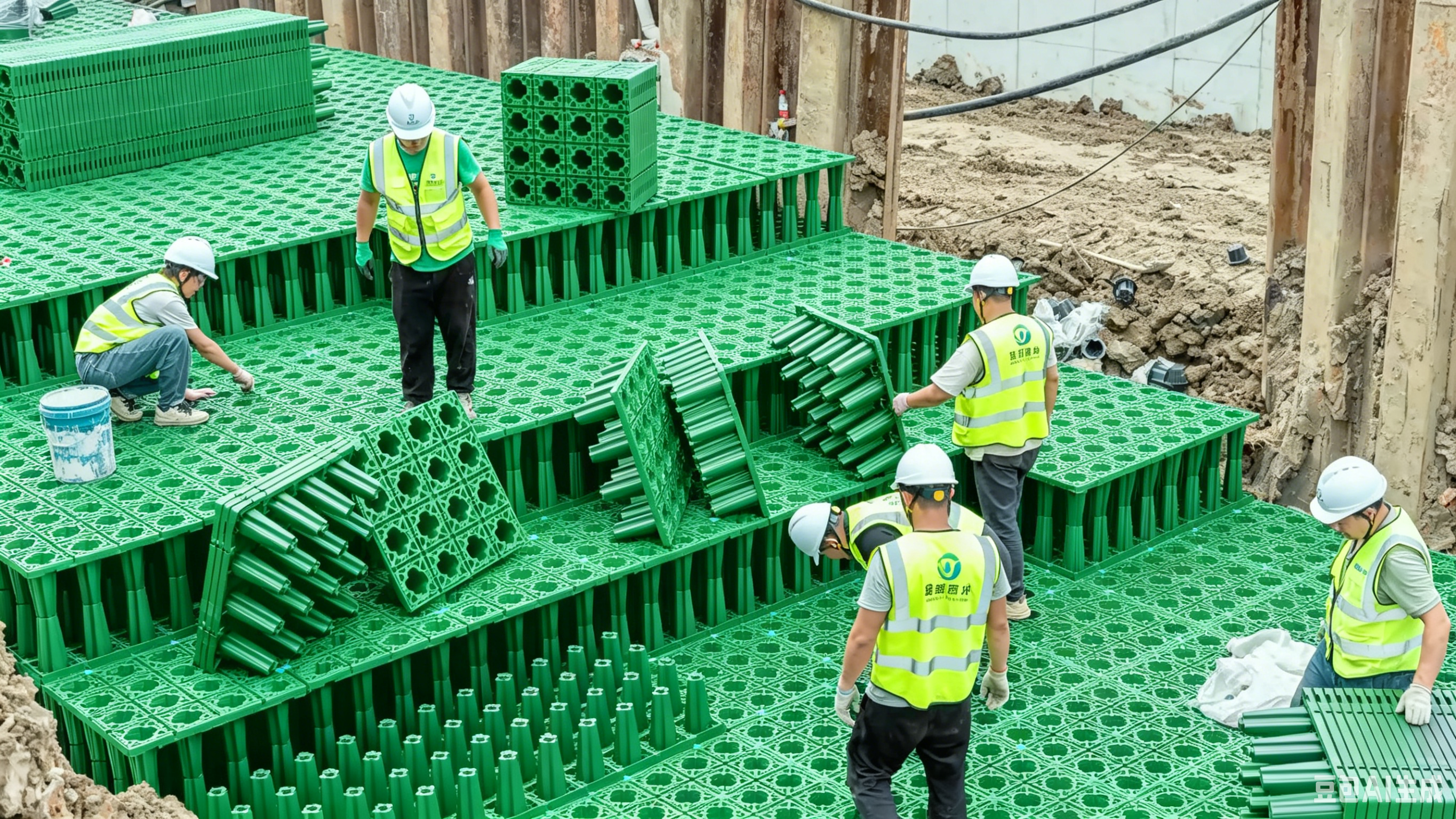
Yingyuan EW-Schwammstadtsystem: Modulare Anlagen zur Quellsteuerung, flache Einbautiefe (1,2–2,5 m), integrierte Versickerung, gesteuerte Rückhaltung und Wasserernte in einem System.
Abflusssteuerung: Versickerung im Quellbereich als Hauptfunktion, Abflussdämpfung auf Gemeindeebene; Einleitung ins Gewässer nur bei Kapazitätsüberschreitung.Flächenbedarf: Keine oberirdische Fläche erforderlich – sämtliche Infrastruktur unter Grünflächen verbaut.Wartung: CCTV-Inspektion über Inspektionsrohre ohne Betreten beengter Räume.Normenkonformität nachgewiesen für Genehmigungs- und Abnahmeverfahren.
Wie Yingyuan Ihr Schwammstadt-Projekt unterstützt Von der Planung bis zur Abnahme
Nr. 1
Erhebung der Projektparameter
Sie stellen folgende Daten zur Verfügung: Projektstandort (Stadt/Bezirk), Grundstücksfläche (m²), Arten und Flächen der Einzugsflächen, jährliches Abflusssteuerungsziel (falls bekannt – ansonsten ermitteln wir es anhand der örtlichen Normen), Grundwassertiefe, Bodenversickerungsrate (aus Versickerungsversuchen oder geotechnischem Bericht) sowie Projekttyp (Wohngebiet/Gewerbe/Kommunal/Landwirtschaft).
Nr. 2
Konformitätsanalyse und Systemauslegung (3–5 Werktage)
Der Anwendungstechniker von Yingyuan prüft Ihre Parameter und erstellt folgende Unterlagen: Berechnung des Speichervolumens unter Berücksichtigung örtlicher Niederschlagsstatistiken, Vorschlag zur Modulanzahl und Anordnung, Auswahl von Geotextil- und Dichtfolienqualitäten, Konformitätsbescheinigung abgestimmt auf gültige nationale, provinzielle und kommunale Normen sowie eine vorläufige Kostenabschätzung.
Nr. 3
Angebot und Dokumentenpaket
Formelles Angebot mit Artikelnummern, Mengen, Einzelpreisen und Liefertermin sowie vollständiges Normenkonformes Dokumentenpaket für die Planungseinreichung. Modulverlegeplan und Zuschnittplan für Geotextil und Dichtfolie sind als PDF-Anlagen beigefügt.
Nr. 4
Montageunterstützung und Bauabnahme
Baustellenbetreuung (erster Montagetag inklusive bei Bestellungen über 200 Module), durchgehende Fernunterstützung per Video während der gesamten Montage sowie Prüfverfahren zur Leistungsbestätigung nach Fertigstellung für die Bauabnahme.
Bereit zur Auslegung Ihres Schwammstadtsystems
für Normenkonformität und Leistungsfähigkeit?
Konformitätsanalyse innerhalb von 5 Werktagen
Normenkonformitätsmatrix
Regulatorische Zuordnung auf nationaler, provinzieller und kommunaler Ebene
Nationale Normen – der regulatorische Kern
- NormVollständiger NameGeltungsbereichYingyuan-Konformität
- CJJ 311-2020Technische Spezifikation für den Bau von SchwammstädtenUmfassende Planung, Bau und Abnahme von Schwammstadtanlagen für alle Anlagentypen und alle GrößenordnungenDas EW-Modulsystem erfüllt die Anforderungen der Abschnitte 5 (Anlagen zur Quellkontrolle), 6 (Wasserqualität), 7 (Wassernutzung) und 8 (Entwässerungssicherheit). Eine vollständige Konformitätsbescheinigung ist verfügbar.
- GB/T 50378-2019Bewertungsnorm für grüne GebäudeBei der Bewertung grüner Gebäude trägt das Regenwassermanagement zu den Bewertungskategorien Flächenschonung und Wassereinsparung bei.Das EW-Regenwassernutzungssystem mit IoT-Überwachung liefert Nachweise für Punkte in den Kategorien Flächenschonung (Regenwassermanagement) und Wassereinsparung (Nutzung nicht konventioneller Wasserressourcen). Bei jeder Systembestellung wird eine Konformitätsbescheinigung ausgestellt.
- GB 50014-2021Norm für die Planung von AußenabwasseranlagenPlanung der Regenwasserentwässerung: Regenintensitätsformel, Rohrdimensionierung, RückhaltebeckenauslegungDas EW-Rückhaltesystem mit VFC-Ablaufsteuerung ist nach der Regenintensitätsmethodik der GB 50014 ausgelegt. Die Berechnung des Speichervolumens stützt sich auf lokale statistische Niederschlagsdaten.
- CJ/T 542-2020Modulare RegenwasserspeichereinheitenProduktnorm für modulare Speichereinheiten – Werkstoffe, mechanische Eigenschaften, PrüfverfahrenDas EW-Modul wurde nach CJ/T 542-2020 geprüft und in die Klasse SL-45 eingeteilt. Ein Prüfbericht ist vorhanden. Modulwerkstoff: recycelbares PP mit UV-Stabilisierung.
- GB/T 17639-2008Geokunststoffe – VliesgeotextilienWerkstoffnorm für Vliesgeotextilien – Flächengewicht, Zugfestigkeit, Durchstichfestigkeit, Durchlässigkeit, 090GTX-180 und GTX-300 werden nach GB/T 17639 gefertigt. Für jede Charge wird ein Drittprüfzertifikat geliefert.
Provinz- und Kommunalnormen – Regionale Anpassung (ausgewählte Beispiele)
- RegionNormWesentliche AnforderungYingyuan-Antwort
- PekingDB11/T 1743-2020Jährliches Ziel für die Abflusssteuerungsrate: 85 % (Kernstadtgebiet); Bemessungsniederschlag 33,6 mm (85-Perzentil). Die Fläche der Versickerungsanlagen muss mindestens 50 % der Gesamtfläche aller Schwammstadtanlagen betragen.Die EW-Versickerungskonfiguration erfüllt die Flächenvorgabe von 50 %. Das Speichervolumen berechnet sich nach 33,6 mm × Einzugsgebietsfläche × Abflussbeiwert unter Berücksichtigung eines Sicherheitsfaktors von 1,1.
- ShanghaiDG/TJ 08-2230-2017Jährliche Abflusssteuerungsrate: 80 % (Innenstadt), 85 % (Neubaugebiete). Bemessungsniederschlag 26,7 mm (80-Perzentil), 33,4 mm (85-Perzentil). Hoher Grundwasserspiegel – Auftriebsbewertung ist für alle unterirdischen Speicheranlagen zwingend vorgeschrieben.Ein Auftriebssicherungsverankerungsset ist vorzusehen, falls der Grundwasserspiegel weniger als 1 m unter der Modulunterkante liegt. Das Speichervolumen wird anhand schanghausspezifischer Niederschlagsstatistiken ermittelt. Flache Einbauvarianten (1,2–1,8 m Einbautiefe) werden bevorzugt, um oberhalb oder nahe dem Grundwasserspiegel zu bleiben.
- GuangdongDBJ/T 15-173-2019Jährliche Abflusssteuerungsrate: 70 % (Guangzhou, Shenzhen – Zone mit hoher Niederschlagsintensität). Die Bemessungsniederschlagshöhe ist stadtabhängig – für eine Steuerungsrate von 70 % in Guangzhou beträgt sie 24,5 mm. Es überwiegen kurze Starkregenereignisse mit hoher Intensität – bei der Auslegung der Rückhalteanlagen muss die 5-minütige Spitzenintensität berücksichtigt werden.Die Bemessung der VFC-Einheit berücksichtigt kurze Starkregenereignisse mit hoher Intensität – der Öffnungsdurchmesser wird so gewählt, dass die 5-minütige Spitzenabflussmenge bei zulässigem Wasserstand abgeführt wird, ohne Rückstau im Zulaufrohr. Das Speichervolumen wird auf den stadtbezogenen Bemessungsniederschlag für eine Abflusssteuerungsrate von 70 % ausgelegt.
- SichuanDBJ51/T 081-2017Jährliche Abflusssteuerungsrate: 80 % (Becken von Chengdu). Bemessungsniederschlagshöhe: 28,2 mm. Berücksichtigung seismischer Zonen (Chengdu liegt in der Erdbebenintensitätsstufe VII) – die Modulverbindungen müssen unter seismischen Bodenbewegungen ihre Stabilität bewahren.Die EW-Verbindungsbügel sind mit einer Presspassung von 0,20 mm konstruiert – sie halten die Verriegelung auch bei seismischen Bodenbewegungen aufrecht. Die systemweite Flexibilität (Ausgleich einzelner Modulverschiebungen) absorbiert relative Verschiebungen besser als starre Betonbecken.
- ZhejiangDB33/T 1167-2019Jährliche Abflusssteuerungsrate: 75–85 % (ortsabhängig). TSS-Abscheidegrad ≥ 60 % für alle Schwammstadt-Anlagen. Bei öffentlichen Projekten ist nach Fertigstellung über zwei Jahre hinweg eine vierteljährliche Wasserqualitätskontrolle durchzuführen.Die EW-Behandlungsstrecke (Schlammfang + Geotextilfiltration + beruhigter Zulauf) erreicht einen TSS-Abscheidegrad von 75–90 %. Optional ist eine IoT-gestützte Wasserqualitätsüberwachung (Trübungssensor) für automatisierte vierteljährliche Berichte verfügbar.
FAQ
Häufig gestellte Fragen zu
Wholesale & Projects
 Sind die Materialien für umweltsensible Projekte unbedenklich?Was verhindert, dass die Module bei tiefer Einbautiefe einstürzen?Wie erfüllen diese Module die Anforderungen des AASHTO-H-20-Standards?