News


What Is Stormwater? Definition, Meaning & Types | YY Tank
04 Nov 2026What Is Stormwater? Definition and Meaning
Stormwater is water from rain and melting snow that flows over the ground instead of soaking into it. So, what is stormwater, exactly? It is the runoff a storm produces once soil, pavement, and rooftops reach their limit. What is storm water, spelled with a space? The same water — the difference is only spelling.
The Storm Water Meaning, in Plain Terms

The storm water meaning is easiest to see after a heavy downpour. In a forest, most rainfall soaks into the soil or is taken up by roots. In a city, impervious surfaces — roofs, roads, and parking lots — seal the ground. The rain cannot soak in, so it slides.
That sliding water is stormwater, and it moves with purpose. It picks up whatever it crosses: hydrocarbons from roadways, fertilizer from lawns, sediment from construction sites. It drains into storm inlets, travels through municipal pipe networks, and usually discharges to nearby streams without treatment.
Water that does soak in follows a different path. It becomes soil moisture, feeds plant roots, and recharges the groundwater below. The split between soaking in and running off is the starting point of site hydrology. Every drainage decision moves that split one way or the other.
That journey is why the word carries weight in permits and drainage plans. Municipal stormwater permits regulate discharge by the pollutant profile each source carries. Our stormwater management overview covers the whole managed system; this page stays on the water itself. The term also draws a boundary: stormwater is not wastewater, and the two never share a pipe in a modern separation system.
Stormwater or Storm Water?
Both spellings are correct, and both appear constantly. The choice is a style decision, not a technical one:
• Stormwater — one word. It is the standard in current US agency writing, model ordinances, and most engineering reports.
• Storm water — two words. It is common in older documents, some state codes, and everyday typing.
Search traffic splits between the two forms — what is storm water gets asked nearly as often as what is stormwater. Regulators read the terms as identical. For a US audience, use the one-word form and keep it consistent throughout a document. If you quote an older ordinance, keep its two-word spelling inside the quotation.
The Main Types of Stormwater
Engineers sort stormwater by its source, because the source predicts the pollution load:
• Roof runoff — water off shingles, metal panels, and gutters. It carries leaves, dust, and roofing debris, and it is the cleanest of the four.
• Street and pavement runoff — the heaviest load of any source. Oil, brake dust, litter, and road salt concentrate on the asphalt and wash away together.
• Snowmelt — a slow release instead of a rush. As packed snow melts, it concentrates de-icing chemicals from weeks of accumulation.
• Agricultural and yard washoff — nutrients and pesticides from fields, lawns, and gardens. These dissolve easily and travel far in small volumes.
The classification has one practical consequence. A system designed for roof runoff is undersized for street runoff, so engineers match the structure to the dirtiest source it must handle. Pretreatment follows the same logic: a leaf screen suited to roof runoff cannot handle roadway sediment. Where the water travels next is the runoff story — our stormwater runoff guide follows the full path from surface to stream.
Why Stormwater Matters
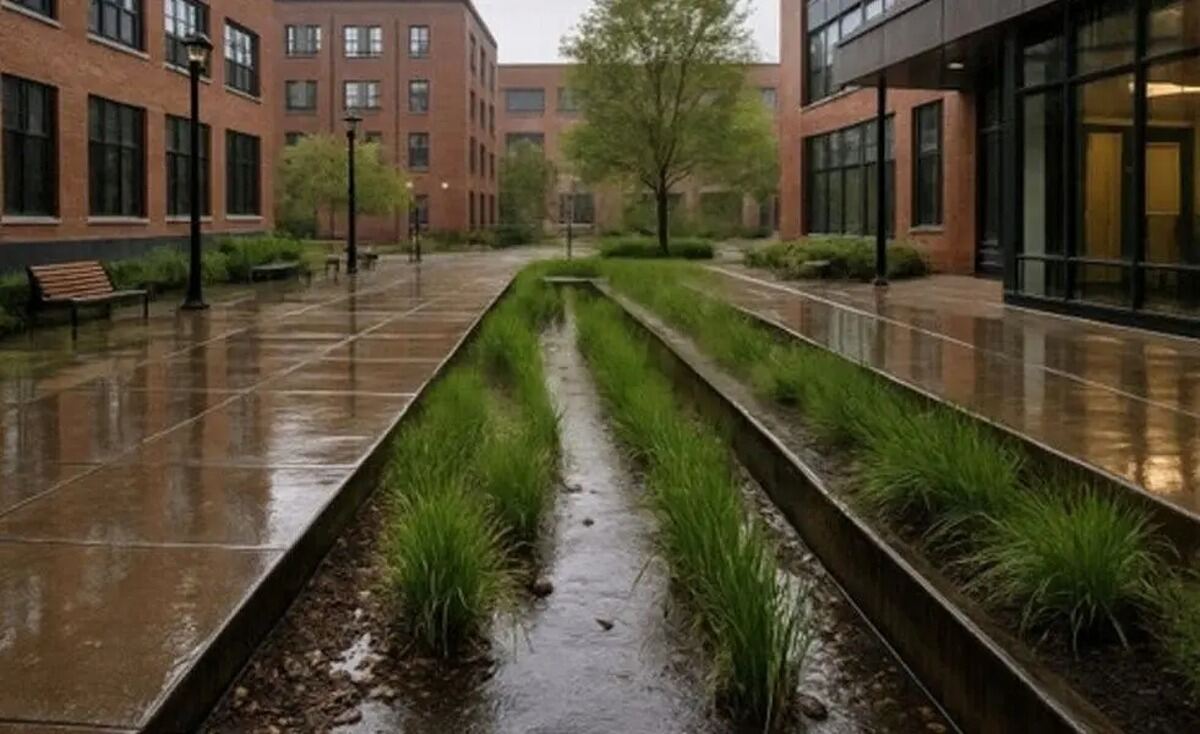
Unmanaged stormwater floods streets, erodes stream banks, and delivers pollution straight to waterways. Managed, the same water becomes a design input. Cities slow it, store it, soak it in, and occasionally harvest it.
That is why stormwater management is important — it protects property, infrastructure, and the water bodies a town drinks from. Every dollar of unmanaged damage lands on utilities, insurers, and owners. The practice spans drainage, underground storage, infiltration, and biofiltration treatment. Our stormwater management solutions guide maps the full option set.
Wondering how a buried storage system would fit a site you know? Send the site details to YY Tank. We return an engineered layout within 24 hours.
Frequently Asked Questions
Why is stormwater management important? Stormwater management is important because unmanaged runoff floods property, erodes streams, and washes pollution into waterways. Management slows the water, stores it, and cleans what can be cleaned. It also keeps cities compliant with discharge permits and protects the infrastructure that roads and buildings depend on.
What are the types of stormwater? The main types are roof runoff, street and pavement runoff, snowmelt, and agricultural or yard washoff. Roof runoff runs relatively clean, while street runoff carries the heaviest load of oil, salt, and litter. Snowmelt concentrates de-icing chemicals, and washoff carries nutrients and pesticides. The source decides the treatment.
Is stormwater the same as sewage? No — stormwater and sewage travel in separate systems across most US cities. Stormwater drains through storm sewers and usually discharges to streams without treatment. Sewage flows through sanitary sewers to a treatment plant. Some older cities share combined sewers, which is why heavy rain can trigger overflows there.
Why is it written as "storm water" sometimes? Both forms are correct. The one-word stormwater is the current standard in US agency writing and engineering reports. The two-word storm water appears in older documents and some state codes. Regulators treat the terms as identical, so pick one form and stay consistent.