





Rainwater Harvesting Maintenance Checklist: Keep Your System Running at Peak Performance
30 Jul 2026Poor Maintenance Is the #1 Cause of Rainwater System Failure — and How PP Modules Break the Cycle
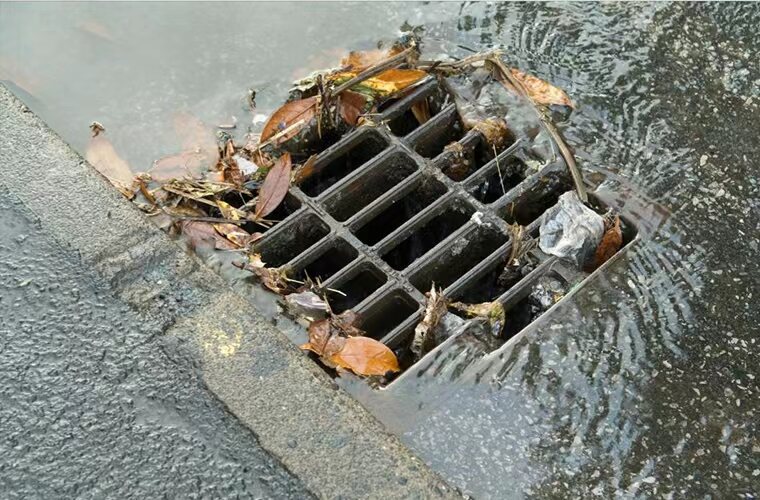
Walk onto a site where the rainwater harvesting system is underperforming and the cause is almost never the original design. It is neglected maintenance.
A clogged pre-filter reduces collection efficiency by 40–60% within weeks. Sediment accumulation on the tank floor accelerates impeller wear, cutting pump life from 10 years down to 3–4 years. Distribution pipework left unchecked develops slow leaks that waste harvested water and defeat the purpose of the installation.
These are the failure patterns we see most often across commercial, residential, and municipal systems . Small maintenance tasks deferred repeatedly until they compound into expensive repairs.
PP modular storage makes maintenance materially easier than concrete tanks. Modules weigh approximately 1/30th of equivalent concrete sections and install over 60% faster, and that simplicity extends to servicing . Smooth polypropylene surfaces resist biofilm adhesion and mineral scaling far better than porous concrete. The modular architecture allows section-by-section inspection — isolate and access individual modules without draining the entire system.
This checklist organises every task by frequency so facility managers and maintenance contractors can keep the system running at full capacity throughout its 50-year design life .
Design Life Substantiation: The stated 50-year lifecycle is verified through independent accelerated aging and structural load tests by the CABR Testing Center. Tested models (1200SD series) demonstrated sustained integrity under peak vertical (85 tons) and lateral (45 tons) loads. [View Official Certification & Test Data].
System Overview: How a Rainwater Harvesting System Works
Before diving into the maintenance checklist, it helps to understand the basic flow of water through your system. Think of it as a five-stage pipeline — from roof to tap.
Flow Diagram (Simplified)
Rainfall → Gutters & Downpipes → First-Flush Diverter → Pre-Filter → PP Module Storage Tank → Pump & Controller → UV Disinfection → End-Use (Toilets, Irrigation, etc.)
↓ ↓
Initial dirty water Overflow to
diverted to drain drainage

Five Core Components in Summary
① Collection Area (Roof or Pavement) – Rain falls onto a clean, hard surface (typically a building roof) and is channeled through gutters and downpipes into the system The quality of collected water depends heavily on surface cleanliness — avoid areas with heavy pollution or chemical residues.
② First-Flush Diverter & Pre-Filter – The first 2–5 mm of rainfall carries most of the dirt, bird droppings, and debris A diverter automatically sends this contaminated water to waste. After diversion, the remaining water passes through a mesh filter (typically 280 microns) that catches leaves, twigs, and larger particles .
③ Storage Tank (PP Module Array) – Cleaned water flows into an underground tank made of polypropylene (PP) modules. These interlocking units create a void ratio of 92%, leaving most of the volume for water storage while the structure itself supports load from above (parking lots, gardens, etc.) The modules are wrapped in a waterproof geomembrane and protective geotextile.
④ Pump & Control System – A submersible or external pump delivers water from the tank to the point of use. A smart controller monitors water level, automatically switches to mains water if the tank runs low, and manages pump cycling to prevent damage.
⑤ Treatment & Disinfection (Optional) – For non-potable uses like toilet flushing and irrigation, simple filtration may suffice. For higher-quality applications (vehicle washing, cooling towers), UV sterilization or chlorination is added to kill bacteria and viruses.
Why this matters for maintenance: Each component in this chain has specific failure points. A blocked pre-filter starves the pump, a torn geotextile lets soil contaminate stored water, and an uncalibrated controller wastes mains water. Understanding the flow helps you connect each maintenance task to its downstream impact.
For a detailed breakdown of every component with technical specifications, see our Rainwater Harvesting System Components Overview.
Maintenance Schedule by Frequency
Monthly Tasks (15 Minutes)
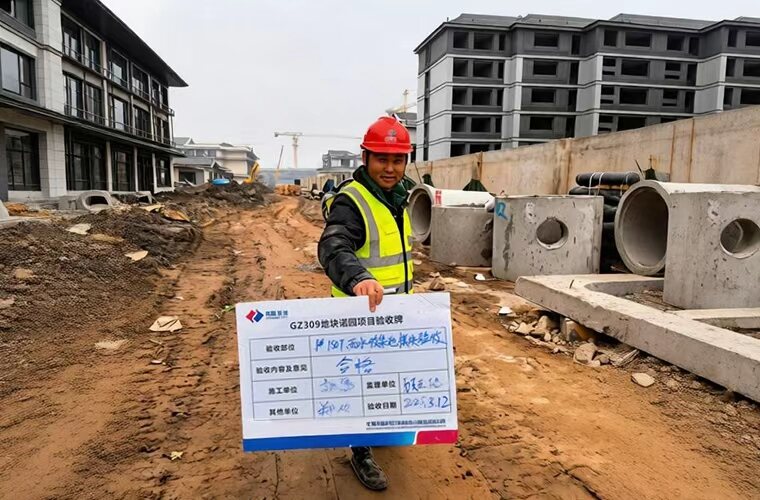
Quick checks for on-site facilities staff — no specialist tools required.
| Task | Frequency | Tools/Qualifications | Estimated Time |
| Inspect and clean gutter screens and leaf guards. Debris blocks water from entering downpipes. Remove leaves and twigs by hand. | Monthly, increase to weekly in autumn or after storms | Hand removal | 15 Minutes |
| Check first-flush diverter operation. Verify it resets automatically after each rain event. A stuck diverter wastes clean water or sends dirty first-flush runoff into the tank. | Monthly | Visual check | 15 Minutes |
| Verify pump pressure gauge reading. Compare against the commissioning baseline. A drop of more than 15% signals filter blockage or impeller wear. | Monthly | Visual check | 15 Minutes |
| Inspect visible pipework for leaks. Walk the distribution runs and look for damp patches, mineral deposits at joints, or dripping connections. | Monthly | Visual inspection | 15 Minutes |
Quarterly Tasks (30 Minutes)
Schedule for the start of each quarter. Basic hand tools may be needed.
| Task | Frequency | Tools/Qualifications | Estimated Time |
| Clean pre-filter mesh. Remove the 280-micron mesh cartridge, rinse with a hose, and inspect for tears. Replace if damaged — even small tears let sediment through to the module floor. | Quarterly | Hose, basic inspection | 30 Minutes |
| Inspect tank access cover seals. Check rubber gaskets for cracking, compression set, or displacement. Worn seals allow contaminated surface runoff to bypass the pre-filter. | Quarterly | Visual inspection, basic hand tools | 30 Minutes |
| Check water level sensor calibration. Compare the controller display against a manual measurement through the access hatch. Drift beyond 5% causes incorrect pump behaviour. | Quarterly | Tape measure, controller | 30 Minutes |
| Test overflow discharge path. Run a hose through the overflow pipe to confirm free flow. A blocked overflow during heavy rain can flood the access shaft. | Quarterly | Garden hose | 30 Minutes |
Annual Tasks (2–3 Hours)
Plan for late autumn in temperate climates, or before monsoon season in tropical regions.
| Task | Frequency | Tools/Qualifications | Estimated Time |
| Flush sediment from the tank base. Fine particulates settle on the floor of the lower modules over 12 months. Open the drain valve or use a submersible pump to remove accumulated sludge. Typical depth in a well-filtered system: 5–15 mm per year. | Annually | Drain valve / Submersible pump | 2–3 Hours |
| Inspect module connections and wrapping integrity. Check that groove-and-rib column connections remain tight with no signs of differential movement. Inspect the geotextile and geomembrane wrapping for tears, root penetration, or degradation — patch any damage immediately. | Annually | Visual inspection, access point | 2–3 Hours |
| Replace UV lamp (if fitted). UV lamps lose effective output after approximately 9,000 hours — roughly 12 months. Replace annually regardless of whether the lamp still illuminates. | Annually | Visual inspection, access point | 2–3 Hours |
| Service pump impeller and check valve. Inspect the impeller for wear or debris. Test the check valve for one-directional hold and free opening. A leaking check valve causes unnecessary pump restarts. | Annually | Basic hand tools, inspection | 2–3 Hours |
| Calibrate smart controller sensors. Clean rainfall sensor surfaces and recalibrate against reference values. An uncalibrated sensor triggers unnecessary mains top-up. | Annually | Reference values, controller | 2–3 Hours |
| Full water quality test. Collect a sample from the distribution outlet and test for pH, turbidity, and E. coli. Results should meet local standards for the intended end-use. Deviations from baseline often point to a specific upstream issue. | Annually | Water quality test kit | 2–3 Hours |
Every 5 Years
Professional inspection by a qualified engineer or the original installer.
| Task | Frequency | Tools/Qualifications | Estimated Time |
| Structural integrity assessment. Check the underground array for ground settlement, module deformation, or load redistribution. The system is designed for long-term structural performance — verified through independent testing at the CABR Testing Center — but soil conditions and surface loading change over time. | Every 5 Years | Qualified engineer or original installer | N/A (Depends on scope) |
| Geotextile and geomembrane condition report. Extract a small wrapping section from a non-critical edge and assess for embrittlement, root damage, or chemical degradation. Plan replacement if tensile strength has deteriorated significantly. | Every 5 Years | Qualified engineer or original installer | N/A (Depends on scope) |
| Replace filter cartridge elements. Filter media degrades even with regular cleaning. Replace all inline cartridges and pre-filter mesh to restore original filtration performance. | Every 5 Years | Qualified engineer or original installer | N/A (Depends on scope) |
For a refresher on how the components fit together, see our rainwater harvesting system components overview.
Troubleshooting Common Issues
Issues arise between scheduled visits. Here are the most frequent problems and how to resolve them.
Low Water Pressure
Check the pre-filter first — a blocked 280-micron mesh restricts flow and starves the pump. Cleaning it usually restores pressure within minutes. If the filter is clean, inspect the pump impeller for wear. A third cause is an air lock in the distribution pipework, common after maintenance draining. Bleed air from the highest point in the pipe run.
Water Discolouration
Brown or cloudy water usually means disturbed sediment on the module floor. Run a full flush cycle and the water should clear within hours. In above-ground tanks, check for algae growth from sunlight exposure. Iron bacteria, which produce rust-coloured slime, respond to shock chlorination (50 mg/L for 30 minutes, then flush).
Overflow During Light Rain
Check the overflow pipe for blockages first. If the pipe is clear, the tank may simply be full after prolonged wet weather. Frequent overflow throughout the year suggests the system is undersized — see our tank sizing guide to recalculate.
Pump Cycling On and Off
Rapid cycling almost always indicates a leak in the pressurised distribution pipework. Check all visible joints and connections. If no leak is found, the pressure switch diaphragm may have stiffened — replace the switch if adjusting the cut-in and cut-out settings does not stabilise operation.
Unusual Taste or Odour
Stagnation is the most common cause — the system collects more than it distributes and water sits too long. Increase demand or reduce effective collection area. Biofilm in distribution pipework is another possibility, particularly in warm climates. Flush with mild chlorine solution (25 mg/L for 15 minutes) and install a UV unit to prevent recurrence.
Frequently Asked Questions
1. Maintenance Cost
Q: What is the annual maintenance cost for a commercial rainwater harvesting system?
A: For a typical commercial installation serving 500–2,000 m² of collection area, budget $200–$500 USD per year for consumables and basic servicing. This figure comes from Yingyuan’s field‑tested maintenance checklist and assumes the system is correctly installed.
These funds cover four core line items:
• Filter element replacement – pre‑filter mesh and inline cartridges
• UV lamp replacement – lamps lose effective output after ~9,000 hours (≈12 months)
• Pump seal kit – ensures impeller housing remains watertight
• Water quality testing – annual pH, turbidity, and E. coli analysis
Compared to mains water, a typical commercial building saves approximately $5,000 USD per year on water bills. Annual maintenance therefore represents only 4–10% of savings, keeping the return on investment strong. The cost breakdown aligns with industry benchmarks where pre‑treatment maintenance accounts for ~25% of annual spending and sediment removal ~35%. Add ~$600 every five years for a professional structural inspection.
2. Maintenance Qualifications
Q: Can I do the maintenance myself, or do I need a specialist?
A: Different tasks require different skill levels. The checklist recommends a clear hierarchy that balances cost with safety:
• Monthly & quarterly tasks (clean gutter screens, check first‑flush diverter, inspect visible pipework) – can be performed by on‑site facilities staff. No specialist qualifications needed; just basic familiarity with the system layout.
• Annual servicing (flush sediment, replace UV lamp, service pump impeller, calibrate sensors) – requires a competent maintenance technician who has read the system manual. No professional license required, but mechanical aptitude is essential.
• Five‑year structural inspection (assess module deformation, geotextile condition, replace filter cartridges) – must be handled by a qualified engineer or the original installer. Many projects require the contractor to hold environmental equipment maintenance certifications.
• Water quality testing (pH, turbidity, E. coli) – best outsourced to an accredited laboratory registered with environmental monitoring authorities. Results may be needed for regulatory compliance.
This layered approach keeps routine tasks low‑barrier while ensuring critical safety and performance checks are done by professionals.
3. PP Module vs. Concrete Tank
Q: How do PP modules compare to concrete tanks for maintenance access?
A: PP modular systems offer a clear advantage in both access frequency and complexity. Their smooth polypropylene surfaces resist biofilm and mineral scaling, while the modular architecture allows targeted servicing.
Key convenience details:
• Integrated access points – Standard 1000 and Large 1200 modules include built‑in inspection openings. You can isolate a single section, inspect the groove‑and‑rib connections, and replace a module without draining the entire system.
• No confined‑space entry – Unlike concrete tanks, which require full draining and confined‑space permits (adding cost, time, and safety risk), PP modules can be serviced from above through the access shaft.
• Modular replacement – Damaged modules are unclipped and swapped individually; the rest of the array continues operating.
Performance and cost comparison:
| Parameter | PP Module | Concrete Tank |
| Void ratio | 92% | 60–70% |
| Cleaning frequency | Less aggressive (smooth surface) | Frequent (rough, porous walls) |
| Major repair | Module‑level replacement | May require demolition |
| Lifecycle cost | 30–40% lower over 20 years | Higher due to sealing repairs |
The higher void ratio (92% vs. concrete’s 60–70%) reduces dead zones where sediment accumulates, further cutting maintenance frequency. These technical parameters make PP systems not only easier to maintain but also more water‑efficient over the long term.
4. Ignoring Maintenance
Q: What happens if I skip maintenance for a year?
A: The system will probably still function – PP modules are engineered to tolerate some neglect, and the 50‑year design life accounts for real‑world maintenance variability. But the consequences accumulate quickly. Here is what happens:
• Reduced inflow – A blocked pre‑filter cuts collection efficiency by 40–60%, starving the system of water.
• Accelerated pump wear – Sediment thickening on the module floor grinds the impeller, reducing pump life from 10 years to 3–4 years.
• Hidden water loss – Small distribution leaks go undetected, wasting thousands of litres annually and defeating the purpose of harvesting.
• Performance decline – Lower pressure, higher turbidity, and increased energy consumption become measurable.
Summary: After two or three consecutive years without servicing, component failure becomes likely and the repair cost far exceeds what routine maintenance would have been. The PP modules can stretch to five years without catastrophic failure, but actively maintained systems deliver the lowest total cost of ownership and remain the recommended practice for maximizing return on investment.
Related reading: How to Install a Rainwater Harvesting System | Rainwater Harvesting System Components | Standard 1000 PP Module