



![[أخبار سارة] إدراج شركتنا بنجاح ضمن القائمة الأولى للمؤسسات التكنولوجية المعتمدة في مقاطعة جيانغسو لعام 2025!](https://oss.yy-aicloud.com/uploads/69c33be2eeba08e5e15c4e6d09c8333a17843461041a9.png?x-oss-process=image%2Fresize%2Cm_lfit%2Cw_500%2Fwatermark%2Ctext_aHR0cHM6Ly93d3cueXktdGFuay5jb20v%2Ct_01%2Ccolor_FFFFFF%2Csize_30%2Cfill_1)

وحدات مياه الأمطار عالية التحمل للمشاريع العملاقة في الشرق الأوسط | YY-TANK
01 Jun 2026الرؤى الهندسية الأساسية
القسم الأول: الانهيار الخفي: كيف تقوض صناديق مياه الأمطار القياسية مشاريع البنية التحتية العملاقة في المناطق القاحلة
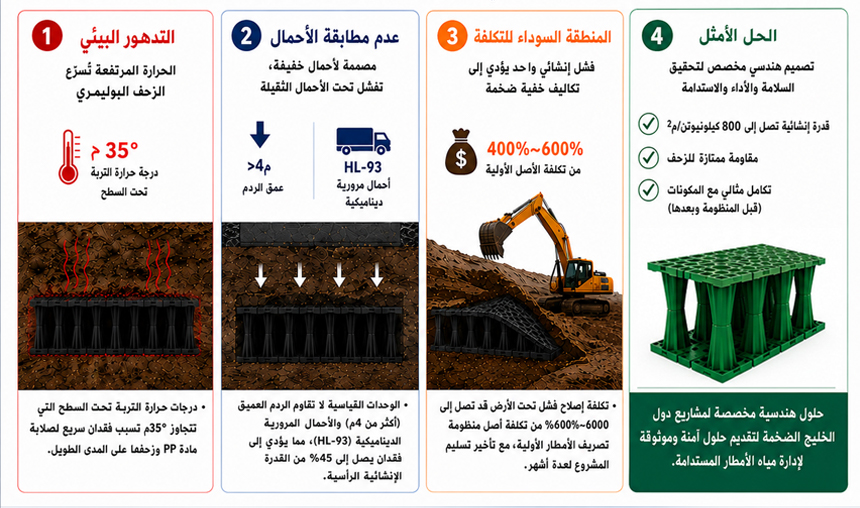
القسم الأول: الانهيار الخفي: كيف تقوض صناديق مياه الأمطار القياسية مشاريع البنية التحتية العملاقة في المناطق القاحلة. لماذا يواجه عدد هائل من أنظمة حصاد مياه الأمطار الضخمة تحت الأرض في منطقة دول مجلس التعاون الخليجي (GCC) تشوهاً هيكلياً أو انهياراً كاملاً للخزانات خلال 24 شهراً من التركيب؟ يُظهر تحليلنا الاسترجاعي لأكثر من 40 مشروعاً ضخماً تحت الأرض في جميع أنحاء شبه الجزيرة العربية، أن السبب الجذري نادراً ما يعود إلى رداءة المواد الخام. بل يكمن في نقطة عمياء هندسية قاتلة: وهم قوة تحمل الضغط المخبرية القياسية.
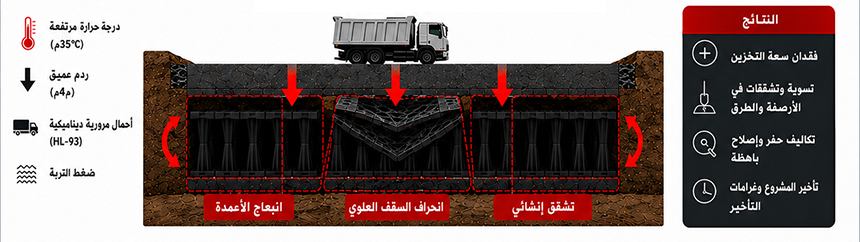
غالباً ما يحدد الاستشاريون المدنيون ومقاولو الهندسة والمشتريات والبناء (EPC) وحدات بولي بروبيلين (PP) الجاهزة لحصاد مياه الأمطار بناءً على أوراق بيانات فنية تم اختبارها في ظروف محيطة ثابتة (23 درجة مئوية). ومع ذلك، عندما تُدفن هذه الوحدات القياسية على أعماق تتجاوز 4 أمتار تحت ممرات التحميل الثقيل في الرياض أو الدوحة، فإن الواقع الفعلي تحت الأرض يكون صارماً ولا يرحم. إذ ترتفع درجات حرارة التربة تحت السطحية في المناطق شديدة الجفاف بشكل متكرر، مما يؤدي إلى تسريع زحف البوليمرات. وسرعان ما تفقد صناديق الوحدات القياسية بأبعاد 1000 × 500 × 400 مم أو 1000 × 500 × 200 مم - والمصممة في الغالب للمناخات المعتدلة وظروف التحميل الخفيف - ما يصل إلى 45% من قدرة تحمل الأحمال الرأسية تحت التأثير المزدوج للأحمال الميتة المستمرة للتربة والأحمال الإضافية الديناميكية للمركبات الثقيلة.
هذا ليس مجرد ضعف في المواد؛ فمن منظور التكلفة الإجمالية للملكية (TCO)، يؤدي أي اختراق هيكلي واحد في خزان احتجاز حضري إلى تحفيز عمليات حفر مكشوفة طارئة، وتحويل مسار المرافق، وإعادة بناء الأساسات العميقة الموضعية. ومن واقع خبرتنا في المشاريع، غالباً ما تصل التبعات المالية لإصلاح فشل هيكلي تحت الأرض إلى ما بين 400% و 600% من التكلفة الأولية لشراء أصول مياه الأمطار، مما يقضي فوراً على هامش ربح المقاول من الباطن ويؤدي إلى تأخير تسليم المشروع لعدة أشهر.
القسم الثاني: المواصفات القياسية الثابتة مقابل الهندسة المخصصة المرنة
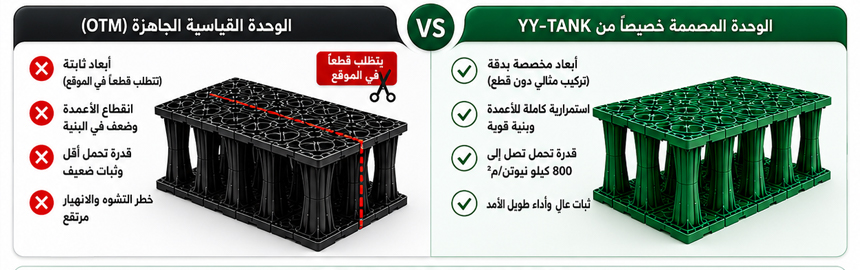
يعمل العديد من الموردين الدوليين الراسخين وفقاً لأطر القولبة بالحقن الصلبة المصممة للإنتاج الضخم، حيث يجبرون تخطيط البنية التحتية على التكيف مع مصفوفات منتجاتهم الثابتة، والتي تبلغ عادةً 1000 × 500 × 400 مم. ورغم أن تكوين الإنتاج الضخم هذا يقلل من التكاليف العامة للمصنع، إلا أنه يُدخل احتكاكاً معمارياً شديداً أثناء التنفيذ على نطاق المشاريع العملاقة (أكثر من 20,000 متر مكعب)، مما يفرض تنازلات هندسية في الموقع مثل القطع اليدوي للوحدات، وانقطاع الأعمدة الهيكلية، ونقاط ضعف نظامية ضد مقاومة الضغط الجانبي. وبالنسبة لأداء نظام احتجاز مياه الأمطار بأكمله، فإن الوحدة غير السليمة هيكلياً تقوض بشكل مباشر الكفاءة الهيدروليكية للنظام واستقراره على المدى الطويل، وهو بالضبط الخطر الذي لا يمكن لمشاريع إدارة مياه الأمطار واسعة النطاق تحمل تبعاته.
يوفر الجدول أدناه فحصاً فنياً دقيقاً ومقارنة صارمة لكيفية تباين الخيارات التقليدية الجاهزة مقابل نهج التصنيع المخصص هندسياً لدينا، والمصمم ليناسب بيئات الأراضي الضخمة في دول مجلس التعاون الخليجي. تركز عناصر المقارنة الجديدة على المعلمات الرئيسية في إدارة مياه الأمطار، مثل قدرة تخفيف ذروة التدفق، والتكامل مع مكونات نظام المنبع والمصب.
| أمن المشروع والأثر المالي | حلول YY-TANK الهندسية المخصصة | الوحدات القياسية الجاهزة | المعلمات الهندسية |
| يقضي على مخاطر تشوه الخزانات تحت الدفن العميق (>4m) وممرات المرور الكثيف (HL-93 / Eurocode 1) | مخصصة لتصل إلى 800 kN/m² عبر زيادة سماكة الأضلاع الموضعية والتحسين باستخدام العناصر المحدودة، وتم التحقق منها عند 40°C | ثابت عند ≤450kN/m² (تم الاختبار عند 23°C وفقاً لمعيار EN 17150) | قوة تحمل الضغط الرأسي |
| يمنع انبعاج الجدار المحيطي الناتج عن الردم الكثيف عالي الملوحة وتقلبات المياه الجوفية | مقويات جانبية متغيرة يتم تعديلها ديناميكياً بناءً على معامل الدفع النشط للتربة الأصلية ( K_a ) وظروف السبخة | مصفوفة جدار/عمود موحدة؛ فئة صلابة واحدة | مقاومة الضغط الجانبي |
| يحافظ على 100% من سلامة الأعمدة الهيكلية؛ صفر نفايات قطع في الموقع | تعديل مرن لقوالب الإدخال لمطابقة الحجم بدقة والارتفاعات غير القياسية | أبعاد ثابتة صلبة، مما يفرض القطع الميداني | معامل الأبعاد ( L x W x H ) |
| يثبط الأكسدة التلقائية للبوليمرات أثناء التخزين في الموانئ الصحراوية والتعرض الكيميائي القاسي تحت الأرض | تخصيص الماسترباتش الوظيفي: مضادات الأكسدة لدرجات الحرارة المرتفعة، ومثبتات الأشعة فوق البنفسجية، وأساس كوبوليمر بكر قابل للتتبع | راتنج قياسي معاد التدوير باللون الأسود أو الأخضر، أو راتنج بكر عام | تركيبة الماسترباتش |
| يضمن تلبية نظام احتجاز مياه الأمطار للنمذجة الهيدرولوجية الدقيقة وحدود التصريف التنظيمية | هيكل فراغي وهندسة قابلة للتخصيص لمطابقة منحنيات الاحتجاز/التخزين المطلوبة | نسبة الفراغ الثابتة؛ قد لا تتوافق مع تصميم منحنى الاحتجاز المعقد | التوافق مع تخفيف ذروة التدفق |
| يتيح تصميماً شاملاً وفعالاً لإدارة مياه الأمطار، مما يقلل من نقاط الفشل البينية | واجهة هندسية للربط السلس مع أنظمة الترشيح المسبق، وفواصل الزيوت، ومحطات الضخ | مدخل/مخرج قياسي؛ تكيف محدود للترشيح المتقدم | تكامل النظام: المنبع/المصب |
| يكرس القدرات الهندسية والتصنيعية حصرياً لمشاريع البنية التحتية العملاقة، مما يضمن توفير دعم فني مخصص | مقياس صناعي: بحد أدنى 20,000 m³ | بيع التجزئة/الجملة: من 1m³ إلى 100m³ | الحد الأدنى لكمية الطلب (MOQ) |
القسم 3: العمق الهندسي: ميكانيكا الزحف الدقيق وتكامل النظام تحت السطحي
1. الزحف الدقيق للبوليمرات وميكانيكا الفشل الهيكلي
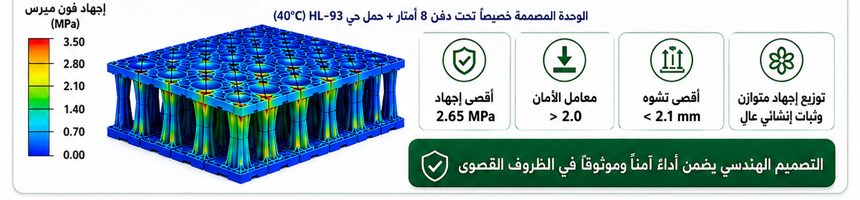
تحت وطأة الوزن المستدام غير القابل للخضوع للردم الترابي العميق، يُظهر البولي بروبيلين سلوكاً لزجاً مرناً. بمرور الوقت، وتحت إجهاد ثابت σ، يزداد الانفعال ديناميكياً:
ε(t) = σ/Eeffective(t)
تُظهر وحدات البولي بروبيلين (PP) القياسية الجاهزة انخفاضاً حاداً في معاملها الفعال عندما تتجاوز درجات الحرارة المحيطة تحت السطح 35℃. تبدأ الأعمدة الهيكلية الرأسية في التعرض لانبعاج دقيق موضعي. ومع انحناء الأعمدة، يتحول توزيع الحمل بشكل غير متساوٍ عبر مصفوفة القبو، مما يؤدي إلى تسلسل انهيار تدريجي لا يمكن لأي فحص سطحي اكتشافه حتى يفوت الأوان.
تُعدّل هندستنا المخصصة مصفوفة المواد الأساسية من خلال مركبات مسجلة الملكية، مما يعزز بشكل كبير من أداء مقاومة الزحف. من خلال توسيع المقطع العرضي للعمود الرأسي الداخلي وتحسين المورفولوجيا الهيكلية للكوبوليمر، يتم تثبيت معامل الزحف طويل المدى عند مستويات أعلى بكثير من العتبة الحرجة. تؤكد اختبارات الزحف المستقلة (CABR) دورة حياة هيكلية موثوقة تمتد لـ 50 عاماً تحت ظروف الدفن العميق والملامسة المستمرة للتربة بدرجة حرارة 40℃. يعد هذا أمراً بالغ الأهمية لضمان عمل نظام احتجاز مياه الأمطار كأصل استراتيجي طويل الأجل ضمن الخطة الشاملة لإدارة مياه الأمطار.
2. طبوغرافيا الواجهة البينية تحت السطحية للمنبع والمصب
لا يمكن التعامل مع خزان الاحتجاز تحت السطح كمكون بلاستيكي معزول؛ بل إنه يعمل ضمن نظام بيئي جيو-تركيبي معقد. تعالج هندسة الأبعاد المخصصة لدينا بشكل مباشر الواجهات البينية الحرجة مع الأعمال المدنية المحيطة:
• توافق نسيج التكسية الأرضية: تقضي الأبعاد المخصصة على الوصلات المعيارية غير المستوية، مما يضمن الحفاظ على تلامس سطحي سلس لنسيج التكسية الأرضية غير المنسوج والمثقوب بالإبر بوزن 400g/m². هذا يمنع هجرة جزيئات التربة وتشكيل هبوطات أرضية موضعية.
• حماية غشاء التبطين الأرضي: تشكل الحواف الحادة الناتجة عن القطع الميداني للوحدات القياسية خطراً معروفاً لثقب بطانة HDPE غير المنفذة بسمك 1.5mm. تضمن الحواف النهائية من المصنع لوحداتنا محيطاً أملس، مما يحافظ على السلامة الهيدروليكية المطلقة.
• تحمل دك الردم: تم تصميم إطاراتنا الخارجية الجانبية عالية التحمل لمقاومة التأثيرات الديناميكية المباشرة لضواغط الألواح الاهتزازية الثقيلة أثناء الردم الهيكلي، لتحقيق كثافة بروكتور المعدلة >95% بأمان دون حدوث أضرار ما بعد التركيب.
القسم 4: الثقة الفنية والالتزام الاستراتيجي
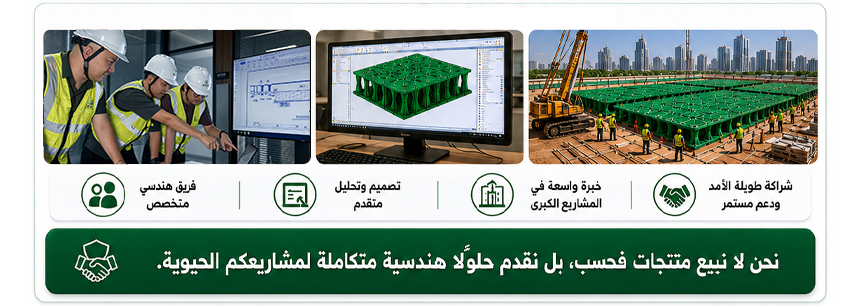
نحن نتجاوز بوعي سوق السلع الاستهلاكية ذات الحجم الكبير والمواصفات المنخفضة. إنتاجنا مصمم خصيصاً لمواجهة التحديات الهندسية حيث تفشل الحلول القياسية. إذا كان مشروعك عبارة عن تطوير بلدي أو تجاري ضخم يواجه أعماق دفن شديدة، وتقاطعات مرافق معقدة، وموافقات هيكلية حكومية صارمة، فإننا نقدم مركبات مواد شديدة التحمل ومعالجة قوالب مخصصة للقضاء على مخاطر الفشل الهيكلي تحت السطحي. لقد أثبت هذا التركيز الفريد قدرته على توفير الملايين لعملائنا من المسؤوليات الهيكلية المحتملة، وإعادة أعمال الحفر، والتعويضات المقطوعة.
قبل الاعتماد النهائي لتصميمك تحت السطحي أو توريد وحدات قد لا تصمد أمام المراجعات الهيكلية للسلطات المدنية المحلية، تأكد من التحقق من صحة تصميمك باستخدام بيانات أداء معتمدة.
تم التحقق من خصائص تحمل الأحمال ومقاومة الزحف لدينا بشكل مستقل من قبل جهات دولية معتمدة.
احصل على المخططات الهندسية الفنية
معتمد من المركز الوطني لفحص واختبار جودة هندسة البناء (CABR)، تقرير رقم BETC-T3AC-2025-02701(EN).يتوافق اختبار إجهاد الزحف طويل المدى لمدة 50 عاماً تماماً مع بروتوكولات CJ/T 542-2020 الملحق D.6.
انقر أدناه لتحميل كتاب البيانات الفنية الشامل، أو أرسل مخططات موقع مشروعك لتلقي تحليل إنشائي مخصص ومقترح لتحديد الأبعاد من مهندسي التطبيقات لدينا في غضون 24 ساعة.
👉 [تحميل الورقة البيضاء: الأحمال الهيكلية تحت السطحية وتحليل الزحف للمشاريع الضخمة التي تتجاوز 20,000 m³ (PDF)]
👉 [طلب مخطط هندسي مخصص لتحديد الأبعاد والمحاكاة الإنشائية لقدرة التحمل]
الأسئلة الشائعة الفنية: أسئلة جوهرية لمشروعك تحت السطحي
س: هل يمكن تعديل أبعاد وارتفاع وحدات تجميع مياه الأمطار المصنوعة من البولي بروبيلين (PP) لتجاوز خطوط المرافق القائمة تحت الأرض؟
ج: نعم. على عكس الوحدات ذات الأبعاد الثابتة القياسية التي تتطلب القطع اليدوي في الموقع—مما يؤدي إلى تدمير دعم الأعمدة—توفر وحداتنا أبعاداً مخصصة دقيقة وتغييرات في الارتفاع من خلال تكوينات قوالب مرنة للمشاريع التي تتجاوز 20,000 m³.هذا يحافظ على السلامة الهيكلية الكاملة ويلبي متطلبات الحجم والخلوص الدقيقة للتخطيطات تحت الأرضية المعقدة والمزدحمة.
س: ما هو أقصى حد لتحمل الأحمال لخزانات مياه الأمطار المخصصة من البولي بروبيلين في ممرات الطرق الحضرية؟
ج: نعم، يمكن تعديل وحداتنا الهندسية لتصل إلى قدرة تحمل أحمال رأسية تصل إلى 800kN/m²، عند اختبارها وفقاً للمعيار EN 17150 تحت درجة حرارة مستمرة تبلغ 40℃.يتعامل هذا التكوين بأمان مع أعماق دفن تتجاوز 4 أمتار وأحمال المرور الديناميكية المستمرة، بما يتوافق مع المعايير الدولية مثل HL-93 و Eurocode 1.
س: لماذا غالباً ما يكون البولي بروبيلين (PP) المعاد تدويره الأسود القياسي غير مناسب لمشاريع البنية التحتية الضخمة في الشرق الأوسط؟
ج: غالباً ما تفتقر المركبات السوداء المعاد تدويرها إلى التجانس الكيميائي وحزمة المثبتات المطلوبة لتحمل درجات حرارة التربة الجوفية المرتفعة في دول مجلس التعاون الخليجي، مما يؤدي إلى تحلل حراري تأكسدي سريع وزحف متسارع. تستخدم وحداتنا عملية تخصيص دقيقة للمواد المضافة (Masterbatch) مع بوليمر مشترك خام عالي النقاء، تتضمن مضادات أكسدة عالية الحرارة ومثبتات متطورة للأشعة فوق البنفسجية، مصاغة بدقة للتخزين في ظروف الصحراء
الخاتمة: وضع حجر الزاوية الإنشائي لإدارة مستدامة لمياه الأمطار
في الختام، بالنسبة للمشاريع الضخمة في منطقة دول مجلس التعاون الخليجي، لم يعد اختيار وحدة مياه الأمطار المناسبة مجرد قرار شراء بسيط، بل يؤثر بشكل مباشر على موثوقية وعمر نظام احتجاز مياه الأمطار بالكامل، وعلى نجاح استراتيجية إدارة مياه الأمطار على مستوى المدينة. ومن خلال توفير حلول مخصصة بقوة ضغط تصل إلى 800 kN/m²، ومقاومة استثنائية للزحف، وتكامل سلس مع المكونات الأولية واللاحقة، تقضي وحداتنا بشكل جذري على مخاطر فشل النظام الناتجة عن أوجه القصور الهيكلي في الوحدات القياسية. لا يحمي هذا القيمة طويلة الأجل للأصول تحت الأرض فحسب، بل يساهم بشكل كبير في الاستخدام المستدام للموارد المائية واقتصاديات دورة حياة المشروع. نحن ملتزمون بأن نكون شريكك الهندسي في بناء بنية تحتية قوية وفعالة ومستدامة لمياه الأمطار.
المحرر: لونا، قسم تخطيط المحتوى