News


Rainwater Harvesting System Cost Guide: Commercial & Industrial Pricing Breakdown
15 Oct 2026Rainwater Harvesting System Cost: What Commercial and Industrial Buyers Actually Pay
Residential rain barrel systems typically cost $300–$1,200 installed, larger cistern systems run $2,500–$15,000, and complete retail packages list between $8,160 and $21,500. Engineered commercial systems are quoted per project, because storage volume, traffic loading and ground conditions — not catalogue stickers — drive the final number. This guide breaks down every cost component, shows the sizing math, and explains where the money actually goes.
Prices below are third-party public price snapshots captured from retail listings in October 2026 — not YY-Tank quotes. Where factory-direct engineering prices are shown, they come from project-specific calculation; factory-direct pricing is calculated per project, based on volume, burial depth and loading class. Everything else — structure, drivers, sizing math, payback logic — you can use today.
What Does a Rainwater Harvesting System Actually Cost?
The honest answer is that "rainwater harvesting system" describes three different purchases, and quoting one price for all three misleads everyone. A garden rain barrel, a moulded polyethylene tank package and an engineered modular attenuation system under a car park share nothing except the rain.
Publicly listed prices captured in October 2026 sketch the consumer and light-commercial tiers clearly. Basic rain barrel installations range from $300 to $1,200, while larger cistern systems run $2,500 to $15,000 according to a Maryland landscaping contractor's published rates. A 137-gallon rain barrel lists at $214.95, school and household packages run $829.95 to $1,499.95, and complete rainwater collection systems list at $8,159.95 and $21,499.95 on a specialist US retailer. A 1,550-gallon above-ground collection kit — roughly 5.9 m³ — is listed at $5,656 plus freight.
| Tier | What you are buying | Observed public price band (Oct 2026) |
| Rain barrel setup | 50–300 gallon barrel, diverter, tap | $300–$1,200 installed |
| Cistern / tank system | 500–5,000 gallon moulded tank, filters, pump | $2,500–$15,000; 500-gal tank alone $800–$1,200 |
| Complete retail package | Above-ground kit with tank, filtration, pumping | $8,160–$21,500; 1,550-gal kit $5,656 + freight |
| Engineered commercial system | Modular underground storage, engineered to project loads and volumes | Quoted per project — volume × loading class × ground conditions |
That last row is the one commercial buyers ask us about, and it is the row no retailer can price for you. An engineered system under a logistics yard is a different structural product from a garden tank: it must carry traffic, resist groundwater, hold a calculated volume and discharge at a controlled rate. YY-Tank prices these systems per project because a per-cubic-metre number quoted blind would be dishonest — the same 200 m³ can legitimately cost very different amounts on sand versus saturated clay.
Buyers who think in floor area rather than volume can convert with one division: a 400 m² roof yielding 272 m³ per year works out to roughly 0.68 m³ of annual storage demand per square metre of catchment, before demand-side adjustment. Published consumer guides price options from $99 to $500 for the smallest residential setups, useful calibration at the barrel end only — per-square-foot math stops meaning anything once earthworks enters the bill.
What we can do — and what this guide does — is show you exactly which levers move the price, so you can sanity-check any quote you receive, including ours. Whether the project is a rainwater recycling system recovering process water or a straightforward irrigation cistern, the cost anatomy below is identical; only the weights differ.
The Six Components of an Engineered System Cost
Every engineered rainwater harvesting quote, whatever the brand, decomposes into six cost lines. Oxfam's WASH guidance makes the point bluntly for the aid sector: the storage tank constitutes the bulk of the cost. Our experience with commercial quotes says the same thing with one amendment — storage dominates, but earthworks is the line that surprises people.
The six components, and what actually drives each one:
| # | Cost component | What it covers | What drives its price |
| 1 | Storage modules | The structural tank: modular PP crates or equivalent | Volume needed; traffic loading class; material grade (virgin vs recycled PP) |
| 2 | Geosynthetics | Impermeable geomembrane (attenuation mode) or permeable geotextile (soakaway mode) | Wrapped surface area; membrane specification; welding QA |
| 3 | Filtration | Leaf separators, silt traps, first-flush diverters | Roof or catchment area; end-use water quality target |
| 4 | Pumping & controls | Pressure pump, controls, level sensors | Required flow and head; $80–$700 is typical for on-demand residential pumps; filters and pumps add roughly $300–$500 on small systems |
| 5 | Earthworks & excavation | Dig, bedding, backfill, dewatering | Soil class; groundwater table; burial depth; storage footprint |
| 6 | Installation labour | Assembly, connection, commissioning | Site access; whether modules need a crane or hand assembly |
In our quoting experience, two of these lines cause the most disagreement between expectation and invoice. The first is earthworks: buyers anchor on the module price and forget that digging, bedding and dewatering can rival the structure itself on wet sites. The second is geosynthetics: an attenuation system wrapped in impermeable geomembrane carries a different membrane bill than a soakaway wrapped in permeable geotextile, and the choice is dictated by ground permeability, not preference.
There is a structural reason modular storage shifts the earthworks line in your favour. Because the module lattice itself stores water, a high-void modular bed needs less dug volume than a gravel attenuation bed for the same storage — on our engineering comparison, more than 30% less excavation. On a tight urban site, that is also 30% less exported spoil and 30% less backfill bought in.
Pricing by Scale: 5 m³, 50 m³ and 500 m³ Compared
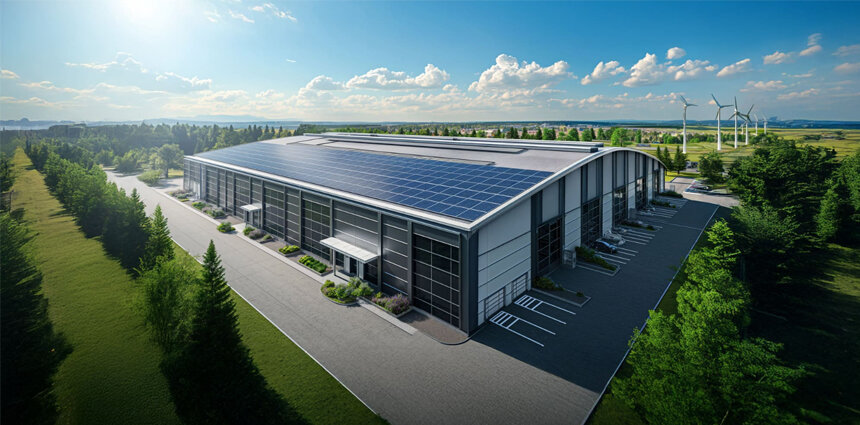
Commercial buyers think in cubic metres, retail listings think in gallons, and almost nothing published bridges the two. Here is the bridge. For orientation: 5 m³ ≈ 1,321 US gallons, 50 m³ ≈ 13,209 gallons, and 500 m³ ≈ 132,086 gallons.
| Design volume | Typical application | Consumer-market reference | Engineered modular territory |
| 5 m³ (~1,321 gal) | Garden irrigation, small building reuse | Moulded tanks dominate; 500-gal polyethylene tanks run $800–$1,200; public sizing guides put home irrigation in the 1,000–5,000 gallon band | Available as a small modular bed; usually beaten on price by a moulded tank at this size |
| 50 m³ (~13,209 gal) | Commercial building reuse, school or workshop irrigation | Above retail catalogue scope; custom moulded or sectional steel quotes vary widely | Core modular application — assembled from crates to exact volume; loading class chosen per surface |
| 500 m³ (~132,086 gal) | Campus, sports venue, industrial park attenuation | Not a retail product at all | Modular systems assemble freely in 5–500+ m³ range; YY-Tank reference projects collectively treat 500,000 m³ of rainwater per year |
Engineered (commercial) system pricing is quoted per project, not off a per-cubic-metre list. The defensible way to sanity-check a commercial quote is structural, not price-matching: count cubic metres, match the loading class to the surface above, and price the earthworks honestly for your ground conditions.
Two structural notes that matter at commercial scale. First, logistics: YYRH-MR modules ship flat-packed and nested, optimized to load 40'HC containers with tight dimensional tolerances, which spreads ocean freight across more storage per container. Second, retail versus engineered is a fork in the road, not a price ladder: a hardware-store kit and an engineered modular system are different products, and the comparison only becomes meaningful once your volume reaches double-digit cubic metres and anything drives over the top of the tank.
Where a quote comes from matters as much as what it contains. Factory-direct pricing removes at least one distribution layer between the injection moulding line and your site — YY-Tank moulds its own modules in a 15,000 m² manufacturing facility in Yancheng, Jiangsu, running high-speed injection presses on continuous daily cycles. A distributor reselling the same polymer at the same tonnage has to recover margin somewhere; on engineered systems it usually surfaces in the module line. Ask any bidder to state the manufacturing origin of the storage structure — it is the single fastest way to compare two quotes that look similar on paper.
How Installation Method Moves the Labour Line
The installation portion of a rainwater harvesting system cost is governed by one question: how does the tank get into the ground? The traditional answer — a crane lifting precast concrete rings or heavy one-piece tanks — adds equipment mobilization, certified operators and site access planning to the bill. A 500-gallon moulded tank needs no crane but does need delivery access; precast assemblies need both.
Modular PP systems change the labour equation at the module level. Each YYRH-MR module weighs 6.7 kg and assembles by hand, with no crane on the storage structure itself. The published installation sequence runs four steps — excavation and bedding, module assembly, geosynthetic wrapping and pipework, then backfill and surface reinstatement — and once modules are in place, backfill compaction can proceed with conventional heavy machinery, so the crane-free advantage does not slow the earthworks crews behind it.
What that means in cost terms: the labour line shrinks from specialist-lift territory to general-civil territory, and the schedule shortens accordingly — fewer trades queued on one critical path. It also removes the rental crane from the day-rate math entirely. For overseas projects the same flat-pack logic that helps warehousing helps the installation crew: modules arrive nested, decant cleanly from the container, and stage compactly beside a trench on congested urban sites.
If you want to see the assembly logic before committing, the site carries a 3D model walkthrough of the module structure and installation sequence — five minutes that makes any installer's method statement easier to judge.
How Traffic Loading Changes the Price
If a car, truck or fire lane crosses the finished surface, the loading class of the storage structure becomes the primary specification — and loading class, not volume, is what separates the product tiers. Choosing too light a module is the expensive mistake: it can mean re-excavation and re-installation after failure. Choosing too heavy is simply paying for capacity you never use.
When a contractor asks us which class to choose, our first question is never price — it is "what drives over it, and how deep can you dig?" The answer selects the module before any money is discussed.
The YYRH-MR series spans four loading grades:
| SKU | Vertical load | Lateral load | Material | Designed for |
| YYRH-MR-1000-HD | >85 T | >45 T | Virgin PP | Heavy-traffic roads, deep burial up to 8.0 m |
| YYRH-MR-1200-SD | >60 T | >25 T | Virgin PP | Light-traffic carriageways: commercial parking, emergency lanes |
| YYRH-MR-1200-EW | >35 T | >15 T | Standard PP | Greenbelt, pedestrian areas — essentially unloaded surfaces |
| YYRH-MR-1000-EW | Custom | Custom | Recycled PP | Project-specific specifications, recycled-content procurement requirements |
For North American readers mapping these numbers to familiar standards: the >85 T vertical rating of the HD module drastically exceeds the pressure exerted by the 32,000-lb (about 14.5-tonne) axle loads defined in AASHTO H-20 — engineered to meet or exceed H-20 wheel loads, per the published test documentation. YY-Tank publishes the third-party test reports themselves: national heavy-duty load testing by Fangyuan Test Group with certified vertical and lateral limits, and report numbers such as BETC-T3AC-2025-02701, all downloadable without registration.
Structurally, the load path runs through three components in every module: the top plate carries vertical load, the ribbed side plate resists lateral earth pressure and neutralizes hydrostatic pressure, and internal columns — fluted to increase moment of inertia, ribbed to resist shear — transfer the load to the base. That is why loading class and price move together: a higher grade spends more polymer in exactly these three places, and molecularly modified PP resists the long-term thermoplastic creep that cheaper resins cannot. The structural designs behind those load paths are protected by dozens of national utility model patents, which is worth checking when a competing module quotes similar numbers without test documents behind them.
The cost logic in one paragraph: specify the EW grade under a pedestrian plaza and you have bought the cheapest compliant structure; specify the HD grade under a bus road and you have bought survivability. The failure mode of under-specifying is not a discount — it is a re-dig. We have seen the arithmetic on both sides, and over-specifying one grade above need costs less than under-specifying by an order of magnitude.
Storage Cost Calculator: From Roof Area to Cubic Metres
Volume is the master variable of system cost — storage is the bulk of the spend — so sizing discipline is cost discipline. The collection side uses one formula that every civil engineer recognizes:
V (m³/year) = A (m²) × R (m/year) × C
• A = catchment (roof) area in square metres
• R = annual rainfall depth in metres
• C = runoff coefficient of the surface
This is the standard runoff-coefficient method, a generic engineering algorithm. Worked example — and this is a real query pattern buyers search for: a 400 m² roof in a region with 800 mm annual rainfall, sheeted in metal:
1. Convert rainfall: 800 mm = 0.8 m
2. Gross collection: 400 m² × 0.8 m = 320 m³
3. Apply runoff coefficient for metal roofing, C = 0.85: 320 × 0.85 = 272 m³ per year
Runoff coefficient reference values:
| Surface | Typical C |
| Metal, tile or membrane roof | 0.85–0.95 |
| Concrete or asphalt paving | 0.80–0.90 |
| Compact gravel | 0.70 |
| Turf (soil- and slope-dependent) | 0.20–0.35 |
Two adjustments turn gross yield into a tank size. Demand: storage only pays back water you actually use, so the tank should be sized near the smaller of annual supply and annual demand — an irrigation-led project behaves completely differently from a toilet-flushing reuse project, which is why the rainwater harvesting for irrigation guide treats demand estimation as its own subject. Buffer: attenuation systems add design storm volume on top of reuse volume. For the full treatment of tank sizing — seasonal distribution, first-flush losses, safety margins — the tank size guide carries the adjustment factors, and this calculator is its cost-side companion.
Our engineering team walks every quote requester through exactly this calculation before talking money, because a buyer who knows their 272 m³ can recognize a 150 m³ undersized proposal — or a 400 m³ oversold one — on sight. That five-minute check is the cheapest cost control in the entire procurement.
Return on Investment: When Is It Worth It?

"Are rainwater harvesting systems worth it?" is a payback question, and payback has three inputs: what water costs you now, what the system yields, and how long the asset lives.
Water savings first. Substituting harvested rain for mains supply is commonly valued at up to $4.60 per kilolitre in published estimates. Illustratively: the 272 m³ annual yield from the worked example above, fully reused, offsets about $1,250 of mains water per year at that reference rate (272 kL × $4.60 ≈$1,251). One published academic scenario puts whole-system numbers together: $22,386 equipment investment, $1,589 annual operating cost, and $2,236 annual value of harvested water — a simple payback of roughly ten years before incentives (22,386 ÷ 2,236 ≈ 10.0).
Second input: value beyond the water bill. In jurisdictions metering stormwater discharge, an attenuation system reduces the billed runoff volume; where certification schemes grade site drainage, source control earns credits. These are regulatory questions with local answers, so treat them as upside to verify with your authority rather than promise from a guide.
Third input — and the one most quotes ignore — is asset life. A tank that lasts thirty years and one that lasts fifty are different investments wearing the same price tag. YYRH-MR modules are made of molecularly modified PP that resists long-term thermoplastic creep, and the 50-year creep performance is not a brochure claim: the China Academy of Building Research (CABR) sustained 25% of maximum failure load on full-size assemblies and concluded zero collapse over the project lifecycle, with the test report downloadable in English from the downloads centre.
For context on other materials, published tank-industry guidance credits concrete tanks with 30 to 50 years of service given consistent maintenance — respectable, but with the caveat that the structure does not move once poured, while modular beds extend in increments as needs grow.
Warranty terms in writing — years and conditions — are provided with every quote. What we can state today is the service frame behind every YY-Tank quote: engineering responses to email within 4 working hours.
The Maintenance Line: Budgeting for Upkeep
A system's cost does not end at commissioning, and the buyers who budget maintenance from day one are the ones whose payback math survives contact with reality. The good news is that upkeep divides into predictably small lines — and the structure itself is, by design, the line you stop thinking about.
Filtration is where maintenance money actually goes, and pre-tank filtration is what protects everything downstream of it; published maintenance guidance for potable-grade systems is explicit that effective pre-tank filtration is essential to protecting treatment components. Household-level guidance converges on a simple rhythm: check the system and seals monthly for leaks or wear, keep gutters and leaf separators clear, and flush roof debris after long dry periods. Pump servicing follows the manufacturer's interval; on small systems the pump was an $80–$700 purchase to begin with, so its service line scales accordingly.
The storage structure is the part that should not appear on your maintenance schedule. Molecularly modified PP is chemically inert underground and food-grade safe — there is no coating to renew, no corrosion protection to inspect, no joint sealant campaign every decade. Contrast that with steel tanks, which sit at the top of published strength rankings but carry corrosion protection as a standing upkeep item, or concrete, whose published 30–50 year service life is explicitly conditioned on consistent maintenance. Servicing requirements of that kind are real money over a 50-year horizon; polymer inertia is the quiet cost saving.
A practical budgeting note from our servicing conversations: systems sized with the calculator above and fitted with correctly rated pre-filtration tend to need attention in hours per year, not days. For the operational how-to — seasonal checklists, sediment handling, pump care — the rainwater harvesting maintenance series covers execution in depth; this guide's job is only to make sure the line item exists in your spreadsheet before the first storm season finds it.
Regional Price Snapshot: UK, India, Philippines
Buyers search prices with their country attached, because installed cost is local labour and local ground. Three quick snapshots — third-party consumer-market figures for calibration, each followed by the engineered-system view.
United Kingdom
The average UK home rainwater harvesting system costs around £2,500, excluding installation, per Checkatrade's price guide. The UK is also the market where system type matters most in the price: SuDS compliance drives source control into planning conditions, and the attenuation-versus-soakaway decision changes both membrane specification and approval path. YY-Tank's modular systems run both applications — impermeable geomembrane for attenuation, permeable geotextile for soakaway — off one module platform.
India
Retail marketplace listings in India span ₹6,500 to ₹76,599 per piece for rainwater harvesting systems. That band describes consumer-scale products; a manufacturing plant or campus project is quoted per structure after a recharge-potential and monsoon-yield calculation. The cost logic that matters locally: high seasonal rainfall concentrates enormous yield into a few months, which rewards storage economics — the per-cubic-metre cost of storing monsoon peaks decides project viability more than the pump or filter lines.
Philippines
High annual rainfall and typhoon-frequency events give Philippine roofs exceptional yield per square metre, and the consumer market relies largely on imported tanks and barrels. For commercial and industrial projects, the engineered view travels well: modular systems ship flat-packed in 40'HC containers with loading optimized per unit of storage, which is what makes factory-direct supply practical for island logistics. Request the freight-inclusive comparison with any quote — it is a bigger share of project cost here than in continental markets.
What Real Projects Look Like: Two Reference Installations
Cost guides get honest when they touch projects. Two reference installations from the YY-Tank project list — structured project parameters (volume, burial depth, loading grade, duration, year) are documented per project, and the selection logic behind each is instructive today.
Suzhou High-Speed Rail New Town. A dense urban commercial district puts the hardest combination of constraints on a stormwater design: heavy surfaces above, premium land value below, and authorities watching discharge. Under those constraints the storage structure has to carry loads while consuming as little excavation volume as possible — precisely the trade where modular high-void storage earns its keep against alternatives, with the 30%-less-excavation factor doing double duty as a land-cost saving.
Wuxi Xinwu Xinhua Intelligent Manufacturing Industrial Park. Manufacturing sites ask a different question: not only how much rain falls, but how much process and non-potable demand exists to absorb it. Large roof areas push annual yield high — the roof-area calculator above applies directly — and reuse for washing, cooling make-up and landscaping turns attenuation volume into working volume. That is the quiet reason industrial parks appear disproportionately in rainwater harvesting project lists: their demand profile monetizes storage faster than most commercial uses.
Across its reference projects, YY-Tank systems treat some 500,000 m³ of rainwater per year — a scale no retail product category touches, and the reason this guide keeps the two markets in separate tables.
Frequently Asked Questions
How much do rainwater harvesting systems cost?
Consumer benchmarks: rain barrel setups $300–$1,200 installed, cistern systems $2,500–$15,000, complete retail packages $8,160–$21,500. Engineered commercial systems are quoted per project — volume, loading class and ground conditions decide. A 400 m² roof at 800 mm rainfall yields about 272 m³ per year, the number a commercial quote starts from.
Are rainwater harvesting systems worth it?
Worth is a payback calculation: water tariff savings (published estimates run up to $4.60 per kL), stormwater fee reductions, and asset life. One academic scenario shows ~10-year payback ($22,386 investment against $2,236 yearly value). Structures creep-tested for 50-year zero-collapse service push lifetime value well past payback.
How much does it cost to install a rainwater harvesting system?
Installation splits into filtration/pumping hardware — roughly $300–$500 extra on small systems, pumps $80–$700 — and groundworks, which swing hardest with soil and groundwater. Modular PP tanks assemble by hand at 6.7 kg per module with no crane, trimming the labour line versus lifted structures.
How long do rainwater harvesting systems last?
Concrete tanks: 30–50 years with consistent maintenance. Moulded polyethylene depends on UV exposure and wall spec. YYRH-MR modular PP carries a CABR 50-year creep test at 25% of failure load with zero collapse — engineered for the project lifecycle, not the warranty cycle. Filtration and pumps are service items on any system; keep spares in the budget.
What drives the cost of a commercial rainwater harvesting system?
Three inputs, in order of weight: storage volume (set by the catchment-and-demand math above), loading class (>35 T, >60 T or >85 T vertical), and ground conditions driving earthworks. Factory-direct supply removes a distribution layer from the module line. A credible commercial quote shows all three assumptions on its face.
How much does maintenance cost after installation?
Modular PP storage needs no coating renewal or corrosion inspection; upkeep concentrates in filtration — monthly visual checks plus periodic pump service sized to the pump line ($80–$700 purchase basis). Budgeted honestly, servicing runs to hours per year on a correctly filtered system, not days.
Get an Engineered Quote for Your Project
Retail bands got you oriented; your project deserves its own numbers. YY-Tank (Jiangsu Yingyuan Sponge City Technology Co., Ltd.) engineers each quote from three inputs — target attenuation volume in m³, maximum burial depth in metres, and estimated surface load — the same fields in our Hardcore Engineering Requirement Form. Send those three numbers to info@yy-tank.com or via WhatsApp, and you will get back a sized proposal, not a catalogue page; engineering responses to email run within 4 working hours.
Supporting documents, no registration wall: the downloads centre carries 14 verified documents including per-SKU load test reports (e.g. BETC-T3AC-2025-02701), the 7-page English CABR 50-year creep test report, and a bid-document package, alongside ISO certification records. Module details and specifications: YYRH-MR series overview.
Still comparing placements? The cost difference between above-ground and underground tanks is the next decision after budget — and because storage is the bulk of the spend, getting the sizing math right before you shortlist installers remains the cheapest cost control in this entire guide.
Sources
• CABR 50-year creep test (China Academy of Building Research, 25% failure load, zero-collapse conclusion)
• YY-Tank product specifications — YYRH-MR series vertical/lateral load ratings, burial depth, materials
• Fangyuan Test Group heavy-duty load test reports, BETC-T3AC-2025-02701
• YY-Tank downloads centre — 14 verified documents, free download
• YY-Tank reference project list and aggregate annual treatment volume
• AASHTO H-20 axle-load benchmark note, YY-Tank downloads FAQ
• Maryland landscaping contractor published pricing (third-party snapshot)
• RainHarvest retail listings, complete-system price points (third-party snapshot)
• RMS product listing, 1,550-gallon kit (third-party snapshot)
• OffGrid Dwellings component pricing (third-party snapshot)
• University of Arizona Water Resources Research Center — pump pricing
• Checkatrade UK price guide (third-party snapshot)
• IndiaMART marketplace listings (third-party snapshot)
• Oxfam WASH rainwater harvesting guidelines
• Smart Water Online savings estimate
• Morehead State University scholarly works — system economics scenario
• Kennedy Tank materials guide — concrete tank service life
• Aquabarrel sizing guide — capacity bands
• Standard runoff-coefficient method and unit conversions (generic engineering references)
Related Reading
Budget ranges and payback assumptions sit in the cost analysis in our rainwater harvesting guide, commercial PP modular attenuation systems, complete rainwater harvesting system cost breakdown, commercial rainwater harvesting ROI analysis and Get a Quote.