News


Stormwater Runoff: Problems, Management & Solutions | YY Tank
05 Nov 2026Stormwater Runoff: Causes, Problems, and Solutions
Stormwater runoff is the rain that a surface cannot absorb, so it slides instead of soaking in. Watch a storm cross any town and the pattern repeats — roofs shed, pavement sheets, and gutters gather the excess. The result is a fast, dirty current with nowhere natural to go. That current is the single biggest water problem a developed site creates. This guide defines runoff, lists the problems it causes, and sorts the solutions by scale.
What Is Stormwater Runoff?
The stormwater runoff definition starts with an impervious surface. Natural ground absorbs most rainfall; roofs, roads, and parking lots absorb almost none. What is stormwater runoff, then? It is the share of a storm that finds no way into the soil and travels overland instead. Its route runs through gutters, across pavement, and into drains and ditches.
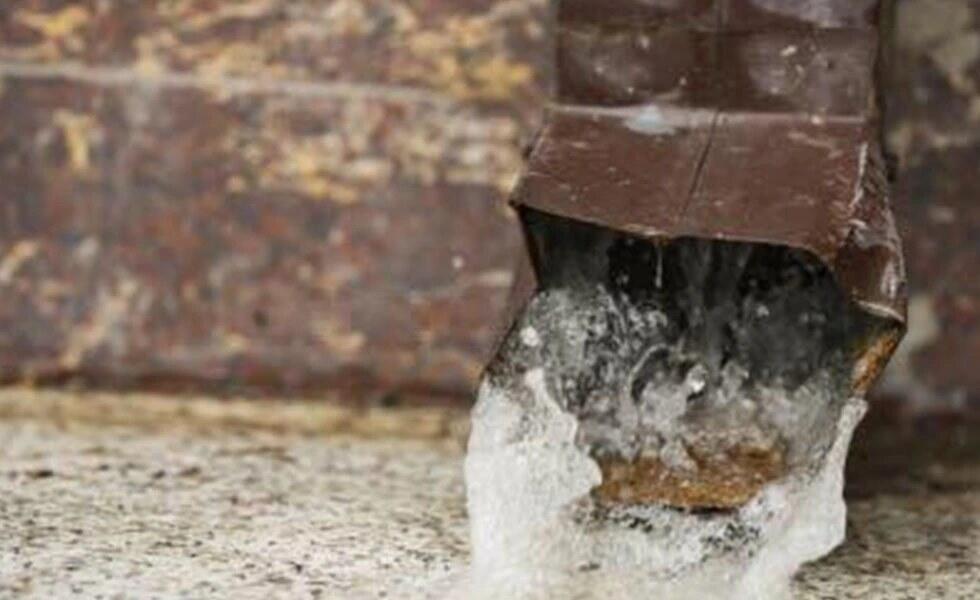
The proportion shifts with development. A woodland site absorbs the great majority of a modest storm, while a paved downtown sheds nearly all of it. Every parking lot added to a watershed moves that split, which is why planners track impervious cover as a core indicator.
Engineers distinguish runoff from its mirror term, run-on. Runoff leaves a site; run-on arrives from neighboring land. Both follow the same physics, and a drainage design must account for both.
You will also see the shorter word runoff used alone, and surface runoff as the formal synonym in hydrology texts. All three name the same moving water. Examples surround every developed place. A wet parking lot drains to one corner, a roof downspout dumps beside a foundation, and a farm field washes sediment into a creek.
Why Stormwater Runoff Is a Problem
Unmanaged runoff concentrates three damages, and they compound each other:
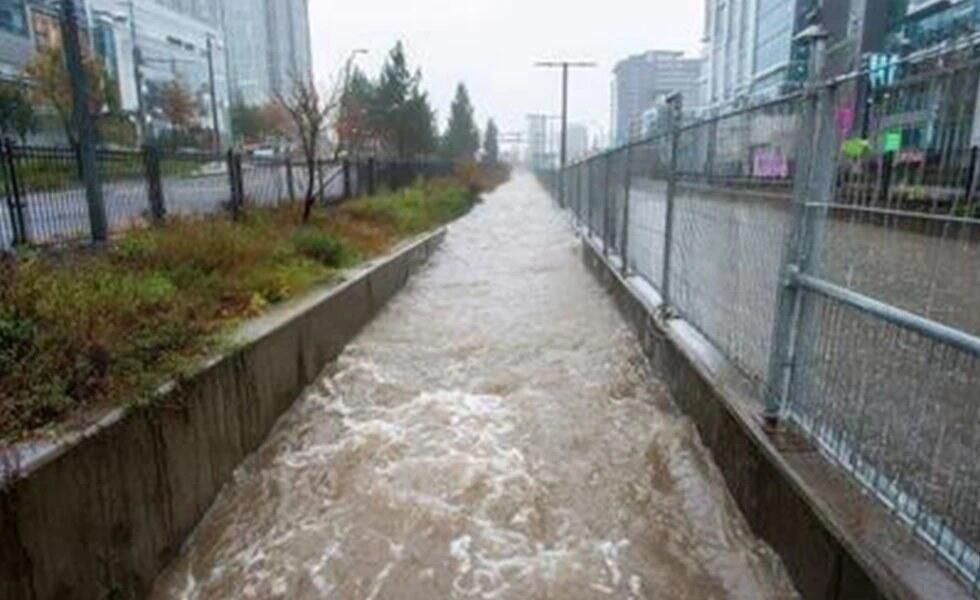
• Flooding. Water that used to soak in now arrives at drains all at once. Pipes and culverts sized for fields drown under parking lots, and the overflow finds basements and intersections first.
• Pollution. Runoff is the last untreated discharge in most cities. It carries oil and heavy metals from roads, nutrients from lawns and farms, sediment from construction, bacteria from pet waste, and litter of every kind.
• Erosion and habitat loss. Fast water scours stream banks and silts spawning gravel. The damage does not stay put — it travels downstream to someone else's jurisdiction, along with the cleanup bill.
Stormwater runoff pollution deserves special emphasis because it is invisible until it is not. A clear sheet of water across a parking lot is already carrying whatever the pavement held. Waterways absorb the load, and the creeks at the bottom of the watershed pay first.
California's coastal cities illustrate the compounding effect. Dry-season buildup on miles of pavement flushes into the surf during the first storms. That is why the state's municipalities treat the first flush as a pollution event, not just a drainage one.
How to Manage Stormwater Runoff
Stormwater runoff management rests on four verbs: slow it, spread it, sink it, store it. Slow the water and erosion drops. Spread it and infiltration begins. Sink it into soil or a permeable surface and volume shrinks. Store what remains and the peak passes without damage.
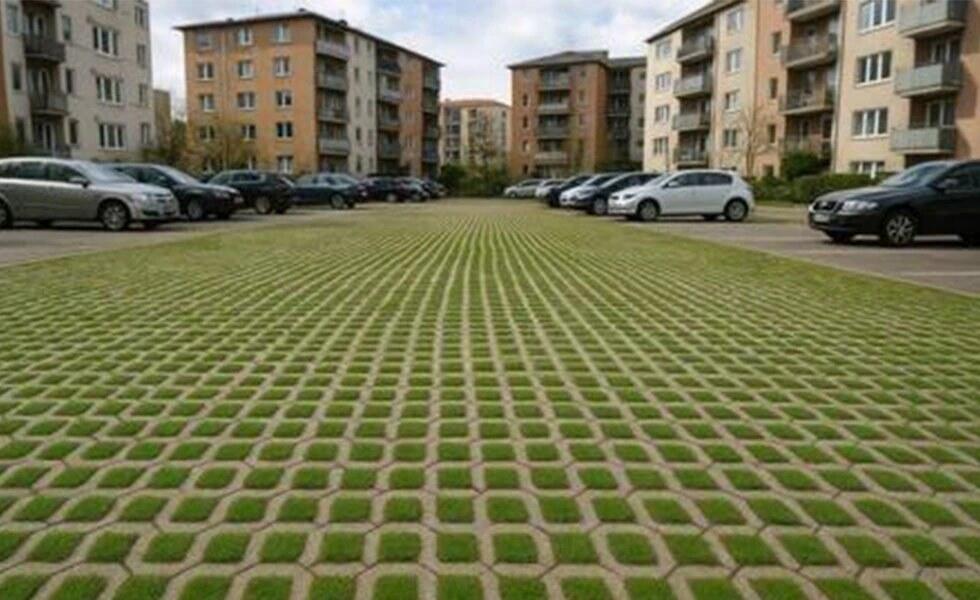
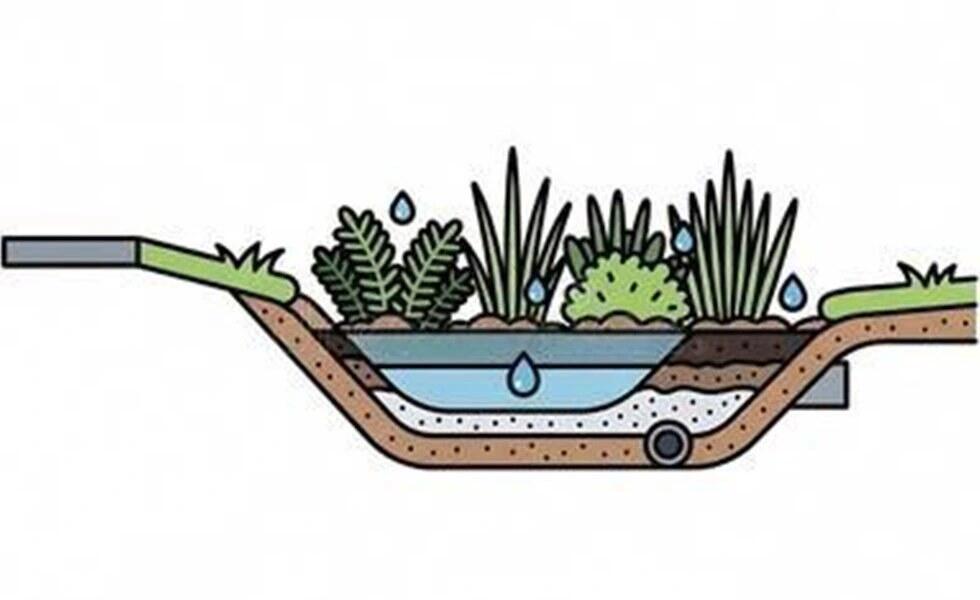
Practice sorts into two layers. Green infrastructure works with soil and plants — rain gardens, bioswales, permeable paving, urban tree canopy. Gray infrastructure moves water by structure — inlets, pipes, culverts, and buried storage. Mature projects combine both: green layers absorb the frequent small storms, gray structures carry the rare large ones.

Maintenance holds the whole stack together. A clogged inlet or a failed permeable surface silently hands the problem back to the pipe network. Every solution below assumes someone inspects it on a schedule.
Stormwater Runoff Solutions by Scale
The right solution depends on how much surface you control:
| Scale | First-line solutions | What they do |
|---|---|---|
| Property | Rain barrels, rain gardens, downspout redirection, permeable paving | Slow and sink the water before it leaves the lot |
| Site / development | Detention structures, underground storage, infiltration basins, construction-phase sediment controls | Cap the discharge rate at what downstream pipes accept |
| Municipal | Culvert upgrades, green streets, retention basins, stormwater utility funding | Manage the network as one system |
No single row works alone. A property that disconnects its downspouts shrinks the load the municipal network sees. A city that upgrades culverts protects every property downstream at once — the scales reinforce each other.
Site-scale storage is where buried infrastructure earns its footprint. An attenuation tank beneath a parking lot holds the storm peak, then releases it at the permitted rate. The stormwater attenuation tanks hub details that structure. Property-scale harvesting pairs with it: capturing roof runoff for reuse removes volume before it ever becomes a drainage problem.
Sizing connects the scales to real numbers. Three inputs drive most engineered quotes — storage volume, loading class, and ground conditions. Collect those three and a supplier can return a layout instead of a catalogue page.
Every scale links back to one discipline — the practice is stormwater management, and our stormwater management hub covers the whole system. For the full solution catalogue, see our stormwater management solutions guide, and for the water itself, start at what is stormwater.
Who Is Responsible for Stormwater Runoff?
Responsibility follows the water's path. A property owner typically manages runoff from their own roof and paving up to the property line. The municipality owns and maintains the public network — inlets, pipes, and outfalls — once water enters it. State transportation departments handle highway drainage separately.
Boundaries create disputes, and ordinances resolve them. Many local codes prohibit redirecting runoff onto a neighbor, and new developments must prove their post-construction discharge does not exceed pre-construction levels. Confirm the local ordinance before any grading work, because the rules vary widely by jurisdiction.
Planning a site-scale fix? Send the catchment area and discharge limits to YY Tank for an engineered layout within 24 hours.
Frequently Asked Questions
Where does stormwater runoff go?
In most cities it flows into storm drains, through a pipe network, and out to the nearest stream or lake — usually without treatment. Some systems route it to detention basins that release it slowly, and newer projects send a share into infiltration or storage instead. The destination matters, because everything the water collected travels with it.
How to prevent stormwater runoff?
You cannot prevent rain, but you can prevent it from leaving as runoff. Break up impervious cover with permeable paving, route downspouts into gardens or barrels, and plant deep-rooted vegetation that soaks water in. On larger sites, add detention or underground storage so the peak leaves at a controlled rate.
How to deal with a neighbor's water runoff?
Start with the conversation and a drainage plan before any legal step. Confirm where the water enters, since the fix is usually a swale, a berm, or a redirected downspout on the source side. Check municipal rules, because many cities regulate drainage across property lines. Document with photos, and involve the local drainage authority if talks stall.
Are stormwater ponds safe to swim in?
No — stormwater ponds are not treated for swimming. They collect whatever the watershed delivers, including bacteria, hydrocarbons, and algae blooms. Most communities restrict access for exactly this reason, and some ponds hold a permanent water quality pool that looks inviting and performs a function. Enjoy them from the bank.
What is stormwater?
Stormwater is the water from rain and snowmelt that flows off surfaces instead of soaking into the ground. It becomes runoff the moment a surface sheds it. The definitions, the spelling question, and the main types all live on our stormwater explainer page.