



![[أخبار سارة] إدراج شركتنا بنجاح ضمن القائمة الأولى للمؤسسات التكنولوجية المعتمدة في مقاطعة جيانغسو لعام 2025!](https://oss.yy-aicloud.com/uploads/69c33be2eeba08e5e15c4e6d09c8333a17843461041a9.png?x-oss-process=image%2Fresize%2Cm_lfit%2Cw_500%2Fwatermark%2Ctext_aHR0cHM6Ly93d3cueXktdGFuay5jb20v%2Ct_01%2Ccolor_FFFFFF%2Csize_30%2Cfill_1)

نظام حصاد مياه الأمطار: الدليل الشامل للتجميع، التخزين، وإعادة الاستخدام
30 Jun 2026تؤثر ندرة المياه الآن على أكثر من ملياري شخص في جميع أنحاء العالم، وهو ما ينعكس بشكل عاجل على سوق حصاد مياه الأمطار العالمي؛ حيث بلغت المبيعات 951 مليون دولار في عام 2024، مع توقعات بنمو سنوي مستمر بنسبة 6-7% حتى عام 2031. وقد توقفت الحكومات من لندن إلى بكين عن التعامل مع تجميع مياه الأمطار كخيار تكميلي؛ إذ تلزم لوائح البناء (Part H3) في المملكة المتحدة، والمعيار الصيني GB 50400، وبرنامج البنية التحتية الخضراء التابع لوكالة حماية البيئة الأمريكية (US EPA)، بإدارة مياه الأمطار في الموقع أو تحفز عليها بقوة. (ملحوظة هندسية: يتماشى هذا التوجه عالمياً مع استراتيجية الصرف المستدام لبلدية دبي لعام 2025 ونظام التقييم بدرجات اللؤلؤ "استدامة" في أبوظبي لإلزامية إدارة السيول وتدوير المياه). وفي الولايات المتحدة، تسمح معظم الولايات بحصاد مياه الأمطار وتدعمها، حيث تعفي تكساس معدات مياه الأمطار من ضريبة المبيعات وتدرج كاليفورنيا هذه الأنظمة في كود البناء الخاص بها. وفي المملكة المتحدة، يتم الترويج على نطاق واسع لاستخدام مياه الأمطار المحصودة للأغراض غير الصالحة للشرب مثل شطف المراحيض والري لتقليل الطلب على شبكات المياه الرئيسية.
يُعرف نظام حصاد مياه الأمطار بأنه نظام هندسي متكامل يقوم بالتقاط مياه الأمطار من أسطح التجميع مثل أسطح المباني أو المساحات المرصوفة، وتوجيهها عبر عناصر الترشيح والتصفية، ثم تخزينها في خزانات أرضية أو فوق الأرض، وجعلها متاحة للاستخدامات غير الصالحة للشرب بما في ذلك ري المساحات الخضراء، شطف المراحيض، والعمليات الصناعية. وتنتج شركة "جيانغسو يينغ يوان لتكنولوجيا مدن الإسفنج المحدودة" وحدات التخزين المركبة من البولي بروبيلين (PP Modular) التي تشكل العصب الهيكلي لهذه الأنظمة، بطاقة إنتاجية سنوية تبلغ 150,000 متر مكعب تلبي احتياجات المشاريع الهندسية في أكثر من 30 دولة.
يغطي هذا الدليل أنواع الأنظمة، المكونات الأساسية، منهجية الحسابات الهيدروليكية لتحديد السعة، بيانات العائد على الاستثمار (ROI)، مسارات التدفق الإنشائي للتركيب، والأطر التنظيمية الحاكمة في ستة أسواق رئيسية.
جدول المحتويات
• ما هو نظام حصاد مياه الأمطار؟
• أنواع أنظمة حصاد مياه الأمطار
• المكونات الأساسية وتكنولوجيا الخزانات المركبة من البولي بروبيلين (PP)
• كيفية حساب السعة الهيدروليكية لنظامك
• تحليل التكاليف والعائد على الاستثمار (ROI)
• نظرة عامة على مسار التركيب الإنشائي
• اللوائح والمعايير الهندسية العالمية
• لماذا تختار أنظمة PP المركبة؟
• الأسئلة الشائعة
ما هو نظام حصاد مياه الأمطار؟
نظام حصاد مياه الأمطار هو حل هندسي يقوم بجمع مياه الأمطار من الأسطح والمسطحات، ثم فلترتها وتخزينها وتوزيعها لاستخدامات المياه غير الصالحة للشرب أو القابلة للشرب.بخلاف أنظمة البراميل والمزاريب البسيطة المستخدمة في حدائق المنازل، تعتمد الأنظمة التجارية الحديثة على أربع مراحل هندسية متسلسلة لضمان توفير مياه نظيفة ومضغوطة عند نقطة الاستخدام.
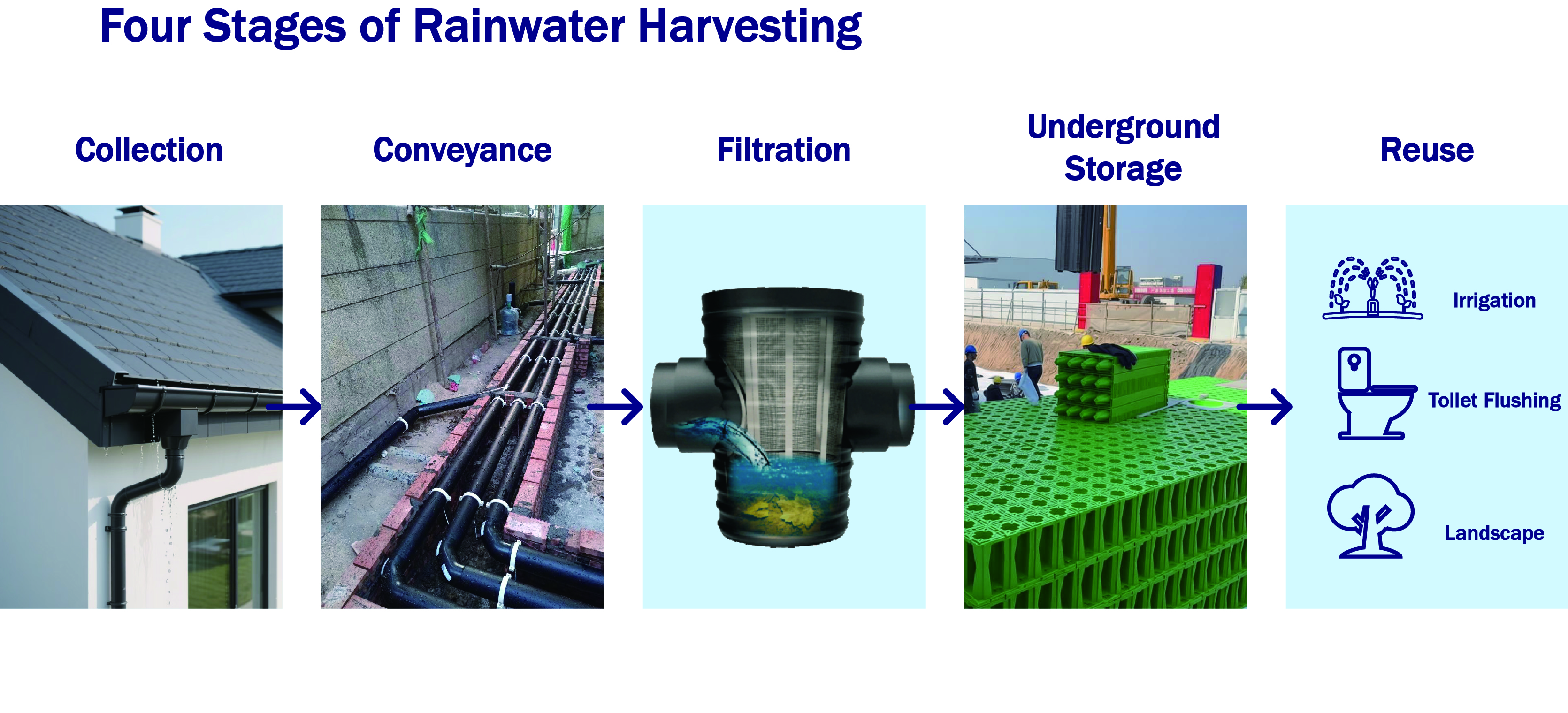
المراحل الأربع الأساسية:
التجميع - تهطل مياه الأمطار على أسطح المباني أو المساحات المرصوفة. تختلف كفاءة التجميع من الأسطح باختلاف المواد: يمكن للأسطح المعدنية تحقيق كفاءة تصل إلى 95%، بينما تصل الألواح الإسفلتية عادةً إلى حوالي 85%. يوفر القرميد الطيني والخرساني كفاءة تقارب 90%.
النقل - تقوم المزاريب وأنابيب التصريف بتوجيه المياه نحو منطقة التخزين. يُوصى بميل مناسب لا يقل عن 1/16 بوصة لكل قدم لمنع ركود المياه. يجب تنظيف المزاريب بشكل ربع سنوي، حيث يعد انسدادها السبب الأول لفشل النظام.
الترشيح - يقوم محول التدفق الأول (First-flush diverter) بالتخلص من التدفق الأولي لكل هطول مطري، والذي يحمل أعلى تركيز من الغبار وفضلات الطيور وحبوب اللقاح وحطام السطح. المعيار التوجيهي الشائع هو تحويل 1 جالون من الماء لكل 100 قدم مربع من مساحة السطح (ما يعادل تقريباً 1 لتر لكل 10 أمتار مربعة). بعد التدفق الأول، تمر المياه عبر مرشح شبكي أو دوامي (Vortex filter) قبل دخولها إلى وحدة التخزين.
التخزين والتوزيع - تدخل المياه المرشحة إلى الخزان الأرضي المركب من البولي بروبيلين (PP)، حيث تُحفظ بنسبة فراغ (Void ratio) تبلغ 92%، مما يعني أن الحجم الداخلي بأكمله تقريباً متاح لتخزين المياه. تقوم محطة الضخ بتوصيل المياه المخزنة إلى نقطة الاستخدام عند الطلب. يجب أن تكون الخزانات معتمة أو مقاومة للأشعة فوق البنفسجية لمنع نمو الطحالب.
تمثل وحدات التخزين المركبة من PP الجيل الثالث من تكنولوجيا خزانات مياه الأمطار. كانت وحدات الجيل الأول عبارة عن صناديق بلاستيكية مجوفة بسيطة بنسبة فراغ 60-70% وقدرة تحمل محدودة (أقل من 10 طن/متر مربع). قدمت تصميمات الجيل الثاني تسليحاً مضلعاً، مما رفع نسب الفراغ إلى 85-90% ومعدلات التحميل إلى 20-40 طن/متر مربع. تحقق وحدات الجيل الثالث الحالية - والتي يمثلها المعيار القياسي Polystorm Xtra - نسبة فراغ تتجاوز 92% وقوة انضغاط تبلغ 80 طن/متر مربع. وتطابق سلسلة Hurricane HD من شركة Yingyuan هذا المستوى بقدرة تحميل معتمدة تبلغ 85 طن/متر مربع.
تكمن أهمية هذا التطور الهندسي في تأثيره المباشر على كمية المياه التي يمكن تخزينها لكل متر مكعب من الحفر. تخزن وحدة PP الحديثة حوالي 950 لتراً لكل متر مكعب من الحجم المركب، مقارنة بـ 300-400 لتر للأنظمة المليئة بالحصى، و1000 لتر لخزان خرساني أحادي الجدار يشغل مساحة أكبر بكثير لكل وحدة تخزين.
أنواع أنظمة حصاد مياه الأمطار
يمكن تصنيف أنظمة حصاد مياه الأمطار وفقاً لأربعة أبعاد: سطح التجميع، نوع التخزين، الاستخدام النهائي، والنطاق؛ حيث يؤثر كل منها على التكلفة، ومستوى التعقيد، والمدى الملائم لمشروع معين.
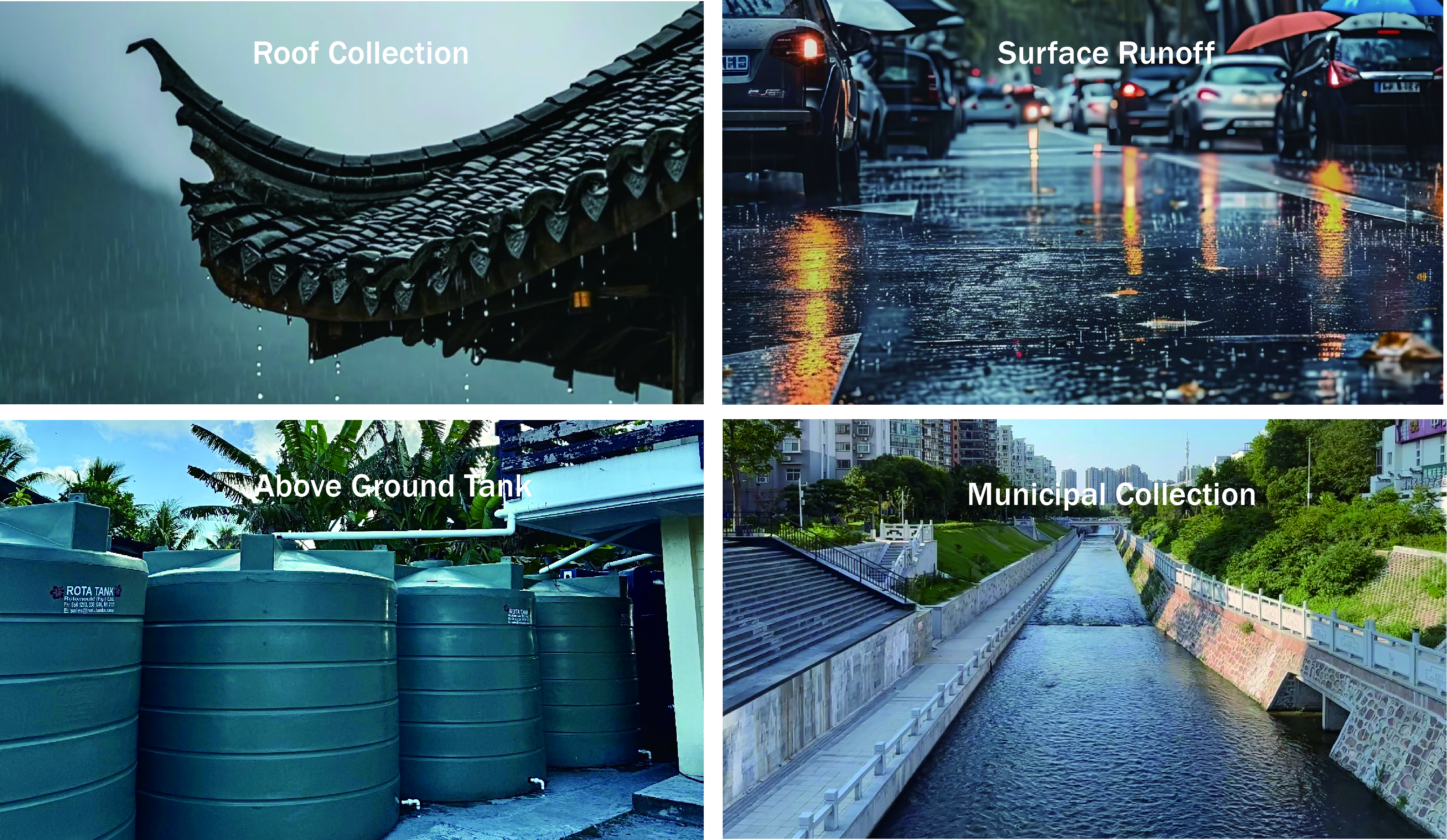
التصنيف حسب سطح التجميع:
• تجميع أسطح المباني يوفر أعلى جودة للمياه وكفاءة تجميع (85-95% حسب المادة)، مما يجعله مثالياً للمباني السكنية والتجارية.
• تجميع الجريان السطحي يلتقط مياه الأمطار من مواقف السيارات والطرق والأسطح الأرضية. تتطلب جودة المياه المنخفضة ترشيحاً أكثر قوة، لكن الكميات الكبيرة المتاحة من المساحات المرصوفة تبرر الاستثمار في المعالجة.
التصنيف حسب نوع التخزين:
• خزان PP الأرضي المركب لا يشغل أي مساحة سطحية، ويوفر استقراراً حرارياً، ونسبة فراغ 92%. وهو الخيار الأمثل للمشاريع التجارية والبلدية ذات المساحات المحدودة.
• الخزان فوق الأرض (الصلب، الألياف الزجاجية، أو البولي إيثيلين) أسهل في التركيب ولكنه يستهلك مساحة سطحية وعرضة لتقلبات درجات الحرارة. تعتبر خزانات البولي إيثيلين خياراً شائعاً نظراً لتكلفتها المعقولة، وزنها الخفيف، ومقاومتها للأشعة فوق البنفسجية.
• الخزان الخرساني يوفر نسبة فراغ 100% ولكنه يزن 30 ضعفاً لكل وحدة حجم، ويستغرق وقتاً أطول في التركيب، ويكون عرضة للتصدع.
التصنيف حسب الاستخدام النهائي:
• أنظمة الاستخدام المباشر تضخ المياه المخزنة مباشرة إلى رشاشات الري، خزانات المراحيض، أو خراطيم الغسيل.
• أنظمة التغذية بالجاذبية تعتمد على الارتفاع الهيدروستاتيكي، مما يلغي تكاليف المضخات ولكنه يتطلب وضع الخزان أعلى من نقطة الاستخدام.
• أنظمة الاحتجاز وإعادة الاستخدام المدمجة تجمع بين احتجاز مياه العواصف وحصاد مياه الأمطار، حيث تطلق المياه المخزنة بمعدل متحكم به مع الاحتفاظ باحتياطي لإعادة الاستخدام.
التصنيف حسب النطاق:
| النطاق | السعة النموذجية | الاستخدام الأمثل | نطاق التكلفة (دولار أمريكي) | الميزة الرئيسية |
| سكني | < 10 متر مكعب | ري الحدائق، شطف المراحيض | 3,000 - 8,000 دولار | تكلفة تأسيسية منخفضة |
| تجاري | 10 - 100 متر مكعب | المكاتب، المدارس، الفنادق | 20,000 - 60,000 دولار | عائد استثمار قابل للقياس خلال 3-7 سنوات |
| بلدي | +100 متر مكعب | الحدائق، الطرق السريعة، المباني العامة | +100,000 - 500,000 دولار | الامتثال التنظيمي + تقارير الحوكمة البيئية (ESG) |
للحصول على مقارنة أعمق لأنواع الأنظمة وتأثيراتها على التكلفة، راجع دليلنا حول أنواع وتكاليف أنظمة تجميع مياه الأمطار. وإذا كنت تقارن بين خيارات التخزين الأرضي، فإن دليلنا للمقارنة بين وحدات تخزين مياه الأمطار الأرضية المركبة والخزانات التقليدية يوضح بالتفصيل المقايضات (الموازنات) الهندسية لكل خيار.
المكونات الأساسية وتكنولوجيا الخزانات المركبة من البولي بروبيلين (PP)
يتكون كل نظام لحصاد مياه الأمطار من ثمانية مكونات وظيفية. إن فهم كل مكون - وكيفية تفاعلها معاً - هو الفاصل بين النظام الذي يوفر وفورات مياه موثوقة والنظام الذي يعاني من ضعف الأداء أو الفشل المبكر.
1. مساحة التجميع - السطح أو المنطقة المرصوفة حيث يتم التقاط مياه الأمطار. احسب منطقة التجميع الفعالة بناءً على المسقط الأفقي (وليس مساحة السطح المائلة). يمكن لسطح مستوٍ بمساحة 500 متر مربع في لندن (600 ملم هطول أمطار سنوي) أن يحصد نظرياً 300,000 لتر سنوياً قبل احتساب خسائر الكفاءة.
2. شبكة منع الأوراق / حاجز الحطام - شبكة مثبتة عند مخرج المزراب لمنع الأوراق، الأغصان، والحشرات. تعتبر الشبكة المصنوعة من الفولاذ المقاوم للصدأ بفتحات 2-3 ملم هي المعيار للأنظمة التجارية. تمنع الشبكة الدقيقة (1/16 بوصة أو أصغر) دخول البعوض أيضاً.
3. محول التدفق الأول - يتخلص من أول 2-5 ملم من هطول الأمطار (أو حوالي 1 جالون لكل 100 قدم مربع من السطح)، والذي يحمل الجزء الأكبر من الجسيمات، فضلات الطيور، والملوثات الذائبة. يُفضل استخدام المحولات من النوع الدوامي (Vortex) للتركيبات التجارية لعدم احتوائها على أجزاء متحركة وتنظيفها الذاتي بعد كل هطول.
4. مرشح ما قبل التخزين - يزيل الجسيمات حتى حجم 280 ميكرون قبل دخول المياه إلى الخزان. تشمل الخيارات المرشحات الشبكية (تكلفة أقل، تتطلب تنظيفاً متكرراً) والمرشحات الدوامية (تكلفة أعلى، تنظيف ذاتي). للاستخدام الصالح للشرب، قد يتطلب الأمر مرشح رواسب 5 ميكرون ومرشح كربون 3 ميكرون.
5. وحدة التخزين المركبة من PP - هي جوهر النظام. تُصنع وحدات Yingyuan من بولي بروبيلين إسهامي متكتل (PP Block Copolymer)، وهو بلاستيك من الدرجة الهندسية يتميز بمقاومة عالية للصدمات وعمر تصميمي يبلغ 50 عاماً. يحقق الهيكل المتشابك للأعمدة والأضلاع نسبة فراغ تبلغ 92% بينما يدعم أحمال انضغاط تتراوح من 35 إلى أكثر من 85 طن/متر مربع حسب الطراز. تتشابك الوحدات معاً دون الحاجة إلى آلات ثقيلة؛ حيث يمكن لعاملين أو ثلاثة تجميع 10 أمتار مكعبة يومياً باستخدام أدوات يدوية.
6. محطة الضخ - توضع المضخات الغاطسة داخل مصفوفة الوحدات؛ بينما توضع المضخات الخارجية في غرفة منفصلة. يعتمد تحديد الحجم على الارتفاع الهيدروستاتيكي للتسليم (عمق الخزان + الارتفاع إلى نقطة الاستخدام) ومتطلبات معدل التدفق. يمكن لخزان الضغط توفير تدفق ثابت للاستخدام الداخلي.
7. المعالجة بعد التخزين - للاستخدام غير الصالح للشرب، عادة ما يكون التعقيم بالأشعة فوق البنفسجية (بجرعة 25 ملي جول/سم مربع) كافياً. تتطلب التطبيقات الصالحة للشرب معالجة إضافية بالكلور أو الترشيح بالكربون. الأوزون والتناضح العكسي (RO) هي خيارات متقدمة.
8. وحدة التحكم الذكية - تقوم وحدات التحكم الممكنة بتقنية إنترنت الأشياء (IoT) بمراقبة مستوى الخزان، وتوقعات الطقس، وحالة المضخة في الوقت الفعلي، وتقوم بضبط التشغيل تلقائياً لزيادة توفير المياه إلى الحد الأقصى.
كيفية حساب السعة الهيدروليكية لنظامك
يؤدي تصغير حجم النظام إلى إهدار مياه الأمطار التي كان يمكن التقاطها. بينما يؤدي تضخيم الحجم إلى زيادة التكاليف الرأسمالية دون تحقيق وفورات مائية متناسبة. الطريقة المكونة من خمس خطوات التالية، المقتبسة من معيار (BS 8515:2009) وإرشادات (BRE Digest 365)، تنتج حجماً عملياً للخزان لمعظم المشاريع.
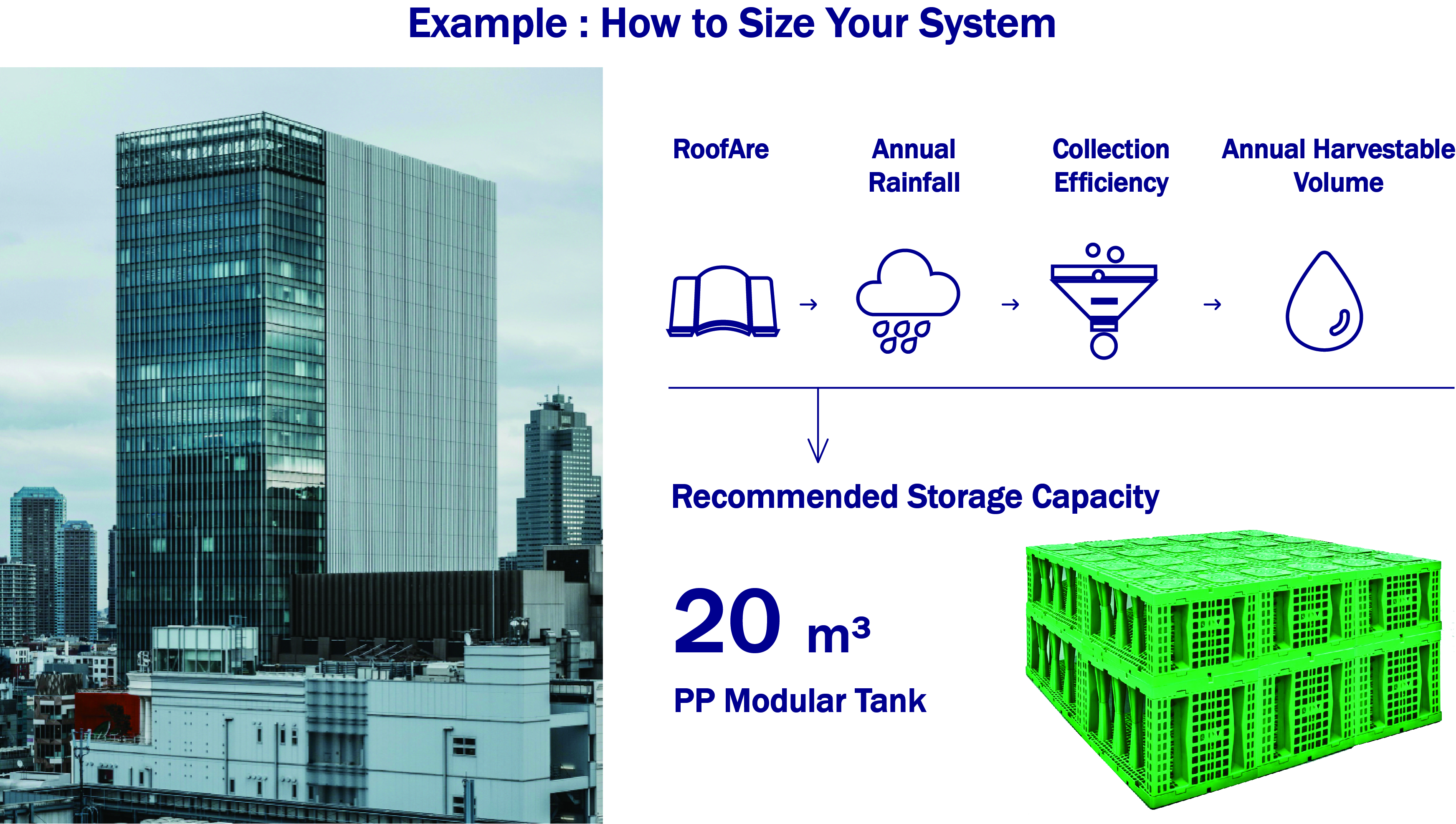
الخطوة 1: حساب مساحة التجميع.
قم بقياس المسقط الأفقي للسطح بالمتر المربع. بالنسبة لمبنى تجاري بمساحة 500 متر مربع، فإن مساحة التجميع هي 500 متر مربع.
الخطوة 2: تحديد معدل هطول الأمطار السنوي لموقعك.
| المدينة | معدل هطول الأمطار السنوي |
| لندن | 600 ملم |
| سيدني | 1,200 ملم |
| دبي | 100 ملم |
| برلين | 570 ملم |
| سنغافورة | 2,340 ملم |
| نيويورك | 1,200 ملم |
الخطوة 3: تطبيق عامل كفاءة التجميع.
تتراوح كفاءة السطح عادةً من 0.80 إلى 0.95 اعتماداً على المادة. استخدم 0.85 للأسفلت، 0.90 للقرميد، و0.95 للمعدن كقيم افتراضية.
الخطوة 4: حساب الطلب.
قدر الاستهلاك اليومي للمياه غير الصالحة للشرب (لتر/يوم) واضربه في أيام الاكتفاء الذاتي المطلوبة (عادةً 14-21 يوماً للمناخات المعتدلة، و7-10 أيام للمناخات الاستوائية ذات الأمطار المتكررة).
الخطوة 5: اختيار سعة الخزان.
المعادلة الأساسية لحجم التجميع هي:
الجالونات = مساحة السطح (قدم مربع) * هطول الأمطار (بوصة) × 0.623 × نسبة الكفاءة
لمستخدمي النظام المتري: اللترات = مساحة السطح (متر مربع) × هطول الأمطار (ملم) × 0.85 (الكفاءة) × 0.001 (تقريبياً، قبل تعديل الطلب).
بالنسبة لمتطلبات التخزين الشهرية، قسّم الإجمالي السنوي على 12 وطبّق معامل الطلب.
مثال عملي - سطح تجاري بمساحة 500 متر مربع في لندن (أمطار 600 ملم، كفاءة 85%):
الحجم السنوي القابل للحصاد = 500 × 0.600 × 0.85 = 255 متر مكعب/سنة ≈ 21.25 متر مكعب/شهر
السعة التخزينية الموصى بها: خزان PP مركب بسعة 15-20 متراً مكعباً (يكفي لتغطية شهر جاف مع التقاط معظم فائض الأشهر الرطبة).
يتيح التصميم المركب من Yingyuan البدء بمصفوفة سعة 10 أمتار مكعبة، مع إمكانية التوسع بإضافة وحدات إضافية وفقاً لنمو الطلب.
للحصول على حسابات دقيقة للحجم، راجع دليلنا حول كيفية حساب سعة تخزين مياه الأمطار. كما يتم تناول إرشادات تحديد حجم الخزان في دليلنا الخاص بأحجام خزانات مياه الأمطار.
تحليل التكاليف والعائد على الاستثمار (ROI)
بالنسبة لمديري المشتريات ومطوري المشاريع، غالباً ما تكون الجدوى المالية أكثر أهمية من الجدوى البيئية. يقلل نظام حصاد مياه الأمطار التجاري المصمم جيداً فواتير المياه بنسبة 20-50% سنوياً، وتتراوح فترة الاسترداد (Payback Period) عادةً بين 3 إلى 7 سنوات اعتماداً على تعريفة المياه المحلية وحجم النظام.
تفصيل التكلفة النموذجية لنظام تجاري بسعة 50 متراً مكعباً:
| المكون | نسبة التكلفة من الإجمالي |
| وحدات تخزين PP المركبة | 40–50% |
| أعمال الحفر والأعمال المدنية | 15–20% |
| محطة الضخ وشبكة التوزيع | 8–12% |
| المعالجة المسبقة (المرشح + التدفق الأول) | 5–10% |
| النسيج الأرضي (Geotextile) وغشاء PE | 5–8% |
| المعالجة البعدية (UV، الكربون) | 5–8% |
| الأنابيب والأعمال الكهربائية | 5–8% |
| وحدة التحكم الذكية والمستشعرات | 3–5% |
تتفاوت تكاليف خزانات التخزين بشكل كبير؛ حيث تتراوح تكلفة خزانات البولي إيثيلين عادةً بين 0.50 إلى 2.00 دولار للجالون، بمتوسط تكلفة تركيب يتراوح بين 1.50 إلى 7.00 دولار للجالون، وذلك بناءً على المادة المستخدمة ومستوى تعقيد النظام. تتمتع أنظمة PP المركبة بميزة تكلفة هيكلية مقارنة بالخزانات الخرسانية: فهي تزن 1/30 من وزن الخرسانة، ويتم تركيبها بسرعة أكبر بنسبة 60%، وتُشحن بكفاءة عالية؛ حيث يمكن وضع أكثر من 1,200 وحدة في حاوية شحن قياسية (40HQ)، في حين يتطلب الخزان الخرساني نقلًا مخصصاً بشاحنات مسطحة لكل وحدة.
دراسة حالة: مجمع نانجينغ الصناعي
بلغت تكلفة نظام بسعة 500 متر مكعب تم تركيبه في منشأة صناعية في نانجينغ 350,000 يوان صيني، ويحصد 1,200 طن من مياه الأمطار سنوياً للري، غسيل الطرق، وتعبئة احتياطي الحريق. تبلغ تكلفة المعالجة 0.8 يوان صيني لكل طن (كهرباء + مستهلكات)، مما يحقق فترة استرداد تتراوح بين 5-7 سنوات مقارنة بتعريفة المياه البلدية.
مقارنة التكلفة الإجمالية للملكية (TCO) على مدار 25 عاماً:
| المعيار | نظام PP المركب | خزان خرساني | خزان صلب فوق الأرض |
| التكلفة الرأسمالية (لكل متر مكعب) | متوسطة | مرتفعة | متوسطة |
| عمالة التركيب | منخفضة | مرتفعة | متوسطة |
| الصيانة (على مدار 25 عاماً) | منخفضة - فحص سنوي | متوسطة - إصلاح التصدعات والتبطين | مرتفعة - معالجة التآكل |
| تكلفة النقل | منخفضة (قابلة للتكديس في حاويات) | مرتفعة جداً | متوسطة |
| التكلفة الإجمالية للملكية | الأقل | الأعلى | متوسطة |
إلى جانب توفير المياه المباشر، تكتسب أنظمة حصاد مياه الأمطار نقاطاً ائتمانية ضمن معايير (BREEAM) و(LEED) والمعيار الصيني لتقييم المباني الخضراء، مما يضيف قيمة ملموسة للمحافظ العقارية التجارية. يتوفر تحليل مفصل للعائد على الاستثمار (ROI) مع دراسات حالة من أسواق متعددة في دليلنا الخاص بعوائد استثمار أنظمة حصاد مياه الأمطار التجارية.
نظرة عامة على مسار التركيب الإنشائي
يتبع تركيب نظام مياه الأمطار الأرضي المركب من PP مسار عمل مهيكلاً يمكن لمعظم مقاولي الأعمال المدنية تنفيذه دون الحاجة إلى تدريب متخصص. تنطبق الخطوات الثماني الموضحة أدناه على كل من تكوينات أنظمة التسريب (المغلفة بالنسيج الأرضي) وأنظمة التخزين المحكم (المبطنة بالغشاء الأرضي).
1. مسح الموقع والتصميم - فحص التربة، التحقق من مستوى المياه الجوفية، ورسم خرائط المرافق. تأكد من أن عمق الدفن يستوعب ارتفاع الوحدة بالإضافة إلى بلاطة أساسية بسماكة 200 ملم وغطاء علوي بسماكة 150 ملم.
2. الحفر - الحفر للعمق المطلوب، عادة ما يتراوح بين 1.5 إلى 3 أمتار. حافظ على مسافة خلوص تبلغ 200 ملم على كل جانب لتوفير مساحة للعمل.
3. تجهيز الأساس - وضع طبقة من الرمل المدكوك أو بلاطة خرسانية (فئة C20) بسماكة 100-150 ملم، مع تسويتها بتفاوت مقبول يبلغ ±10 ملم. 4. 4. طبقة النسيج الأرضي (Geotextile) / الغشاء - بالنسبة لأنظمة التسريب، يتم التغليف بنسيج أرضي غير منسوج (200 جم/متر مربع). بالنسبة للتخزين المحكم، استخدم غشاء أرضي من البولي إيثيلين (PE Geomembrane) بسماكة 0.5 ملم.
5. تجميع الوحدات - تركيب وحدات PP المتشابكة بالضغط. لا توجد حاجة للآلات الثقيلة لتجميع الوحدات؛ حيث يبلغ وزن كل وحدة 5-12 كجم ويتم توصيلها يدوياً. يمكن لعاملين إلى ثلاثة عمال تجميع 10 أمتار مكعبة في اليوم.
6. توصيلات الأنابيب - تركيب أنابيب الدخول، الخروج، الفائض، والتهوية باستخدام وصلات البولي إيثيلين عالي الكثافة (HDPE). يجب أن يكون لجميع الأنابيب ميل أدنى يبلغ 1% نحو الخزان لتسهيل تدفق الجاذبية.
7. التغليف العلوي والختم - إكمال غلاف النسيج الأرضي أو الغشاء، مع تداخل الوصلات بمسافة لا تقل عن 300 ملم.
8. الردم والتشغيل - الردم بشكل متماثل في طبقات بسماكة 200 ملم مع الدك. يُوصى باستخدام الحصى المستدير الحبيبات للردم، ويتم دكه في طبقات بسماكة 30 سم مع رفع مستوى الماء داخل الخزان في نفس الوقت لموازنة الضغط. قم بإجراء اختبار ملء الخزان، وفحص التسريب، وتفعيل المضخة.
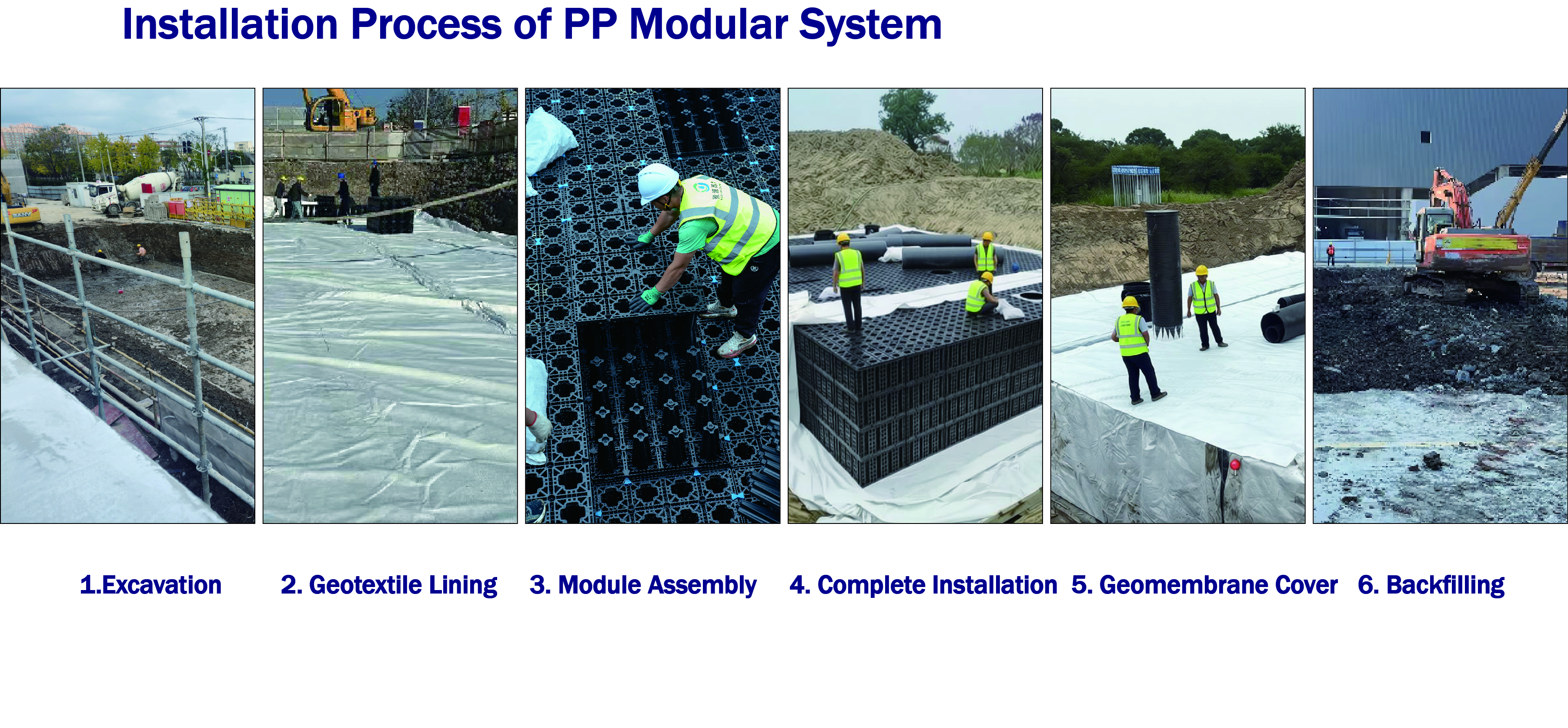
تُشحن وحدات Yingyuan مسبقة التجميع في حاويات 40HQ (أكثر من 1,200 وحدة لكل حاوية)، مما يقلل من وقت التجميع في الموقع مقارنة بالأنظمة التي تتطلب تصنيعاً ميدانياً. للحصول على دليل التركيب الكامل خطوة بخطوة مع قائمة الأدوات المطلوبة وإرشادات أنواع التربة، راجع دليل تركيب أنظمة حصاد مياه الأمطار الخاص بنا.
اللوائح والمعايير الهندسية العالمية
تختلف اللوائح الحاكمة لحصاد مياه الأمطار باختلاف الأسواق؛ ويلخص الجدول أدناه الأطر التنظيمية الرئيسية عبر مناطق Yingyuan الست المستهدفة.
| الدولة / المنطقة | اللائحة / المعيار | المتطلب الرئيسي |
| المملكة المتحدة | لوائح البناء Part H3، BS 8515:2009 | إدارة الصرف المستدام (SuDS) إلزامية للتطويرات الكبرى. التسلسل الهرمي: إعادة الاستخدام > التسريب > مجرى مائي > صرف صحي. |
| الولايات المتحدة | البنية التحتية الخضراء (EPA)، تفويضات LID | يُصنف كبنية تحتية خضراء أساسية. معظم الولايات تسمح به؛ تكساس تعفي المعدات من الضرائب؛ تفرض كولورادو ويوتا قيوداً تنظيمية متخصصة. |
| الصين | معيار GB 50400، برنامج مدينة الإسفنج (2026) | التطبيق الإلزامي لاشتراطات مدينة الإسفنج (Sponge City) لجميع المشاريع الجديدة والمجددة والموسعة. |
| أستراليا | متطلبات WSUD، AS/NZS 3500 | تصميم عمراني حساس للمياه (WSUD) إلزامي في التطويرات الكبرى للتحكم في الحجم والجودة من المصدر. |
| ألمانيا | DIN 1986-100, DIN EN 752 | أصحاب العقارات الجديدة ملزمون بإدارة مياه الأمطار في الموقع. يُحظر التصريف في المجاري العامة إلا في ظروف محددة. |
| الشرق الأوسط | استراتيجية دبي (SuDS 2025)، نظام "استدامة" أبوظبي | اعتماد متزايد مدفوع بندرة المياه الشديدة. ينمو السوق الإقليمي بنسبة تتجاوز 20% سنوياً. |
الاتجاه التنظيمي واضح لا لبس فيه: تنتقل الولايات القضائية حول العالم من المبادئ التوجيهية الطوعية إلى المتطلبات الإلزامية. يضع المتبنون الأوائل لبنية حصاد مياه الأمطار التحتية أنفسهم في مقدمة مواعيد الامتثال مع تحقيق وفورات فورية في تكاليف المياه. للحصول على تحليل تنظيمي معمق لكل دولة، راجع دليل لوائح حصاد مياه الأمطار الخاص بنا.
لماذا تختار أنظمة PP المركبة؟
تحتل وحدات تخزين PP المركبة مكانة متميزة بين الخزانات الخرسانية التقليدية والخزانات الفولاذية أو البولي إيثيلين فوق الأرض. يوضح الجدول المقارن أدناه أسباب استحواذ وحدات البولي بروبيلين (PP) المركبة على ما يقدر بنحو 35-40% من السوق العالمية لتخزين مياه الأمطار، وفقاً لتقديرات الصناعة، وهي نسبة نمو تتجاوز بدائل الخرسانة والمعادن.
نظام PP المركب مقابل الخزان الخرساني:
تزن وحدات PP نسبة 1/30 من الخزان الخرساني المكافئ، ويتم تركيبها بسرعة أكبر بنسبة 60%، وتوفر عمراً تصميمياً يبلغ 50 عاماً مع حد أدنى من مخاطر التصدع أو تآكل حديد التسليح في الهيكل الرئيسي. (يجب ضمان جودة التغليف الخارجي أثناء التركيب). توفر الخرسانة نسبة فراغ تبلغ 100% مقابل 92% للوحدات المركبة، لكن فارق الوزن يعني أن الخرسانة تتطلب استخدام رافعات وشحن مخصص، مما يضيف تكاليف ومخاطر زمنية في المواقع الحضرية المزدحمة.
خزانات البولي بروبيلين الوحداتية مقابل خزانات الفولاذ الموجودة فوق الأرض:
تشغل وحدات البولي بروبيلين (PP) الأرضية مساحة صفرية من سطح الأرض، مما يلغي تكلفة الفرصة البديلة لاستغلال مساحة الأرض فوق السطح في المشاريع التجارية.تحافظ هذه الوحدات على درجة حرارة مياه مستقرة على مدار العام (10–15 درجة مئوية تحت الأرض مقارنة بدرجة حرارة الجو للخزانات فوق الأرض)، مما يقلل من نمو البكتيريا.تتطلب الخزانات الفولاذية معالجة دورية ضد التآكل، كما أن عمرها التشغيلي أقصر (15–25 عاماً مقابل أكثر من 50 عاماً للوحدات المركبة).
نظام PP المركب مقابل وحدات HDPE:
يوفر البولي بروبيلين (PP) صلابة أعلى ومقاومة زحف (Creep Resistance) أفضل من البولي إيثيلين عالي الكثافة (HDPE) تحت الحمل المستمر. تؤكد الاختبارات المعملية المعتمدة من CNAS لشركة Yingyuan على سلامة الوحدة تحت الأحمال المستمرة وفقاً لمتطلبات المهام الشاقة لمعيار CJ/T 542-2020. تتحمل المادة درجات حرارة تتراوح من -20 درجة مئوية إلى +60 درجة مئوية دون تدهور هيكلي. Yingyuan نقاط التميز لشركة Yingyuan:
• اختبارات معملية معتمدة من CNAS مع أرقام تقارير قابلة للتتبع.
• سلسلة Hurricane HD: قوة انضغاط تبلغ 85 طن/متر مربع، وفئة التحميل D400.
• الطاقة الإنتاجية السنوية: 150,000 متر مكعب.
• شبكة توزيع تخدم أكثر من 30 دولة.
•تصنيف ائتماني للمنشأة بمستوى (AAA) (معتمد من قبل وكالة تصنيف ائتماني معترف بها)
الأسئلة الشائعة
كم تبلغ تكلفة نظام حصاد مياه الأمطار؟
يتكلف النظام السكني (5-10 أمتار مكعبة) عادةً ما بين 3,000 إلى 8,000 دولار شاملة التركيب. تتراوح تكلفة الأنظمة التجارية (50-200 متر مكعب) من 20,000 دولار إلى 120,000 دولار حسب نطاق العمل. تتراوح تكاليف تركيب الخزانات وحدها بين 1.50 إلى 7.00 دولار للجالون، وذلك بناءً على المادة المستخدمة وحجم الخزان.تمثل وحدات التخزين المركبة (PP) نسبة 40-50% من إجمالي تكلفة النظام، بينما تشكل أعمال الحفر والأعمال المدنية الحصة الأكبر التالية بنسبة 15-20%.يتوفر تحليل مفصل لتسعير البنود لثلاثة أحجام مختلفة من الأنظمة في دليل تفصيل تكاليف النظام الشامل الخاص بنا.
هل يعد حصاد مياه الأمطار قانونياً؟
ليس قانونياً فحسب، بل هو إجراء إلزامي في العديد من الولايات القضائية. يفرض معيار (UK Part H3) في المملكة المتحدة أنظمة تصريف مستدامة (SuDS) للمشاريع العمرانية الجديدة.يلزم المعيار الصيني (GB 50400) بتركيب أنظمة تجميع مياه الأمطار لجميع المباني الجديدة اعتباراً من عام 2026.في الولايات المتحدة، تسمح معظم الولايات بحصاد مياه الأمطار وتشجعه، رغم وجود قيود محددة في بعضها؛ فعلى سبيل المثال، تضع ولاية كولورادو حداً أقصى للتخزين السكني يبلغ 110 جالونات، بينما تسمح ولاية يوتا بما يصل إلى 2,500 جالون مع اشتراط التسجيل للأنظمة الأكبر.
ما هو العمر الافتراضي لنظام حصاد مياه الأمطار؟
تتمتع خزانات PP المركبة بعمر تصميمي يبلغ 50 عاماً عند تركيبها وردمها بشكل صحيح. تدوم خزانات البولي إيثيلين فوق الأرض عادةً ما بين 15-25 عاماً؛ بينما تدوم الخزانات الفولاذية 15-30 عاماً مع الصيانة المستمرة. يُعد عامل جودة التركيب هو المحدد الرئيسي للعمر الافتراضي؛ حيث يمنع التغليف الصحيح بالنسيج الأرضي (Geotextile) والردم المتماثل حدوث أي توزيع غير متساوٍ للأحمال.كما تساهم الخزانات المعتمة وعمليات التنظيف المنتظمة في إطالة العمر التشغيلي من خلال منع تراكم الطحالب والرواسب.
هل يمكن لحصاد مياه الأمطار توفير المال؟
تشهد المباني التجارية عادةً انخفاضاً بنسبة 20-50% في فواتير المياه. يمكن لنظام ذي سعة مدروسة أن يسترد تكلفته الاستثمارية خلال 3-7 سنوات من خلال خفض فواتير المياه، وتقليل رسوم تصريف مياه العواصف، والحوافز الضريبية أو التخفيضات المحتملة المقدمة في بعض الولايات الأمريكية. يمكن لمياه الأمطار المستخدمة في شطف المراحيض والري أن تحل محل 30-60% من استهلاك المبنى للمياه الصالحة للشرب.
ما هو نوع خزان مياه الأمطار المناسب لمشروعي؟
توفر خزانات PP الأرضية المركبة مزيجاً قوياً من المتانة (عمر تصميمي 50 عاماً)، كفاءة استغلال المساحة (لا تشغل أي مساحة سطحية)، سعة التحميل (تصل إلى 85 طن/متر مربع لطرازات المهام الشاقة)، وكفاءة النقل اللوجستي (أكثر من 1,200 وحدة لكل حاوية 40HQ). تعد خزانات البولي إيثيلين فوق الأرض بديلاً فعالاً من حيث التكلفة للتركيبات الأصغر حيث تتوفر مساحة من الأرض. يعتمد الاختيار الصحيح على حجم المشروع، الميزانية، وظروف الموقع. للحصول على مقارنة كاملة لخيارات التخزين، راجع دليل المقارنة بين وحدات التخزين الأرضية والخزانات التقليدية الخاص بنا.
كيف أقوم بصيانة نظام حصاد مياه الأمطار؟
يعد الفحص السنوي للمرشحات ومداخل/مخارج الخزان والمضخة هو الحد الأدنى الأساسي. يجب فحص محولات التدفق الأول بشكل ربع سنوي وتنظيفها بعد العواصف الكبرى. يجب تنظيف المزاريب قبل وبعد موسم الأمطار على الأقل. يجب فحص غلاف النسيج الأرضي (Geotextile) كل 3-5 سنوات عبر بئر الفحص. يجب تفريغ الخزانات وتنظيفها من الرواسب كل بضع سنوات للحفاظ على جودة المياه. تتوفر قائمة مرجعية كاملة للصيانة في دليل صيانة نظام مياه الأمطار الخاص بنا.
ما كمية مياه الأمطار التي يمكنني جمعها من سطحي؟
استخدم المعادلة: مساحة التجميع (قدم مربع) * هطول الأمطار (بوصة) × 0.623 × الكفاءة = جالون. للمقاييس المترية: المساحة (متر مربع) × هطول الأمطار (ملم) × 0.85 (الكفاءة) ÷ 1000 = متر مكعب. يمكن لسطح بمساحة 200 متر مربع في سيدني (1,200 ملم/سنة) أن يحصد حوالي 204,000 لتر سنوياً - وهي كمية تكفي لتزويد مبنى مكاتب متوسط الحجم باحتياجات شطف المراحيض وري الحدائق على مدار العام.
تم تصميم أنظمة حصاد مياه الأمطار المركبة من البولي بروبيلين (PP) لشركة جيانغسو يينغ يوان (Jiangsu Yingyuan) هندسياً لتلبية متطلبات المشاريع التجارية، البلدية، والسكنية في جميع أنحاء العالم. بفضل الاختبارات المعملية المعتمدة من CNAS، وطاقة إنتاجية سنوية تبلغ 150,000 متر مكعب، وشبكة توزيع تمتد في أكثر من 30 دولة، ندعم المشاريع من مرحلة التصميم الأولي وحتى التشغيل النهائي. [Request a [اطلب استشارة هندسية مجانية لتصميم النظام وعرض أسعار] | [استكشف أنظمة الاحتجاز الخلوية الجغرافية لإدارة مياه العواصف]
المراجع
: Offgrid Collective - أساسيات حصاد مياه الأمطار
: Home Depot Eco Actions - كيفية إعداد نظام منزلي لجمع مياه الأمطار
: Jojo Tanks - خطوات إعداد نظام حصاد مياه الأمطار
: My Rain Plan - مقدمة في حصاد مياه الأمطار [2026]
: NC State Extension - حصاد مياه الأمطار: إرشادات لأصحاب المنازل
: Travis Perkins - نصائح حول حصاد مياه الأمطار
: Tank Systems - دليل حصاد مياه الأمطار
: FilterSmart - حصاد مياه الأمطار: دليل شامل
: GRAF UK - كيفية تركيب نظام حصاد مياه الأمطار
سيسي — إدارة تخطيط المحتوى